Author: radjmover

  • Olive Oil Salad Dressing: The Only Recipe You Need — and Why the Oil Is the Recipe

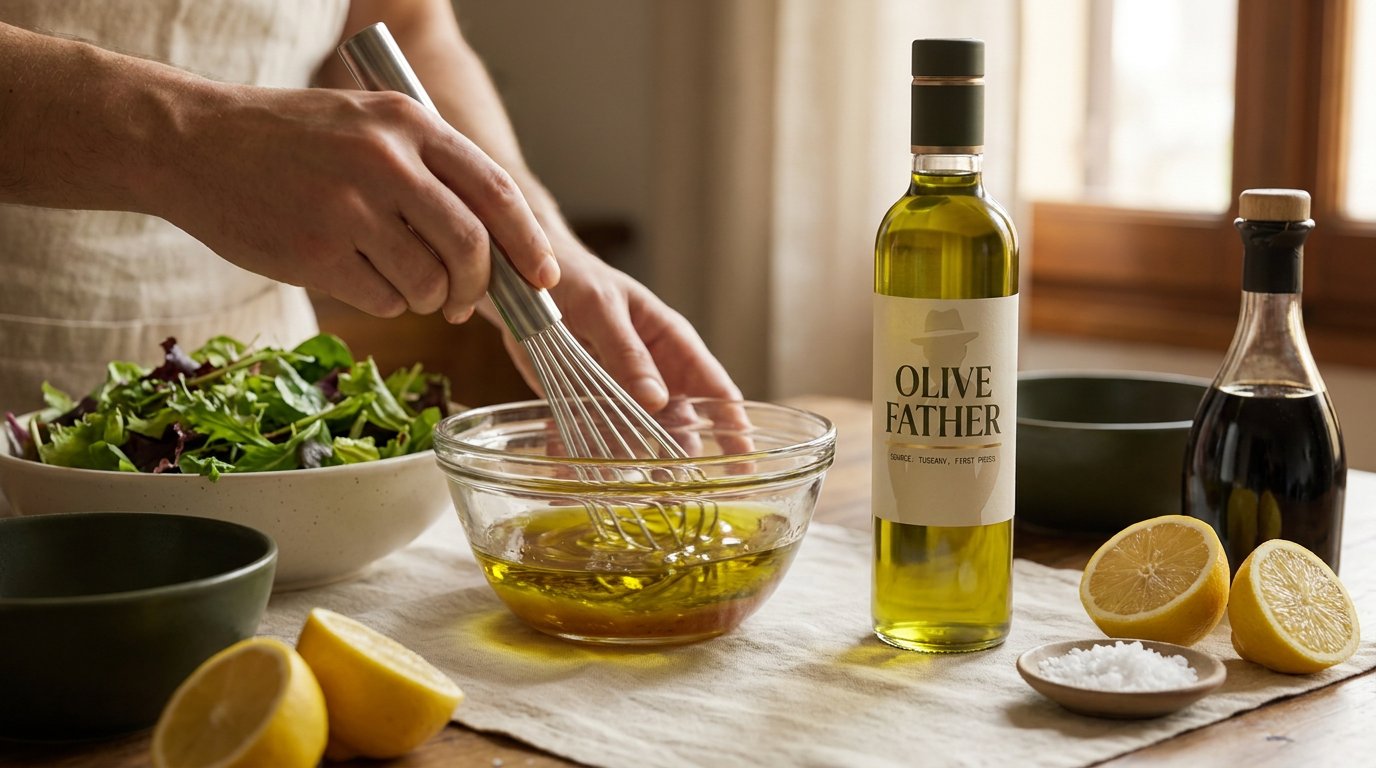
    Whisking an olive oil vinaigrette in a rustic Italian kitchen beside a bowl of fresh salad and a bottle of Olive Father extra virgin olive oil

    Walk down the dressing aisle of any American supermarket and you will find fifty bottles of something that never needed to be invented. Emulsifiers, gums, sugar, “vegetable oil blend,” and a shelf life measured in years — all to replace a preparation that takes ninety seconds and three ingredients. A real olive oil salad dressing is one of the oldest recipes in the world, and it is barely a recipe at all. It is a ratio, a pinch of salt, and one decision that determines everything: which oil you pour.

    The master ratio: three to one

    Every classic vinaigrette begins with the same proportion: three parts extra virgin olive oil to one part acid, plus salt. The acid can be red wine vinegar, white wine vinegar, or fresh lemon juice. That is the entire foundation. From there:

    • In a jar: add three tablespoons of olive oil, one of vinegar, a generous pinch of flaky salt, screw the lid on, and shake hard for ten seconds. The agitation breaks the oil into droplets and produces a briefly stable emulsion — cloudy, thick, and ready to pour.
    • In a bowl: whisk the vinegar and salt first so the salt dissolves, then stream in the oil while whisking. Half a teaspoon of Dijon mustard, if you like it, acts as a natural emulsifier and holds the dressing together longer.

    Taste it on a leaf, not a spoon — a leaf carries far less dressing, which is how it will actually be eaten. Adjust with a few drops of vinegar if it tastes flat, a little more oil if it bites too hard.

    The Italian way: dress the salad, not the jar

    It is worth knowing that in Italy, the vinaigrette itself is almost a foreign concept. An Italian salad is dressed in the bowl, at the table, in a strict order the old rule captures neatly: be a sage with the salt, a miser with the vinegar, and a spendthrift with the oil. Salt first, so it dissolves against the wet leaves; a restrained thread of vinegar; then olive oil, poured generously, and a final toss with your hands or two forks until every leaf shines. No jar, no whisk, no leftovers.

    Both methods work. The jar gives you an emulsified, American-style vinaigrette; the Italian method gives you a brighter salad where you taste leaf, salt, and oil in sequence. What they share is the arithmetic: the dressing is roughly three-quarters olive oil. Which brings us to the part most recipes skip.

    The oil is the recipe

    A salad dressing is a raw preparation. Nothing is cooked, nothing is masked, and the oil is never diluted below seventy-five percent of the total. Whatever character your olive oil has — fresh-cut grass, green almond, that peppery catch at the back of the throat — arrives on the leaf intact. And whatever faults it has arrive intact too. A tired, refined, or blended supermarket oil produces exactly the dressing you would expect: greasy, flat, and vaguely stale. This is the quiet reason so many people think they dislike vinaigrette. They have only ever tasted it made with oil that was never worth eating raw.

    The bitterness and pepper of a genuine extra virgin oil are not flaws to be softened — they are the polyphenols, the same compounds behind most of the oil’s health research, and in a dressing they do real culinary work. Bitterness balances sweet vegetables and fruit; pungency cuts through rich cheeses and cured meats; the acid ties it together. A robust oil against sweet tomatoes and burrata is not a recipe so much as a chord.

    Choosing an oil worth pouring

    For a dressing, apply the same tests we would apply at our own mill: a stated harvest date within the last year or so, a named place and producer rather than a “blend of EU oils,” dark glass, and — when you taste it — the bitterness and pepper of an oil that is still alive. A single-source oil tells you exactly whose standards you are eating. This is precisely what our own estate oils are pressed for: olives from one family’s groves in Calabria, milled cold within hours, bottled unblended, made to be poured raw.

    Three dressings to know by heart

    • Classic red wine vinaigrette: 3 tbsp olive oil, 1 tbsp red wine vinegar, pinch of salt, optional ½ tsp Dijon. For every leafy salad and most grain bowls.
    • Lemon and oil: 3 tbsp olive oil, juice of half a lemon, salt. The Mediterranean default for fish, avocado, fennel, and bitter greens.
    • Warm pan dressing: whisk a spoonful of pan juices from roasted vegetables or chicken with oil and vinegar for a dressing that seasons the whole plate.

    Ninety seconds, three ingredients, one decision

    You do not need the dressing aisle. You need a ratio you can remember, salt you can pinch, and an olive oil good enough to carry three-quarters of every bite. Choose the oil the way you would choose the main ingredient — because in this dish, it is. Explore our single-estate extra virgin olive oils, pressed from one harvest and dated so you know exactly how alive they are, and taste what a salad has been trying to tell you all along.
  • The Truth About Truffle Oil: Why Most of It Has Never Met a Truffle

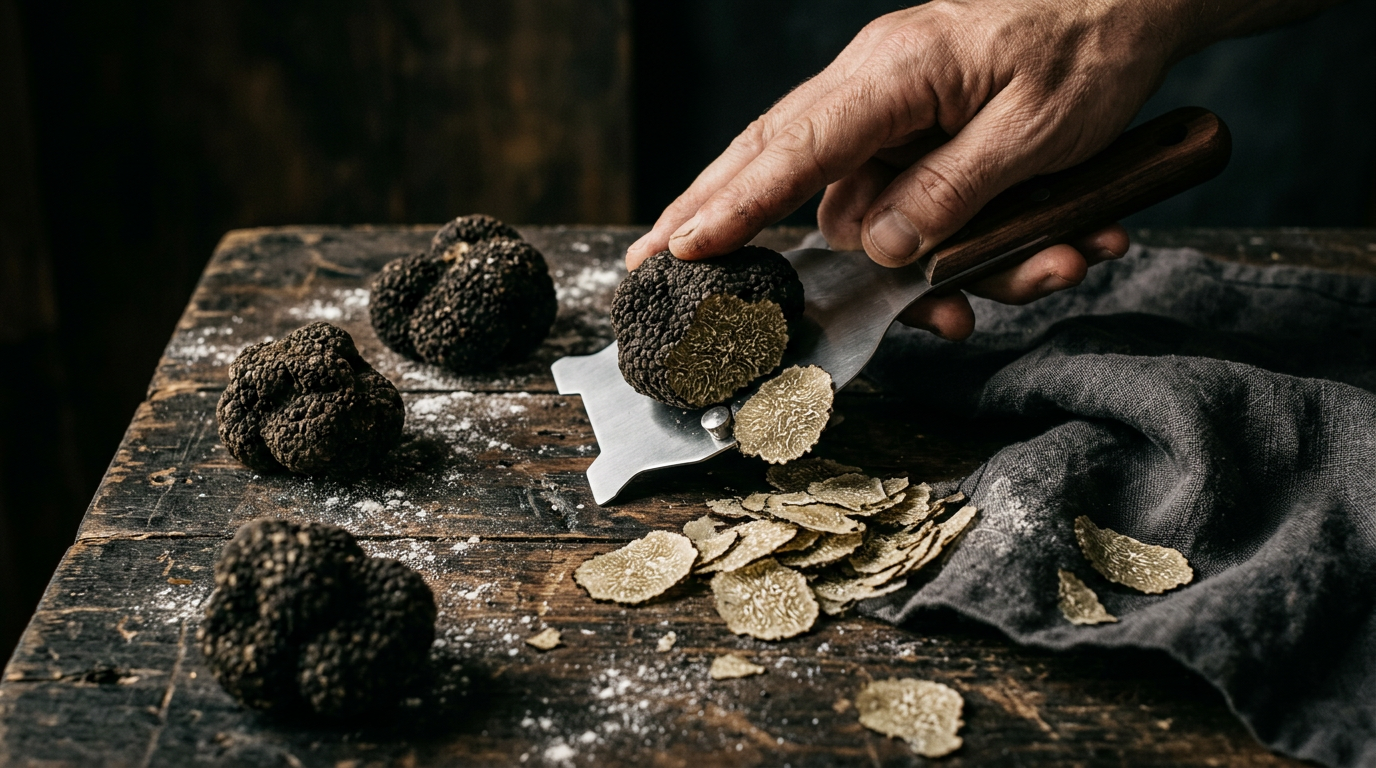
    Fresh black truffles and shaved truffle slices on a dark wooden table in dramatic light

    Truffle oil may be the most successful illusion in the modern pantry. It sits on the shelf at a luxurious price, wearing a photograph of a black truffle, promising the most coveted aroma in gastronomy for twenty dollars. And in the great majority of bottles, no truffle was ever involved. As people who make our living pressing real olives into real oil, we have a professional interest in what happens when an ingredient’s name and its contents part ways. Here is the honest story.

    What is actually in most truffle oil

    The dominant aroma of white truffle can be imitated by a single synthetic molecule — 2,4-dithiapentane — produced in a laboratory for a fraction of the cost of the fungus itself. Most commercial truffle oils are exactly that: a neutral base oil (often refined olive oil, sunflower or grapeseed) dosed with the synthetic aroma compound, sometimes with a fleck of dehydrated truffle added so the label can mention the real thing. The ingredient list gives it away: “truffle aroma,” “truffle flavor,” or simply “aroma” means the perfume came from a flask, not a forest. This is legal, and it is everywhere — including in some very expensive restaurants.

    Why chefs turned against it

    Real truffle is subtle, earthy, layered — and fades within days of being dug up. The synthetic compound is loud, persistent, and one-dimensional, which is precisely why many serious chefs have banned truffle oil from their kitchens. Once you have smelled fresh truffle next to the artificial version, the difference is unmistakable: one is a place and a season; the other is a single note played at full volume. The parallel with olive oil is exact. A refined, deodorized oil dressed up with additives can imitate the idea of the real thing, but it cannot imitate the experience — something we explore in what makes quality olive oil.

    How to read a truffle oil label

    The three questions that expose the bottle

    First: does the ingredient list say truffle, or “truffle aroma”? Only actual pieces of tuber — named, ideally by species — mean truffle was present. Second: what is the base oil? A producer proud of the base names it; “vegetable oil” or unspecified “olive oil” usually means the cheapest refined liquid available. Third: is there a harvest or production date? Both truffles and olive oil are fresh products; an undated bottle of either is a bottle with something to skip. These are the same habits of label-reading we teach in our guide to choosing olive oil — the aisle changes, the detective work doesn’t.

    The honest alternative: let a great oil be the luxury

    Here is the quiet irony. The role people want truffle oil to play — a finishing flourish that makes a plate of pasta or eggs feel expensive — is a role a genuinely great extra virgin olive oil already performs, honestly. A fresh, high-polyphenol oil from a single estate brings aroma that no laboratory produced: cut grass, artichoke, green tomato, black pepper. Drizzled over the same risotto or scrambled eggs, it does what the synthetic bottle only gestures at — it adds a place and a harvest to the plate. Our tasting notes and pairings show how far one true bottle can carry a kitchen.

    If you love real truffle, buy real truffle in season and shave it yourself — it is worth every cent. And if what you want is that everyday feeling of luxury from a bottle, choose an oil made by people who put the grove, the harvest date and their name on the label. That is the entire philosophy behind our single-estate oils: no shortcuts, no aromas from a flask — just the fruit, pressed fresh, telling the truth.

  • How to Choose Olive Oil: A Buyer’s Guide From People Who Press It

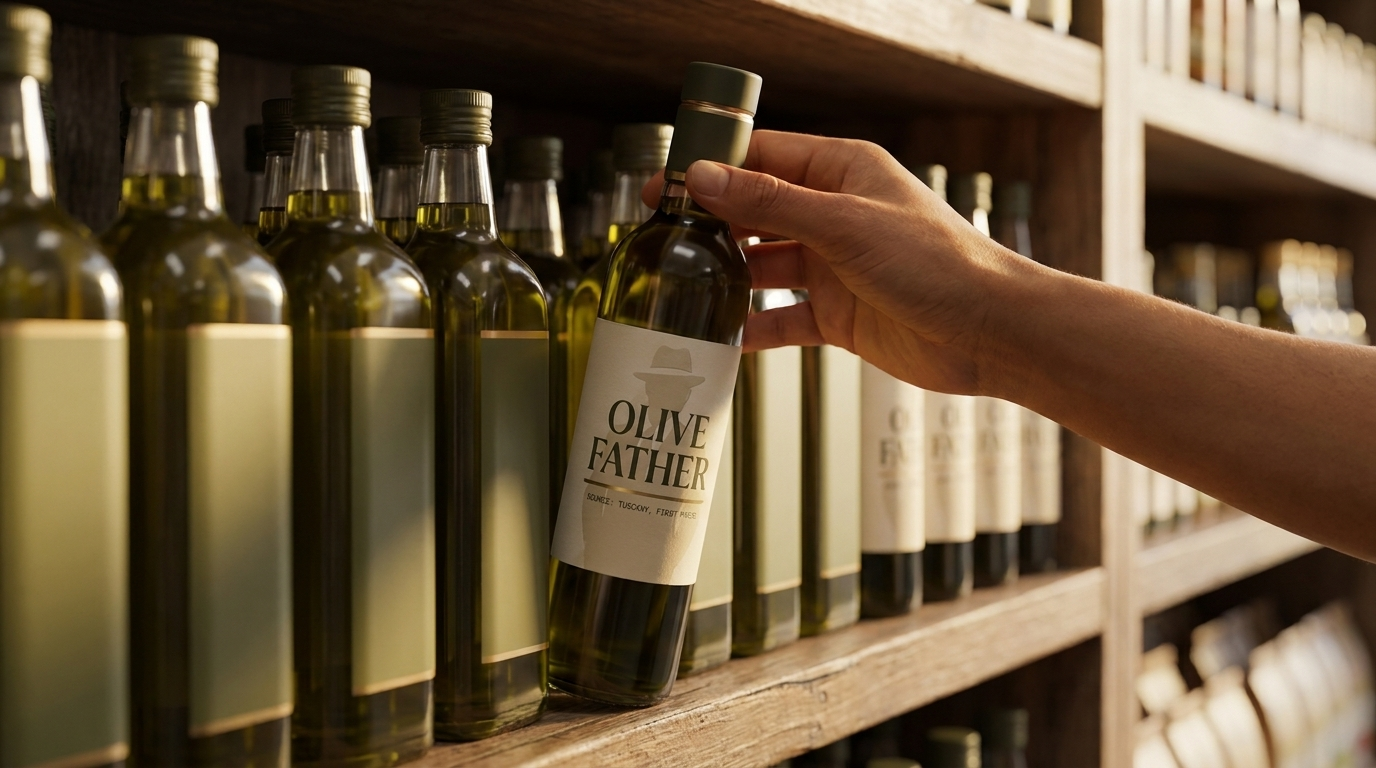
    A hand choosing one distinctive bottle of extra virgin olive oil from a shelf of generic supermarket bottles

    Stand in front of the olive oil shelf and you face forty nearly identical bottles, every one of them promising to be “extra virgin,” “cold pressed,” and “imported from Italy.” The prices run from six dollars to sixty. The labels are gorgeous. And almost none of them tell you the one thing you actually need to know: whether the oil inside is fresh, real, and worth your money. We press olive oil for a living, so let us save you some time. Here is exactly how we would choose a bottle we hadn’t made ourselves.

    Start with the harvest date — not the best-by date

    Olive oil is a fresh fruit juice, not a wine. It is at its best in the first year after harvest and fades steadily after that. A “best by” date tells you when the bottler thinks the oil becomes unsellable — usually two years after bottling, which itself can happen long after pressing. A harvest date tells you when the olives actually came off the tree. Producers who are proud of their freshness print it; producers who blend old stock from multiple years and countries physically cannot. If there is no harvest date on the bottle, that absence is itself the answer.

    Read the back label like a detective

    The front of the bottle is marketing. The back, by law, must tell some truth. Look for the small print about origin. “Blend of olive oils of European Union and non-European Union origin” means the bottler is legally telling you they cannot say where the oil came from — it may combine oils from five countries and several harvests. Compare that with a label that names a region, an estate, even a grove. Traceability is the single strongest predictor of quality, because a producer who signs their name to a place has nowhere to hide. It is the entire reason we built our own oil around a single source you can trace to the tree.

    The five-point checklist

    1. Dark glass or tin, never clear plastic

    Light is one of olive oil’s three great enemies, alongside heat and oxygen. Serious producers bottle in dark glass or tin because ultraviolet light degrades the oil day by day on a bright shelf. A clear bottle showing off a pretty green color is a marketing decision made at the oil’s expense.

    2. A named place, not just a flag

    “Italian olive oil” can legally mean oil bottled in Italy, whatever its origin. What you want is a region (Calabria, Tuscany), a certification (DOP, IGP), or best of all a single named estate. The more specific the place, the more accountable the producer.

    3. A harvest date within the last 12–18 months

    Fresh oil is where the flavor and the polyphenols live. Anything older is fading, however well it was made.

    4. A price that could plausibly pay a farmer

    It costs real money to grow, hand-pick, and cold-press olives within hours of harvest. When a liter of “extra virgin” costs less than a latte, someone in the chain has cut a corner — and in a landmark UC Davis study, a large share of imported oils labeled extra virgin failed to meet the standard for the grade. Cheap oil is not a bargain; it is usually a different product wearing the same name.

    5. Flavor claims that sound like a living thing

    Real extra virgin olive oil tastes of something: grass, artichoke, green almond, tomato leaf — followed by a pleasant bitterness and a peppery catch in the throat. Those last two are quality markers, not flaws. A label (or an oil) that promises only “smooth” and “mild” is usually describing an oil with nothing left to say. Our guide to what actually makes quality olive oil goes deeper on all three markers.

    Where you buy matters almost as much as what

    The supermarket aisle is optimized for price, not freshness — bottles sit under fluorescent light for months, and the economics of the shelf reward the cheapest possible liquid in the prettiest possible bottle. We have written honestly about why supermarket oil so often disappoints. Specialty grocers, good importers, and producers who sell direct can tell you the harvest date without looking it up. That conversation is worth more than any medal on the label.

    Choose once, well

    You do not need forty bottles. You need one true one — pressed from a named grove, in the current harvest, by people willing to put their family on the label. That is the standard we hold our own oils to: single-estate Calabrian and Tuscan extra virgin, harvest-dated, traceable to the tree. Once you have tasted oil chosen this way, the wall of anonymous bottles loses its power over you for good.

  • Is Organic Olive Oil Worth It? What the Certification Really Tells You

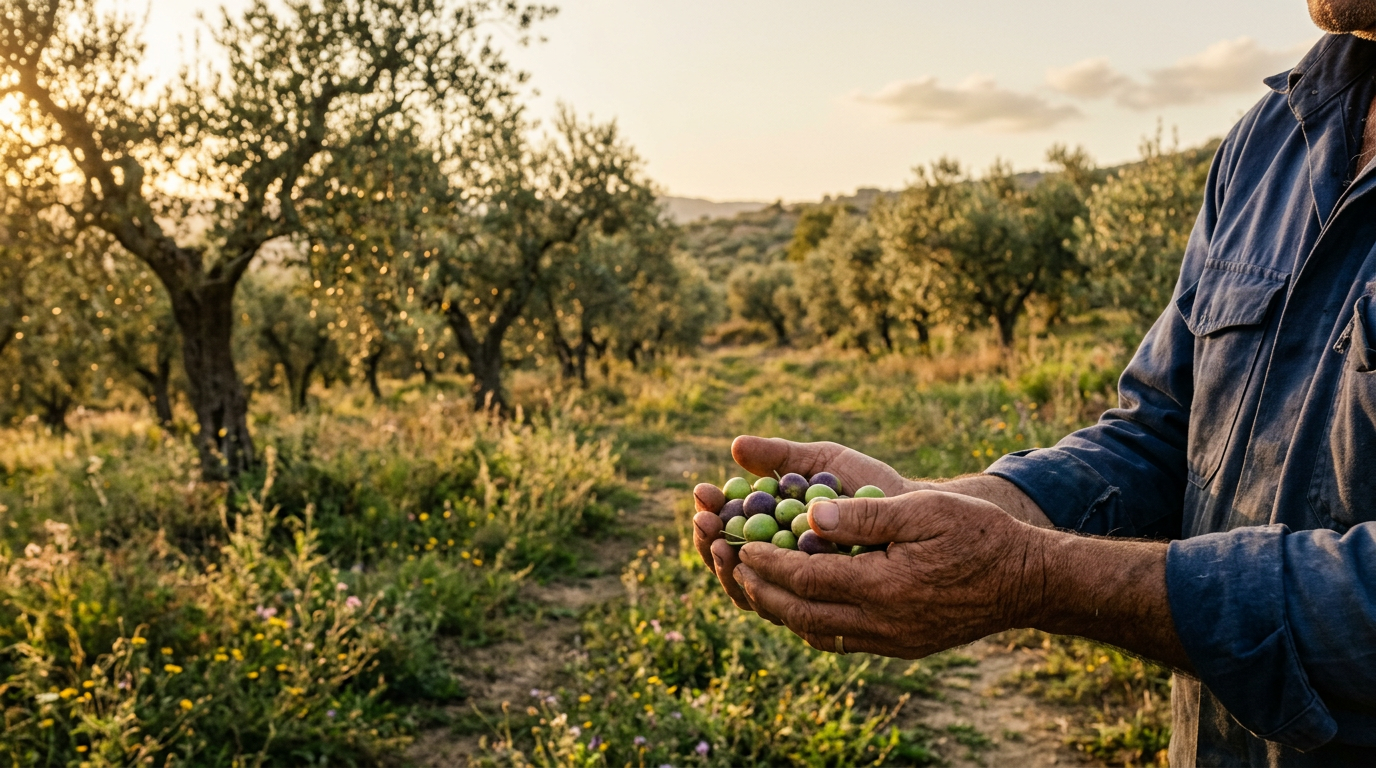
    Farmer's hands cradling fresh olives in an organic Calabrian olive grove at golden hour, wild grasses growing between ancient trees

    Organic olive oil costs more, and the little green leaf on the label asks you to take a lot on faith. So it is worth asking the question plainly: what does organic certification actually guarantee — and is it worth paying for? We farm organically ourselves, so we clearly have a view. But the honest answer is more nuanced than the marketing on either side, and understanding it will make you a sharper buyer of any olive oil, certified or not.

    What “organic” actually guarantees

    Organic certification is a legal claim about farming, verified by inspection. For olive oil, it means the grove is managed without synthetic pesticides, herbicides or fertilizers; that pests are controlled with traps, beneficial insects and timing rather than blanket spraying; and that the land is audited, documented and re-inspected, year after year, by an accredited body. In the European Union — where our groves are certified — that paper trail runs from the tree to the bottling line.

    That is not nothing. It is a real, enforceable promise about what never touched your food, and in a product you consume raw, by the spoonful, that promise has obvious appeal. It also says something about the farm’s whole posture toward its land: cover crops between the rows instead of scorched, tilled earth; hedgerows and wild grasses that keep the hillside alive. On our own estate, that approach long predates the paperwork — a story we tell in full on our organic and sustainability page.

    What organic cannot tell you

    Here is the part the green leaf will never say out loud: organic is a farming standard, not a quality standard. Certification tells you how the trees were treated. It tells you nothing about when the olives were picked, how fast they reached the mill, how carefully they were pressed, or how the oil was stored. An organic grove that harvests late and presses slowly will produce a flat, tired oil — certified from the first tree to the last drop, and mediocre in the glass.

    The two labels answer different questions

    “Extra virgin” answers: is this oil well made? It is defined by laboratory limits and a clean sensory profile — the standards we unpack in what makes quality olive oil. “Organic” answers: how was the land farmed? Neither implies the other. The bottle worth your money answers both — and adds a third answer the regulations do not require: a harvest date, the single most honest number on any label.

    So — is it worth it?

    If you are choosing between an organic oil and a conventional oil of equal freshness and craftsmanship, we think the organic bottle earns its premium: cleaner farming, audited claims, and a living grove behind it. What is not worth paying for is the leaf alone — an anonymous “organic extra virgin” blended from unnamed sources, with no harvest date and no farm behind the label, is trading on the certification while skipping everything that makes oil great.

    The good news: the same signals that mark out honest oil also mark out honest organic oil. A named estate. A single origin. A harvest date. A producer who will tell you their acidity numbers without being asked. When those line up with the certification, the premium stops being a leap of faith and becomes simple arithmetic — careful farming plus fast, cold pressing costs more, and delivers more.

    How we do it

    Our organic extra virgin comes from one certified grove in San Procopio, Calabria, farmed by the same family for six generations and pressed within hours of picking. It is the oil we pour at our own table, available in bottles for the counter and tins for the kitchens that cook with it daily.

    Organic, single-source, and picked green. Taste what certification plus craftsmanship actually delivers — explore the range.

  • Pomace Olive Oil: What It Actually Is — and Why We’d Never Bottle It

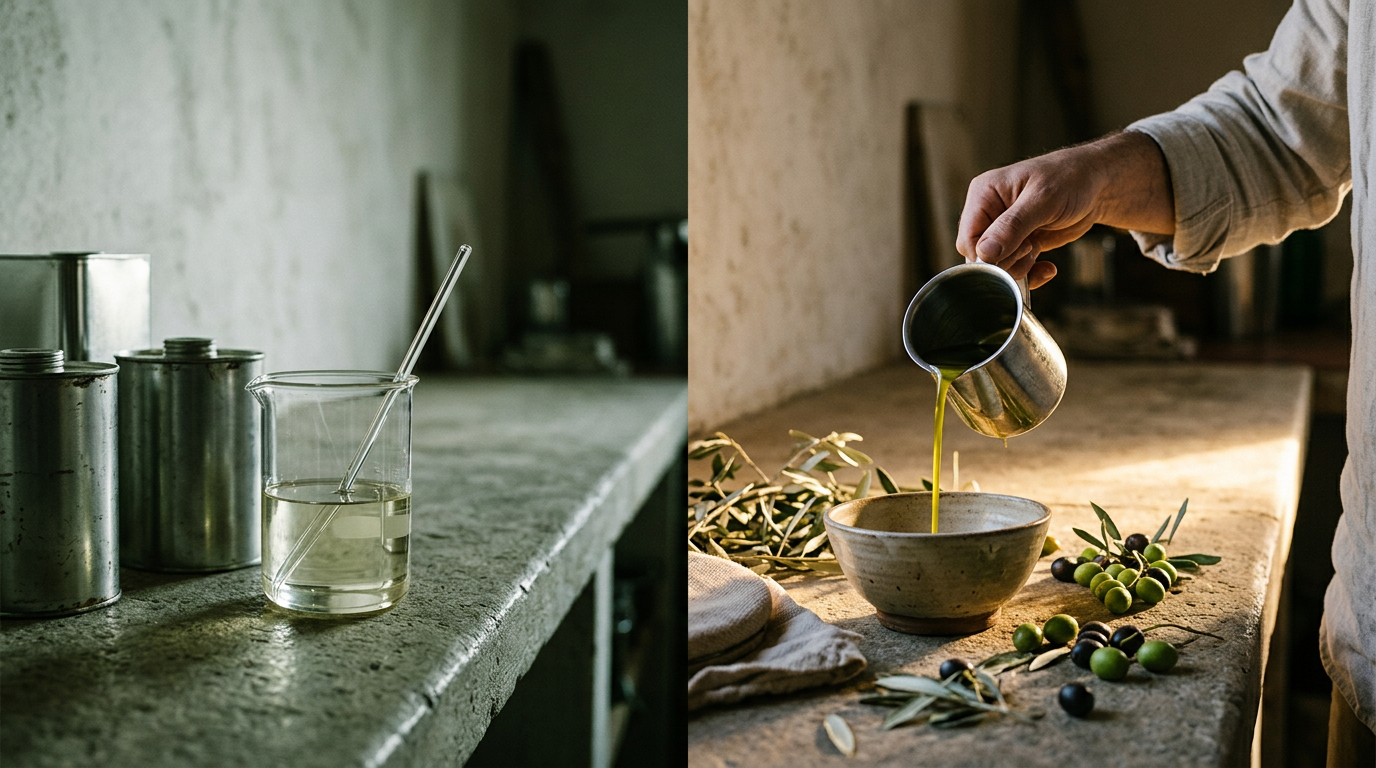
    Pale refined pomace oil in a laboratory beaker beside industrial canisters, contrasted with vivid green-gold extra virgin olive oil being poured in warm light

    Every olive pressed for oil leaves something behind: a dense, damp paste of crushed pits, skins and spent pulp. In Italian it is called sansa. In English, pomace. And here is the part of the story most shoppers never hear — that leftover paste is pressed into service one more time, chemically, to produce the cheapest grade in the entire olive oil hierarchy: olive pomace oil. It is legal, it is everywhere, and it has almost nothing in common with the oil we make. Here is exactly what it is, so you can decide for yourself whether it belongs in your kitchen.

    How pomace oil is actually made

    By the time olive paste leaves the mill, mechanical pressing has taken essentially all the oil that pressing can take. What remains in the pomace is a small percentage of residual fat, bound so tightly into the solids that no press on earth can free it. So the industry does not press. It dissolves.

    The pomace is dried and treated with a chemical solvent — typically hexane, the same solvent used to extract seed oils — which strips the last oil out of the solids. The solvent is then evaporated off, and what remains is crude pomace oil: dark, harsh, and inedible as it stands. To make it sellable, it goes through full industrial refining — neutralization, bleaching, deodorization at high temperature — the same process we described in our guide to refined olive oil. Refining strips odor and flaws, and with them nearly everything else: the aroma, the pepper, the bitterness, and the great majority of the polyphenols that make real extra virgin worth eating. A small dose of virgin oil is blended back in at the end, mostly to give the finished product a hint of color and flavor.

    None of this is a scandal in the legal sense. Olive pomace oil is a recognized category with its own standards, and reputable producers declare it. The problem is not that it exists. The problem is how easily it trades on the reputation of a product it does not resemble.

    Where pomace oil hides

    On the shelf

    By law, the label must say “olive pomace oil” — it cannot be sold as olive oil, and certainly not as extra virgin. But the bottles are designed to blur the distinction: Italian flags, groves at sunset, words like “classico” and “cucina” in large type, with “pomace” in the quietest print the regulations allow. It usually sits on the same shelf as real olive oil at a fraction of the price, and shoppers in a hurry take home the bottle without ever registering the word.

    In restaurant kitchens

    The biggest market for pomace oil is not homes but food service. It is sold in large tins as a cheap frying and cooking fat, and in much of the world it is what actually sizzles under dishes described on the menu as “cooked in olive oil.” The menu is not exactly lying — pomace oil is, technically, in the olive family. But if you picture green-gold juice from freshly crushed fruit, you are picturing a different product entirely.

    What you give up

    Real extra virgin olive oil is fresh fruit juice: pressed mechanically, cold, within hours of harvest, and never touched by solvents or refining. That is the entire reason it tastes alive — and the reason it carries the polyphenols and oleocanthal that make it one of the most studied foods in nutrition science. We walk through those standards in detail in what makes quality olive oil.

    Pomace oil, by contrast, arrives at your table having been solvent-extracted from spent solids and refined at high heat. Its polyphenol content is negligible. Its flavor is engineered to be absent. It is a neutral industrial fat with an olive-adjacent name — closer, in every way that matters, to the anonymous supermarket blends we examined in why we walked away from supermarket oil than to anything a family mill would sign its name to.

    How to make sure you never buy it by accident

    Turn the bottle around and read the grade — the front of the label is marketing, the back is law. Look for the words “extra virgin,” a named country of origin, and ideally a harvest date. Be suspicious of any “olive oil” priced like seed oil; solvent extraction is cheap, and real harvests are not. And when a producer tells you exactly which grove the fruit came from, the question answers itself — traceability and pomace do not coexist. That is the standard behind our single-source guarantee: one estate, one press, nothing extracted, nothing refined.

    Taste what olive oil is supposed to be. Our extra virgin comes from one Calabrian family estate, pressed within hours of picking — no solvents, no refining, no fine print. Explore the range.

  • Italian Olive Varieties: Frantoio, Coratina, and Why the Cultivar on the Label Matters

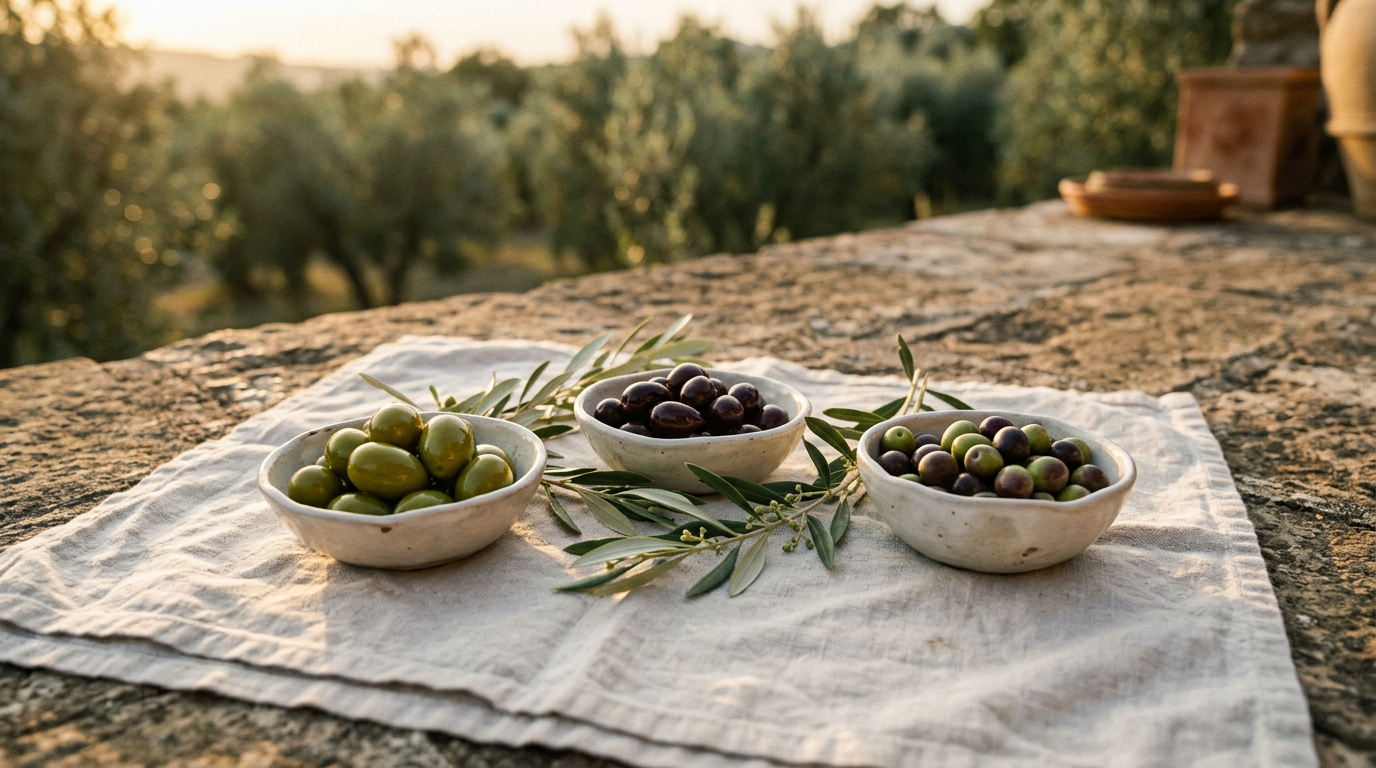
    Three ceramic bowls of different Italian olive varieties — Frantoio, Coratina and Ottobratica — on linen with olive branches

    Wine drinkers learned long ago that “red” is not a flavor. Pinot Noir and Nebbiolo are different experiences because the grape is different. Olive oil works exactly the same way — Italy alone grows more than five hundred olive cultivars, more than any other country on earth — yet almost nobody shopping for oil ever asks the question they would never skip with wine: which olive is this? Learn a handful of the great Italian varieties and the label starts speaking to you.

    Why the cultivar matters as much as the grape

    The variety of olive determines nearly everything about the finished oil: the aromas it can express, the natural level of bitterness and pepper, the polyphenol load that decides how long the oil stays alive, even how forgiving the tree is of drought and altitude. A mill can ruin a great cultivar, but it can never add what the fruit did not bring. That is why serious producers talk about olives the way winemakers talk about grapes — and why a bottle that names its cultivars is quietly telling you it has nothing to hide. A bottle that says only “olive oil,” blended from unnamed fruit across unnamed countries, is telling you something too.

    The great Italian cultivars, region by region

    Frantoio — Tuscany’s backbone

    If Tuscan oil has a signature, Frantoio wrote it. The name literally means “olive mill,” which tells you how central this olive is to the craft. Frantoio oils are intensely fruity and green — cut grass, artichoke, green almond — with a firm, structured bitterness and a peppery finish that announces a high polyphenol content. It is the backbone of most great Tuscan blends, including the classic quartet behind our ETRURIUM Tuscan IGP, where it works alongside three other varieties rather than alone.

    Leccino and Moraiolo — the supporting cast that isn’t

    Leccino is the diplomat: soft, round, gently fruity, the variety that smooths a blend’s edges and makes it welcoming. Moraiolo is its opposite — a small, stubborn mountain olive that gives fiercely herbaceous, pungent oil with real grip. Blended with Frantoio, they do what a good ensemble does in any craft: each covers the others’ silences. This is the logic of the traditional Tuscan blend — complexity by design, not by accident.

    Coratina — Puglia’s polyphenol powerhouse

    Head south into Puglia and you meet Coratina, the variety tasters call a “gladiator.” Coratina routinely posts some of the highest polyphenol readings of any olive in the world, and you can taste every milligram: bold bitterness, a pepper finish that can make a newcomer cough twice, and remarkable staying power in the bottle. It is not a beginner’s oil — but for cooks who understand that bitterness and pungency are the signature of antioxidant richness, Coratina is a destination.

    Ottobratica and the olives of Calabria

    Calabria — the toe of the boot, and one of Italy’s largest oil-producing regions — has cultivars most Americans have never heard of, and that obscurity is a quiet scandal. Ottobratica, native to the Tyrrhenian side of the region where our own grove stands, gives an elegant, aromatic oil: delicate fruit, notes of fresh herbs and tomato leaf, and a fine, balanced pungency. Alongside it grow Carolea and Sinopolese, each with its own accent. These are the olives behind Calabria’s best-kept-secret oils — pressed for centuries for local tables rather than export catalogs, which is precisely why they stayed honest.

    One grove, known tree by tree

    Knowing the cultivar only matters if you can trust the answer — and that trust comes from traceability. A blend of “EU and non-EU oils” cannot tell you what olive it was pressed from, because its own bottler may not know. A single-source oil can name the variety, the grove, and the week of harvest, because there is nothing to average away. That is the difference between an agricultural product and an industrial one, and it is the entire reason we bottle the way we do.

    How to use this knowledge at the shelf

    Start simple. If a label names its cultivars, that is a good sign — producers proud of their fruit say so. Match the variety to your table: a robust Frantoio or Coratina oil for grilled meat, beans and bitter greens; a gentler Ottobratica or Leccino-led oil for fish, fresh cheese and raw vegetables. And taste comparatively when you can — two single-variety oils side by side on bread will teach you more in five minutes than a year of labels.

    When you are ready to taste what a named cultivar from a named grove actually delivers, explore our range — Calabrian single-source oils and the four-cultivar ETRURIUM from Tuscany, each one traceable to the trees it came from. The olive has a name. We think you deserve to know it.

  • Olive Oil Cake: Why Italy Bakes With Oil Instead of Butter — and How to Do It Right

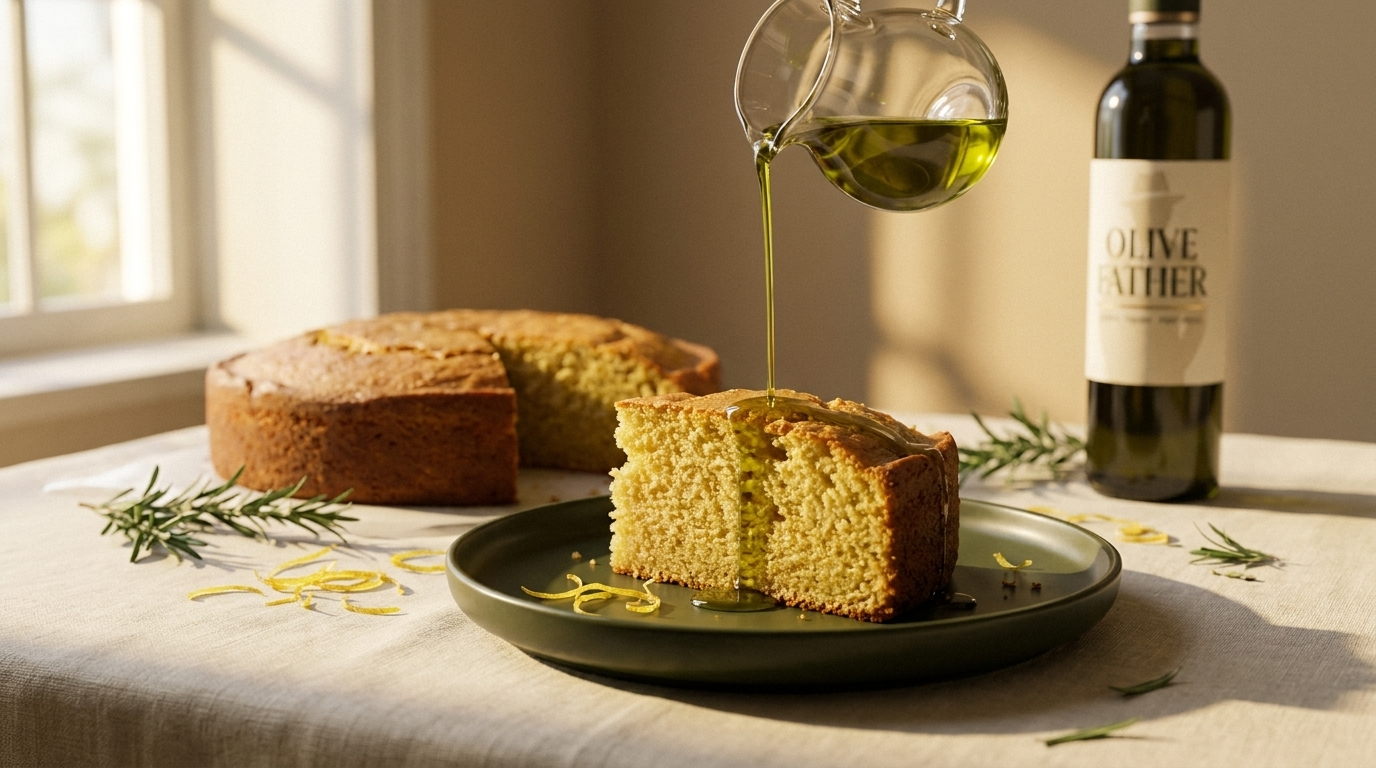
    Rustic Italian olive oil cake with a slice cut, extra virgin olive oil being drizzled over the golden crumb

    Somewhere along the way, olive oil cake stopped being a curiosity on American menus and became the dessert everyone orders — the one that arrives looking humble and disappears first. Italians find the fuss charming, because in the olive-growing south, baking with oil was never a trend. It was simply what you did with the ingredient you had in abundance and trusted most. Here is why the cake works, what the oil actually does to the crumb, and how to make one that tastes like it came from a grove rather than a mix.

    Why oil makes a better crumb than butter

    The difference is physical, not sentimental. Butter is roughly one-sixth water; when a butter cake cools, that water helps the starches firm up, which is why yesterday’s pound cake feels dry. Olive oil is pure fat. It coats the flour’s proteins more completely, limits gluten development, and stays liquid at room temperature — so an olive oil cake is tender the day it is baked and often better on day two and three, when the flavors have settled into the crumb. That famous plush, springy, almost damp texture is not a baker’s trick. It is chemistry you can taste.

    Then there is the flavor itself. Butter gives a cake richness; a real extra virgin gives it a point of view — green, faintly bitter at the edges, with that peppery finish that oleocanthal leaves at the back of the throat. Sugar softens it, lemon sharpens it, and the result is a dessert that tastes like an ingredient rather than a technique.

    The one decision that makes or breaks it

    An olive oil cake has five or six ingredients, and the oil is a third of the batter’s character. This is not the place for the anonymous supermarket bottle — a vague blend that tastes of nothing will bake into a cake that tastes of sugar and regret. But it is also not a myth that you “can’t bake with good oil.” Heat mellows an oil’s sharpest edges but keeps its fruit; a fresh, genuinely extra virgin oil bakes into something floral and gently grassy. We wrote about the broader smoke-point misunderstanding in Can You Cook With Extra Virgin Olive Oil? — the short version is that a moderate oven is well within a real EVOO’s comfort zone.

    A useful rule from our own kitchen: bake with an oil you would happily eat on bread. If it has a harvest date, a named place, and a little pepper on the finish, it belongs in the batter. Our Organic Extra Virgin — pressed from a single Calabrian grove — is the bottle we reach for.

    A simple method that always works

    The proportions

    For one 9-inch cake: 3 eggs, 200 g sugar, 150 ml extra virgin olive oil, 120 ml whole milk, the zest of two lemons, 250 g flour, 2 teaspoons baking powder, a good pinch of salt. No mixer needed — a whisk and a bowl.

    The method

    Whisk the eggs and sugar until pale and slightly thickened — two patient minutes. Stream in the oil, whisking as you pour, until the batter turns glossy; this is a loose emulsion, and it is where the crumb’s silkiness is decided. Whisk in the milk and zest, then fold in the dry ingredients just until no flour shows. Into a parchment-lined tin, 45–50 minutes at 170°C (340°F), until deep gold and a skewer comes out clean. Cool it in the tin — an olive oil cake is fragile warm and magnificent at room temperature.

    Serve it the Italian way: a dusting of powdered sugar, nothing else — or go where the restaurants go and add a pinch of flaky salt and a fresh thread of the same oil you baked with, poured at the table. That final raw drizzle is where a truly fresh oil — the kind we describe in our tasting notes — earns its keep, aroma fully intact.

    A cake that keeps

    Wrapped at room temperature, the cake stays moist for four days — it genuinely improves overnight, which makes it the rare dessert you should bake ahead on purpose. It wants espresso in the afternoon, vin santo after dinner, and no occasion at all.

    Bake it with the real thing. Olive Father is single-source Italian extra virgin — one grove, one harvest date on every bottle, pressed by a family that has done this for six generations. Explore the range and taste what the cake has been trying to tell you.

  • Olive Oil vs Butter: Which Is Better? An Honest Answer From an Olive Oil Family

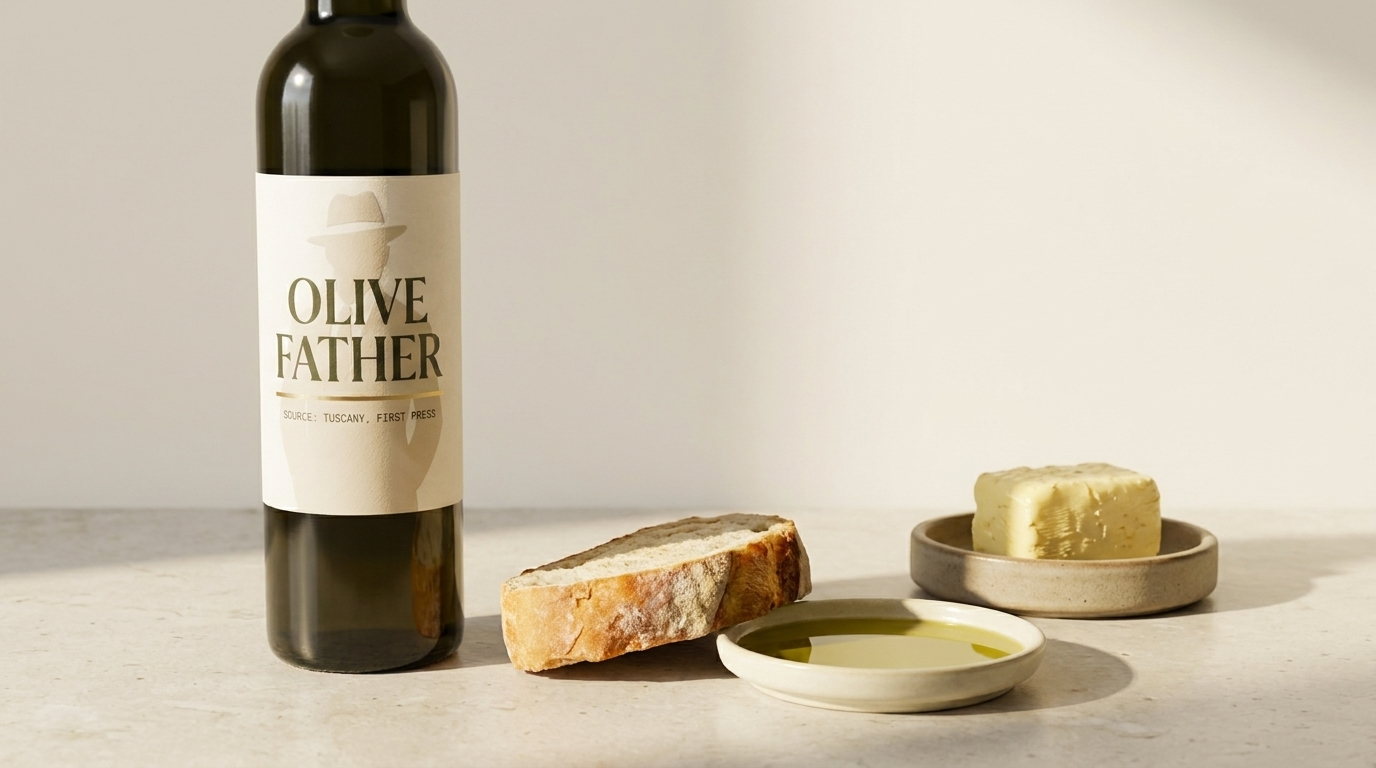
    An Olive Father bottle beside a block of butter, rustic bread and a saucer of green-gold olive oil on a stone counter

    Let us begin with a confession: we press olives for a living, so you know where our heart is. But the butter-versus-olive-oil question deserves a fair answer, not a partisan one — because both are real foods with real kitchens’ worth of history, and the honest comparison is more useful than the internet shouting match. Here is how the two fats actually differ: in the body, in the pan, and on the palate.

    Two entirely different things that share a dish

    Butter is a dairy fat: cream, churned until the fat separates, roughly 80 percent fat with milk solids and water making up the rest. Extra virgin olive oil is not a manufactured fat at all — it is the fresh-pressed juice of a fruit, 100 percent fat by composition but carrying the fruit’s own antioxidants, pigments and aromas with it. One comes from a barn, the other from a grove, and everything else follows from that difference.

    The health question, answered without hysteria

    The core difference is the kind of fat. Butter is mostly saturated fat — about 60 to 65 percent of its fatty acids. Extra virgin olive oil is dominated by monounsaturated oleic acid, typically 70 percent or more. Decades of cardiovascular research, including major reviews and the landmark PREDIMED trial, point the same direction: replacing saturated fat with unsaturated fat is associated with better blood-lipid profiles and lower cardiovascular risk. That word replacing matters — the benefit shows up when olive oil takes butter’s place, not when it is poured on top of an unchanged diet.

    Extra virgin oil also brings something butter simply does not have: polyphenols, the antioxidant compounds behind its bitterness and peppery bite, which carry a recognized European health claim for protecting blood lipids from oxidative stress. The catch is that only genuine, fresh extra virgin oil delivers them in meaningful amounts — refined “light” olive oil does not. We cover the full evidence in our guide to what the science actually supports, and the compounds themselves on our polyphenols page.

    None of this makes butter poison. It makes butter an occasional pleasure, and olive oil a daily foundation — which is precisely how the Mediterranean has eaten for centuries.

    In the pan: heat, behavior, and the smoke point myth

    Butter burns easily. Its milk solids scorch around 350°F (175°C), which is why recipes clarify it or add oil to the pan. A quality extra virgin olive oil smokes at roughly 375–410°F, and — more importantly — its monounsaturated structure and antioxidants keep it stable under everyday heat. For sautéing, roasting, and frying, olive oil is the more forgiving fat, a point we unpack in the truth about smoke point.

    Where butter genuinely wins

    Honesty requires the list: laminated pastry, where butter’s solid structure creates the layers; classic French pan sauces mounted with cold butter; brown butter’s nutty magic over sage or scallops; and traditional baking where creamed butter builds the crumb. No olive oil replicates those. A serious kitchen keeps both — it simply reaches for them at different moments, and in different proportions.

    Where olive oil wins

    Everywhere else, and it is not close: every salad, every roasted vegetable, every soffritto, grilled fish and meat, beans, bread, pasta — and yes, cakes, where olive oil produces a moist, fragrant crumb Italians have baked with for generations. Raw, at the table, is where a great extra virgin does what no butter can: it finishes a dish with aroma, bitterness and pepper that are, quite literally, the taste of its antioxidants.

    The verdict

    For daily cooking and for your heart, olive oil is the better default — the research is consistent, and so is the tradition behind it. Keep butter for the moments only butter can deliver. And if you are choosing an olive oil to be your daily fat, choose one that actually contains what the science measured: fresh, single-source, genuinely extra virgin. That is the entire idea behind our range — and if you enjoyed this comparison, our avocado oil versus olive oil piece gives the same honest treatment to the other shelf neighbor.

  • How Is Olive Oil Made? Every Step From Tree to Bottle, Explained

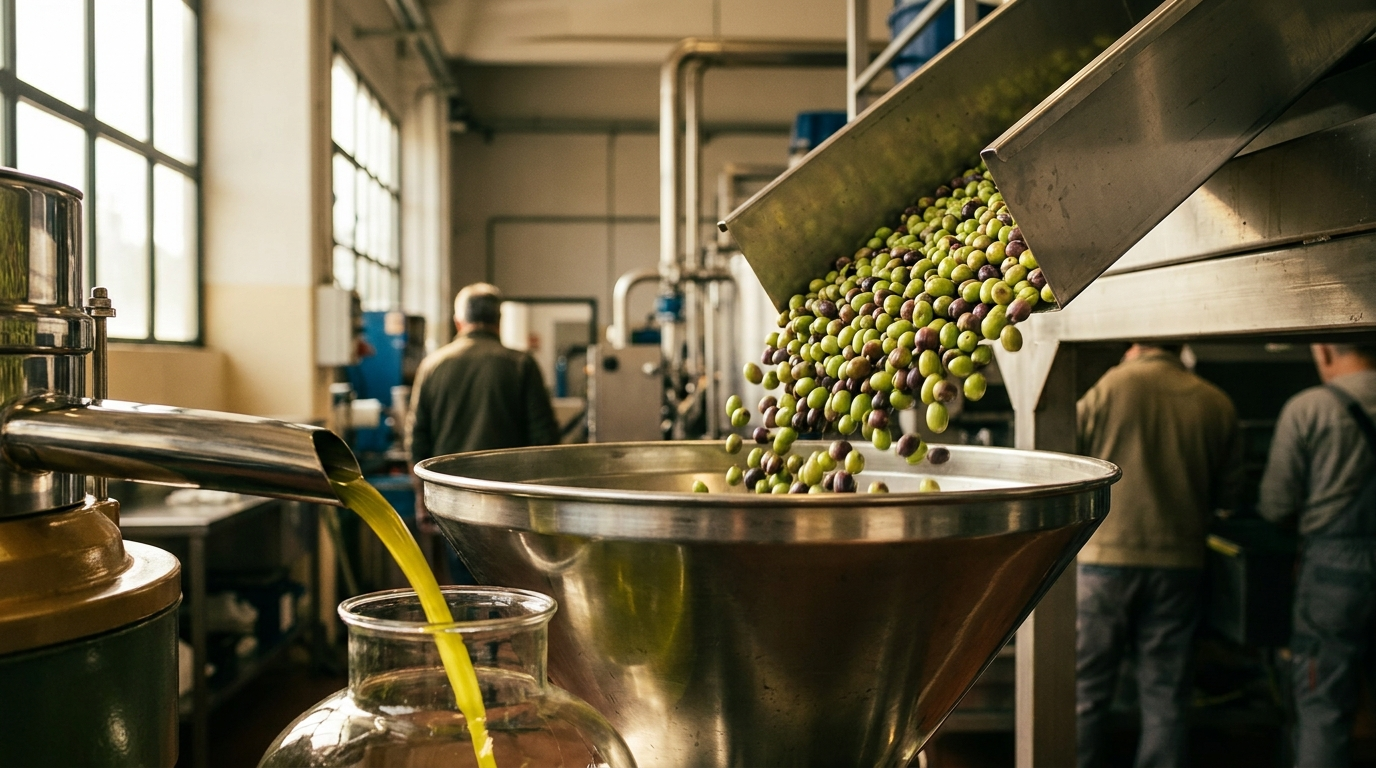
    Fresh olives entering a stainless steel mill as a ribbon of green-gold extra virgin olive oil flows from the separator

    Most people have poured olive oil their whole lives without ever seeing how it comes to exist. The surprise, when you finally watch it happen, is how little stands between the tree and the bottle. Olive oil is not brewed, refined, or formulated. It is a fresh fruit juice, squeezed from a stone fruit and separated from its own water — and every single step is a place where the oil is either protected or quietly ruined. Here is the whole process, from someone whose family has done it for six generations.

    First, understand what you are making

    An olive is a drupe — a cousin of the cherry and the plum — and its flesh is full of tiny droplets of oil. Making olive oil is simply the craft of freeing those droplets without damaging them. There is no cooking and no chemistry in true extra virgin oil; the entire legal definition requires that the oil be obtained by mechanical means alone. That is also the clock ticking over the whole operation: from the moment an olive leaves the branch, enzymes and oxygen begin degrading it. Speed and care are the recipe.

    Step 1: The harvest — the decision that shapes everything

    Quality is decided first in the grove. Olives picked early — green, or just turning — give less oil but far more flavor and polyphenols; olives left to blacken give more liters of something flat and fragile. Serious producers accept the smaller yield and pick early, by hand or with gentle rakes and nets, never letting fruit bruise on the ground. The best mills will not accept fruit that has sat overnight. We describe our own timing on our harvest and cold pressing page.

    Step 2: To the mill within hours

    The interval between picking and milling is the most honest measure of a producer’s seriousness. Hours are good; same-day is the standard that matters. At the mill the fruit is washed, stripped of leaves, and crushed whole — stone and all — into a thick paste. Modern mills use stainless steel crushers rather than the old granite wheels, not for romance but for hygiene and speed.

    Malaxation: the slow stir

    The paste is then gently churned for thirty to forty-five minutes so the microscopic oil droplets find each other and merge. This is where the phrase “cold extraction” earns its meaning: under European rules the paste must stay below 27°C (about 80°F). Warm the paste and you would get more oil — and lose the aromas and antioxidants that make it worth having. It is the single clearest trade of quantity for quality in the whole process, and it is why the words on the label deserve scrutiny, as we explain in our guide to what cold pressed really means.

    Step 3: Separation — juice from water from solids

    An olive is mostly water. A horizontal centrifuge called a decanter spins the paste so it splits into three streams: oil, vegetal water, and the solid pomace of skins and pits. A second, vertical centrifuge polishes the oil further. What flows out of that final spout — green, cloudy, alive, often literally still cool from the process — is extra virgin olive oil. It has existed for less than a day, and it will never taste better than it does at that moment.

    Step 4: Rest, filter, and bottle in the dark

    Fresh oil rests briefly in sealed stainless steel tanks, usually under inert gas so oxygen cannot reach it. Most fine producers then filter it — removing the fruit particles that would eventually turn to sediment and shorten its life — and bottle it in dark glass or tins, because light is one of oil’s three enemies, along with heat and air. From there the countdown continues gently: a well-made oil is at its best within about eighteen months of harvest, which is why a printed harvest date matters more than any medal on the label.

    Where great oil is won — and where cheap oil cheats

    Notice what this process has no room for: waiting, heating, blending, deodorizing. Industrial “olive oil” exists because each of those shortcuts recovers money at the cost of the fruit — late-picked olives, hot extraction for yield, tanker blends from many countries, refining to strip away defects. The result is technically oil and spiritually nothing. Every step we have described happens on one estate, within hours, for every bottle we make — that is the meaning of our grove to bottle promise and our single-source guarantee.

    Once you have seen how olive oil is made, the bottle in your kitchen stops being a commodity and becomes a verdict on how it was treated. Taste one made the slow way — explore our oils, each pressed within hours on a single Calabrian estate.

  • Olive Oil Pasta: The Five-Ingredient Dish That Tells You Everything

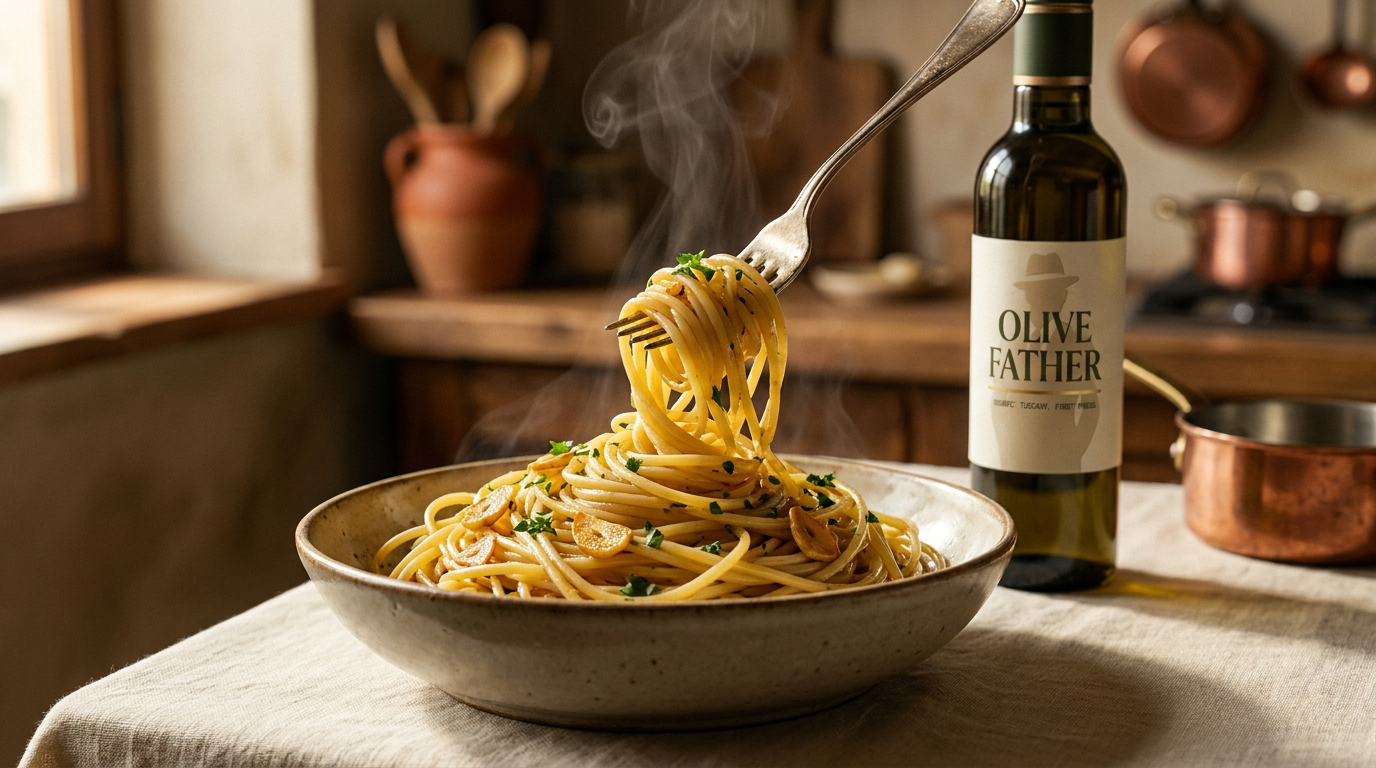
    A bowl of bronze-cut spaghetti glistening with extra virgin olive oil, garlic and parsley beside a bottle of Olive Father olive oil

    Every food culture has a dish that functions as a lie detector. For Italy, it is pasta dressed in olive oil. Spaghetti aglio e olio — garlic and oil — asks for five ingredients and about fifteen minutes, and precisely because there is nowhere to hide, it tells you the truth about every one of them. The garlic can be forgiven for being ordinary. The parsley is a garnish. The pasta and the oil are the dish, and if either one is mediocre, dinner will say so out loud.

    The dish is really an emulsion

    The secret that separates a glistening, silky olive oil pasta from a greasy one is not an ingredient at all. It is starch. When you finish the pasta in the pan with a ladle of its own cooking water, the starch in that water binds with the oil and emulsifies it into a light sauce that clings to every strand instead of pooling at the bottom of the bowl. This is the same principle behind every great Roman pasta, and it costs nothing. Save a cup of pasta water. Always.

    How we make it at home

    The method

    Boil the spaghetti in well-salted water, one minute short of the package’s al dente time. While it cooks, warm a generous pour of extra virgin olive oil in a wide pan over gentle heat with thinly sliced garlic — the garlic should turn fragrant and barely golden, never brown, because burnt garlic is bitter in the wrong way. Add chili flakes if you like heat. Transfer the pasta straight into the pan with a ladle of cooking water, raise the heat, and toss hard for a full minute until the liquid tightens into a sauce that coats the strands. Off the heat, add parsley and — this is the part most recipes miss — one more pour of raw oil, so its aroma arrives at the table alive. That final flourish is the finishing-oil principle we explored in why your best olive oil goes on last.

    The pasta matters more than you think

    A dish this minimal exposes industrial pasta instantly. Teflon-extruded spaghetti is smooth and glassy, and sauce slides off it. Bronze-cut pasta — extruded through traditional bronze dies — has a rough, porous surface that drinks in the emulsion and releases more starch into the cooking water, which makes the sauce itself better. It is a compounding advantage, and it is the entire reason we make bronze-drawn pasta the way we do. If you are curious which shapes suit which sauces, our pasta shapes guide goes deep.

    The oil is the recipe

    Here is the honest arithmetic: in a plate of aglio e olio, olive oil is the largest flavor contributor by far. A tired, refined, anonymous oil gives you hot greased noodles. A fresh extra virgin — green, slightly bitter, peppery at the back of the throat — gives you a sauce with fruit, spice and length, from exactly the same recipe. The bitterness and pepper are not flaws; they are the taste of the polyphenols that make great oil worth seeking out, and they bloom beautifully against sweet garlic and wheat. If you want to train your palate to recognize that character, start with our tasting guide.

    Beyond aglio e olio

    Once the emulsion technique is in your hands, a whole family of suppers opens up: spaghetti with oil and lemon zest; orecchiette with oil, anchovy and breadcrumbs; cold summer spaghetti dressed like a salad with oil, tomato and basil. Each one is the same lesson repeated — good pasta, good oil, starch, motion — and each takes less time than delivery. You will find more of them among our recipes.

    Five ingredients, fifteen minutes, no place to hide. Cook it once with a supermarket blend and once with a single-estate oil pressed hours after harvest, and you will understand our entire company in one bite. When you are ready for the second version, explore the Olive Father range — the oil and the bronze-drawn pasta were made for exactly this plate.