Somewhere in every supermarket there is a shelf of bottles labeled “olive oil,” “pure olive oil” or “light tasting olive oil,” priced comfortably below the extra virgin next to them. The words sound gentle, even virtuous. What they actually describe is one of the least understood products in the aisle: refined olive oil — oil that could not qualify as extra virgin, sent through an industrial correction process to make it sellable. There is nothing illegal about it. But once you understand what refining is, you will read those labels very differently.
What refining actually does
Extra virgin olive oil is, at heart, fresh fruit juice: olives crushed and cold-extracted, nothing added, nothing removed. It must pass strict laboratory limits and a formal taste panel with zero sensory defects. Oil that fails — because the fruit was overripe, damaged, fermented, or the oil turned rancid — is called lampante, from the Italian for lamp oil, a nod to the days when it was fit only for burning.
Lampante oil cannot legally be sold as food in that state. So it is refined: treated with heat and processes such as neutralization, bleaching and deodorization until the defects — and nearly everything else — are gone. Out go the off-flavors, but with them go the aromas, the color, the bitterness, the pepper, and the great majority of the polyphenols that make real olive oil worth seeking out. What remains is a neutral, stable, nearly flavorless fat.
Then a splash of the real thing
Refined olive oil on its own is so characterless that producers blend a small percentage of virgin oil back in for color and a hint of flavor. That blend is what the label calls “olive oil” or “pure olive oil.” Read that again: “pure” on an olive oil label typically marks the refined blend, not the premium product. It may be the single most successful piece of wordcraft in the food business.
Decoding the grades on the shelf
Stripped of marketing, the grades you will actually meet are simple. Extra virgin is the top grade: mechanically extracted, defect-free, chemically within strict limits — the only grade we make, and the only one we would put our name on. Virgin is honest oil with minor sensory flaws, rarely seen in US stores. “Olive oil” / “pure olive oil” is refined oil with a splash of virgin. And “light” or “extra light” olive oil is the most refined of all — “light” describes the taste, not the calories, which are identical. If you have ever wondered why a “light” oil costs less than the extra virgin beside it, now you know: you are paying less because there is less in it.
Does refined oil have any place?
We will be fair: refined olive oil is not dangerous, and its neutrality and stability suit industrial kitchens frying at scale. But in a home kitchen the case collapses. A good extra virgin handles everyday cooking beautifully, and everything the refined bottle lacks — aroma, pepper, antioxidants, character — is precisely what you buy olive oil for. Choosing “light” oil to be healthy is like buying a guitar with no strings to enjoy quietly.
The test refining cannot pass
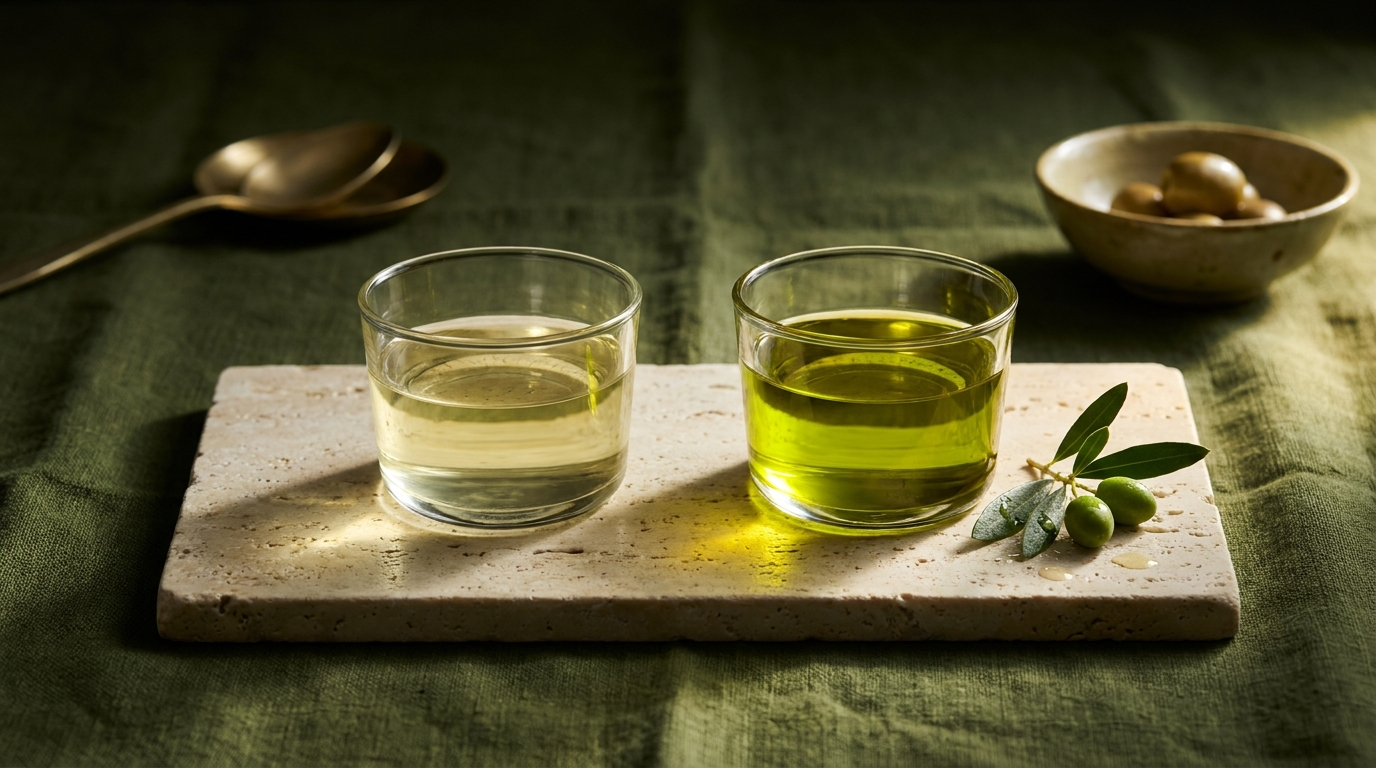
Here is the taste that tells the whole story. Pour a little refined blend into one cup and a fresh single-source extra virgin into another. One is pale, slick and silent. The other is green-gold, smells of cut grass and artichoke, turns pleasantly bitter mid-palate and finishes with a peppery catch in the throat. That pepper is oleocanthal, part of the polyphenol family that refining destroys and no blender can restore. It is the difference between a juice and an ingredient-grade fat — and once you taste it side by side, no label will fool you again.
This is why we are fanatical about what makes quality olive oil, and why every bottle we sell is traceable to a single named grove in Calabria — harvested green, cold-extracted within hours, never corrected, never blended. If your current bottle says “pure” or “light,” consider this your invitation to taste what olive oil is actually supposed to be. Start with the Olive Father range — the comparison will do the rest.
Leave a Reply