
Walk into a kitchen where the oil actually matters — a trattoria at the back end of service, a farmhouse in Calabria on a Sunday, the pass of a restaurant that means what it writes on the menu — and you will not find a row of precious little bottles. You will find a tin, sitting where the cook can reach it without looking. The tin is how people who cook with great oil every day buy great oil: by the litre, without rationing, without ceremony.
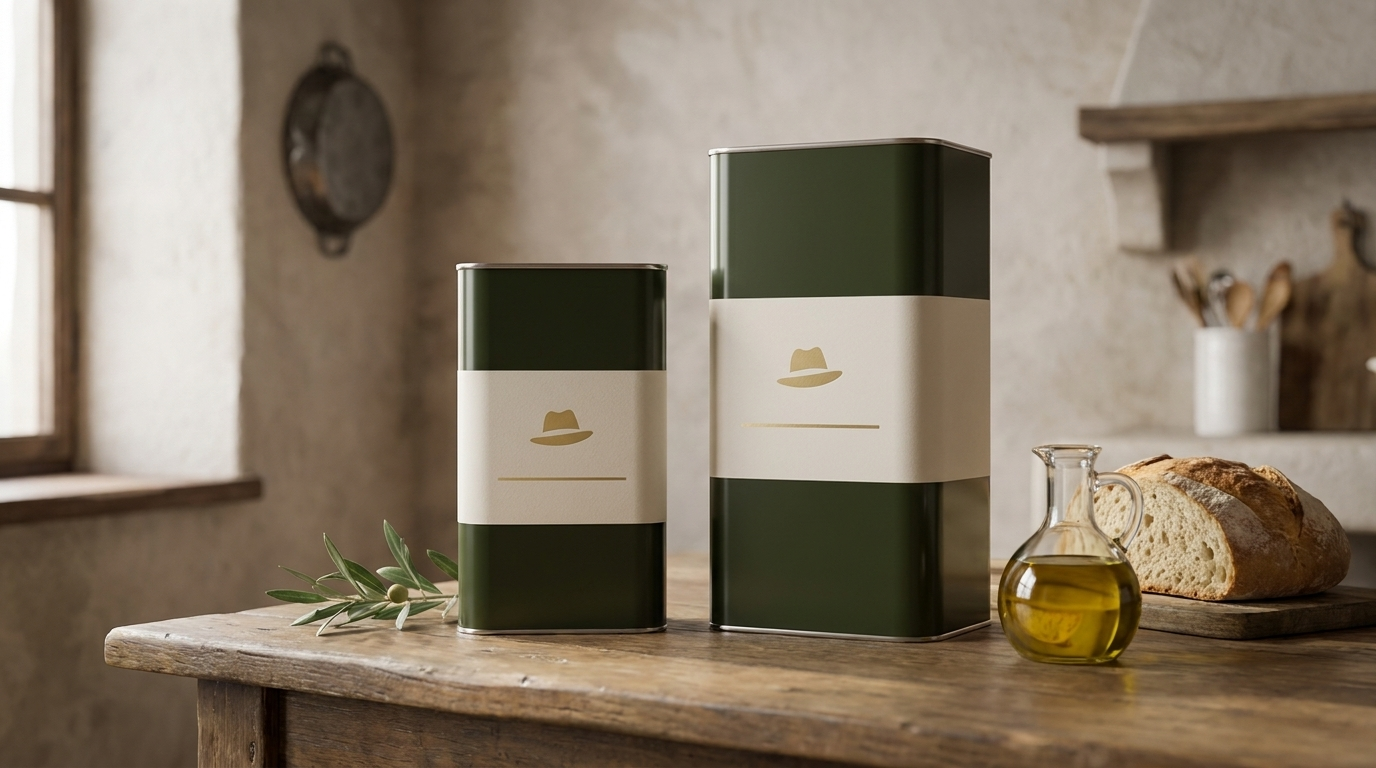
Our Organic Extra Virgin Olive Oil in 3 litre and 5 litre tins is that habit made available. It is not a lesser grade sold in bulk. It is the identical certified-organic, single-source oil we put into dark glass, in the format built for a kitchen that never stops pouring.
The same oil. Not a bulk grade.
This distinction is worth being blunt about, because much of the industry blurs it. Across most of the trade, the large format is where quality quietly drops — the tin becomes the home for the flatter lots, the blended oil, the fruit that did not make the cut for the retail bottle. It is a widespread practice and almost nobody advertises it.
We do not run two standards. What goes into the 5 litre tin is what goes into the 500 millilitre bottle described on our Organic EVOO bottles page: the same early-harvest fruit, from the same named groves in San Procopio, picked in the same short window and milled within hours. Same harvest and cold-pressing discipline. Same lot stamp, carrying the same traceability back to a single grove and a single pressing date. Same certified-organic farming. Only the vessel changes.
What it tastes like
Poured fresh from a newly opened tin, the oil arrives green — cut grass, green almond, a note of artichoke and tomato leaf that belongs to fruit picked before it turned soft. The body is medium and clean rather than heavy. Bitterness builds through the middle of the palate, and then the finish catches: a distinct peppery grip at the back of the throat, sometimes enough to make you clear it.
That catch is not a flaw and it is not seasoning. It is oleocanthal, one of the polyphenols that early picking preserves and that time, heat and light steadily destroy. It is the most reliable thing your own mouth can tell you about an oil’s freshness, and it is the reason we care so much about the container. If you want to learn to read it deliberately, our tasting guide walks through the method a judging panel uses.
Why a tin is, quietly, the best vessel ever made for olive oil
Olive oil has three enemies: light, heat and oxygen. Light is the fastest of the three and the one most kitchens ignore entirely.
Light
Photo-oxidation is not slow. Under bright light, the chlorophyll that gives fresh oil its green cast turns from an asset into a catalyst, accelerating the breakdown of the aromatics and burning through the antioxidants that made the oil worth buying. This is why a clear bottle under supermarket lighting is a slow execution, and why we use dark glass at all. A tin is the absolute case: fully opaque, zero light transmission, permanently. Nothing in glass, however dark, matches it.
Oxygen
Every time a bottle is opened and poured, air replaces what left. A large sealed tin spends most of its life untouched, with far less surface area exposed per litre poured than a bottle that is opened twice a day for a month. Sealed and stored properly, the tin is the slowest-ageing format in a working kitchen — which is exactly why the decanting habit below matters so much.
Heat
The one thing the tin cannot solve for you. Heat is the enemy you control by where you put it. The cupboard, never the shelf above the range — the warmest square metre in most kitchens is precisely where most people keep their oil.
The decanting ritual
Thirty seconds a week, and it is the single best habit a tin owner can have. Decant roughly a week’s pouring into a small dark bottle or a proper pourer, and leave the mother tin sealed and cool. The working bottle stays lively; the reserve stays effectively untouched. Done properly, the last pour out of a 5 litre tin tastes very nearly like the first — which is the entire economic case for buying the large format rather than a false one.
Do not decant the whole tin into a row of bottles at once. That defeats the point: you would be trading a single sealed vessel for several partly filled ones, each with its own headspace of air.
Who the tins are for
- Restaurants and chefs finishing plates with an oil whose origin can be printed on the menu — a named grove and a harvest year, not a house blend of unstated provenance.
- Delis, bakeries and specialty kitchens that go through oil weekly and need supply they can count on at a cost per litre that works.
- Serious home cooks who pour good oil daily and would rather buy well once than buy small repeatedly.
- Large households where a 500 ml bottle lasts a week and rationing good oil starts to feel faintly absurd.
How to actually use it
Generously, and for everything. The single most common mistake with a good oil is treating it as too precious to cook with — a fresh, high-polyphenol extra virgin is more stable under heat than its modest smoke point suggests, and the flavour it returns is the point. Sauté in it, roast in it, build your sauces and dressings on it, and then finish the plate with a raw pour from the working bottle, where the aromatics arrive intact.
The tin exists to make that generosity affordable. An oil you are frightened to use is an oil that will be stale before it is finished.
Formats and storage, briefly
Available in 3 L and 5 L. Store upright, cool, dark and away from the stove. Once opened, aim to finish within a few months — and let the harvest date on the tin, not a distant best-before, be the number you judge freshness by. If you want the reasoning behind that, our page on grove to bottle explains what each step costs and preserves, and why supermarket oil is a different product covers what happens when those steps are skipped.
Buying in volume
If you run a restaurant, deli or specialty shop, the tin is the natural place to start. Our wholesale programme is built for exactly this: volume pricing, reliable supply through the season, and full lot-level traceability on every case, so your menu claim is one you can defend.
Tell us how much you pour in a month and we will make it simple. Get in touch, or see the full range.