
Stand beside the press in a small Calabrian pasta workshop and you hear the difference before you taste it. Bronze does not let dough glide; it resists. The motor works audibly harder as golden semola is forced through the aged metal, and what emerges is pasta with a surface like fine sandpaper — matte, pale, faintly rough under the thumb, dusted with its own starch. Industrial factories solved this “problem” decades ago with Teflon-coated dies that let dough race through slick and glassy. We kept the problem. The problem is the point.
What the bronze die actually does
As dough passes through bronze, the metal drags against it, tearing the surface at a microscopic scale into thousands of ridges, pores and starch-rich peaks. On a smooth Teflon strand, sauce is a coat of paint; on a bronze-drawn one, it is mortar in brickwork. The porous surface releases more starch into the cooking water, that starchier water binds the sauce, and the rough wall gives it something to hold. This is why the pasta in a serious trattoria seems fused with its sauce while the same recipe at home slides apart — the die decided the outcome before the water ever boiled. We wrote a full explainer on why the bronze die makes all the difference if you want the mechanics.
100% Italian durum wheat, coarsely milled
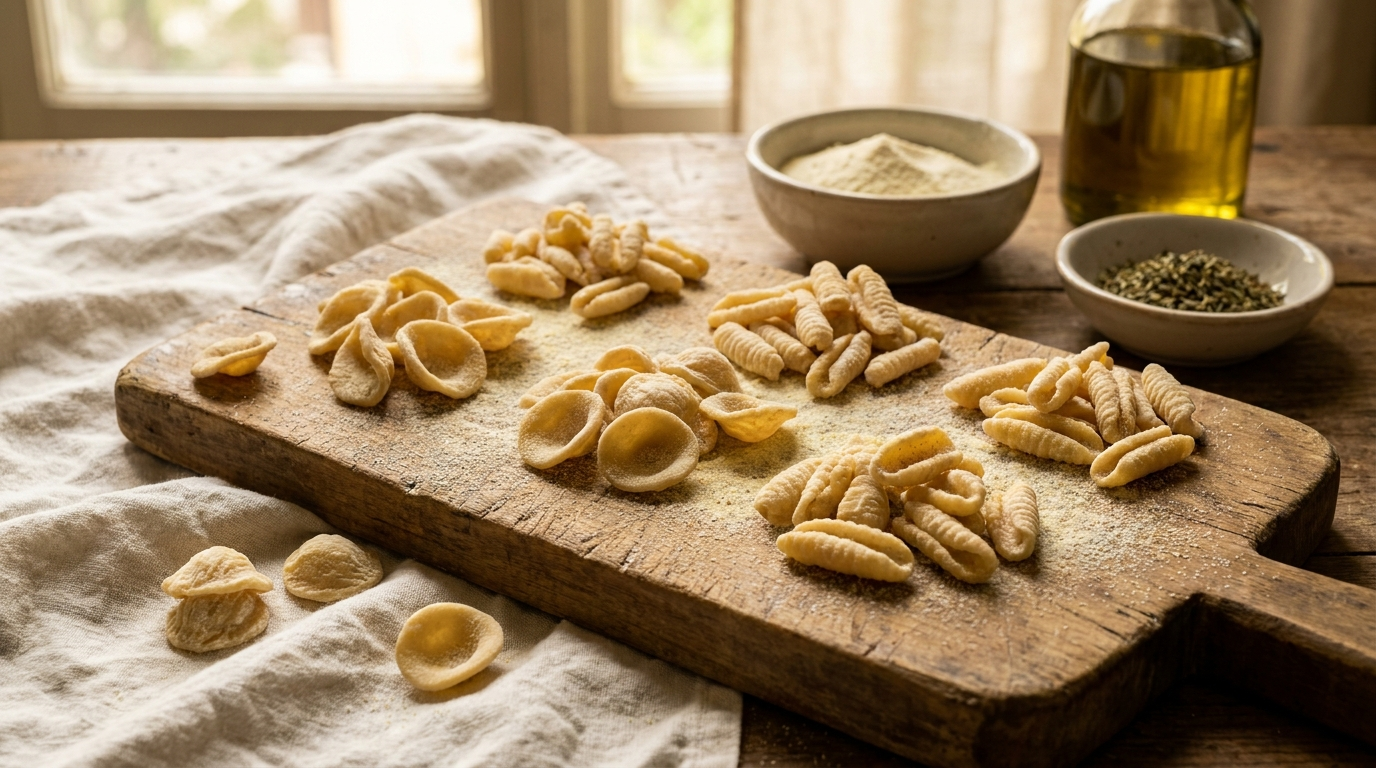
None of it matters without the wheat. Our pasta begins as 100% Italian grano duro — hard durum wheat milled into a coarse, amber semola with the protein and gluten strength to stand up to bronze extrusion and a real al dente. Strong gluten is what lets a rigatone stay springy at the center while its ridged wall softens; weak, cheap semolina collapses into uniform mush and dissolves its edges into the pot. Bite through a properly cooked strand and you should meet a thin, pale core of resistance — the anima, Italians call it. The soul. Our guide to what al dente really means shows you how to find it every time.
Slow-dried at low temperature
Industrial pasta is dried fast and hot — hours compressed by temperatures that toughen the protein, flatten the wheat’s aroma and leave the pasta tasting of nothing at all. Ours dries the old way: slowly, gently, over many hours at low temperature, the way you would dry anything you intend to keep alive. Slow drying preserves the nutty, faintly sweet flavor of the durum itself, protects its nutritional character, and builds a structure that cooks evenly, holds its shape and forgives the extra minute at a rolling boil. Fast drying is a manufacturing decision. Slow drying is a cooking decision, made months before you ever fill the pot.
Made on the slopes of Aspromonte
Our pasta is made in Calabria, on the slopes of the Aspromonte massif in Italy’s deep south — mountain air, sea light, and a culinary tradition that never had money to waste on shortcuts. Eighteen shapes in all, from everyday spaghetti to the grand formats built for hearty southern sauces. Every cut exists for a reason and answers to a particular sauce, which is exactly what our guide to pasta shapes and cooking untangles.
How to tell bronze-drawn pasta from the rest
Hold a piece up to the light. Bronze-drawn pasta is pale straw, opaque and chalky, with a surface that scatters light rather than reflecting it. Teflon-extruded pasta is deeper yellow, smooth and slightly translucent, almost lacquered. Run a thumb across it: bronze feels like unglazed ceramic, Teflon like glass. Drop it in water and watch the pot — bronze-drawn pasta clouds the water with starch within a minute; smooth pasta leaves it nearly clear. The Italian phrase to look for on a label is trafilata al bronzo. If it also says essiccazione lenta — slow drying — you have found the real thing.
Cooking it properly
Use more water than you think and salt it until it tastes like the sea. Bronze-drawn pasta releases a lot of starch, so it needs room. Cook it one to two minutes short of the packet time, then finish it in the pan with your sauce and a ladle of the cloudy cooking water; the rough surface and the starch do the rest, pulling sauce and pasta into one glossy emulsion. This is the whole technique behind cacio e pepe, aglio e olio and every great olive oil pasta — and it simply does not work with a slick, fast-dried noodle.
Is it healthier?
Bronze-drawn, slow-dried durum pasta is still pasta — we will not pretend otherwise. But properly cooked al dente durum wheat pasta has a lower glycemic response than overcooked or soft-wheat pasta, and the intact protein structure of slow drying is part of why. Portion it the Italian way, dress it with vegetables, legumes and real extra virgin olive oil, and it is one of the most satisfying things you can eat for the calories. We go through the evidence in is pasta healthy?
The perfect partner
Bronze-drawn pasta and single-estate extra virgin olive oil are two halves of the same argument: that texture and flavor are made at the source, not added later. Toss the drained pasta with a ladle of its own starchy water, finish with a raw pour of our oil off the heat — the rough surface drinks the emulsion, and a two-ingredient dish becomes the whole point of dinner. Start with the recipes, then explore the range. Restaurants and retailers can find case pricing on our wholesale page.