
Walk into our organic groves in early summer and the first thing you notice is the noise. Bees working the wild clover between the rows. Wind moving through cover crops we planted on purpose and wildflowers we simply allowed to stay. A conventional grove at the same hour is silent — bare swept earth between the trunks, nothing alive but the crop itself.
That difference in sound is the entire philosophy of ETRURIUM Organic. The same fierce, green-hearted Tuscan oil we press under our IGP label, grown in a grove that is audibly, measurably alive.
What organic actually changes — and what it doesn’t
Let us be precise, because this is a category thick with vague language. Organic certification changes nothing about the oil itself. Nothing is ever added to a true extra virgin; it is fruit juice, pressed mechanically and filtered or not. What organic governs is everything that happens in the three to four years before the fruit reaches the mill.
No synthetic nitrogen fertiliser. The soil is fed instead with leguminous cover crops that fix their own nitrogen, with composted pomace returned from the press, and with time. No chemical herbicides: the ground between the rows is mown and grazed, never sprayed bare. No systemic pesticides: pheromone traps, beneficial predator insects and the grove’s own biodiversity manage the olive fly, and some years that means we lose fruit we would otherwise have saved.
Every practice is logged, inspected on-site and re-certified season after season by an accredited body — and every certificate traces back to one named place, because single-source traceability is the architecture underneath everything we bottle. An organic seal on a blended oil of unstated origin tells you considerably less than it appears to.
Why it costs more, honestly
Organic yields per hectare run lower, sometimes markedly so in a bad fly year. Mowing costs more labour than spraying. Compost is slower than a bag of fertiliser. Certification itself is an annual expense. We have written plainly about the economics and the trade-offs in our page on organic and sustainable farming, and in a franker consumer-side piece asking whether organic olive oil is actually worth the premium. We think it is, for reasons of soil and grove longevity as much as flavour — but we will not pretend the seal by itself guarantees a better-tasting oil. Harvest timing and press speed matter more. Organic is how we farm; the harvest is how we make the oil.
Four cultivars, one certified hillside
ETRURIUM Organic comes from the same protected Tuscan hillsides that give the line its IGP identity — the geographic indication explained in our guide to DOP and IGP certification — planted to the classic Tuscan quartet.
Frantoio gives the backbone: green fruit, artichoke, structure and the long peppery finish. Leccino softens and rounds, contributing sweetness and almond. Moraiolo brings the ferocity — high polyphenol, intensely bitter, the cultivar that makes Tuscan oil taste like Tuscany. Correggiolo, Frantoio’s close cousin, adds aromatic lift and herbal complexity. Blended in the mill, not in a tank — all four grown on the same certified ground, harvested in the same week, pressed together. Our page on Italian olive varieties goes deeper on what each cultivar contributes.
The flavour of a living grove
Pour ETRURIUM Organic into a warmed glass and it comes up bright, opaque, cut-grass green. The nose is artichoke heart and green tomato leaf, with a cool mineral edge and a note of raw almond behind it.
The first taste is clean and unmistakably fruity. Then the bitterness builds across the mid-palate — deliberate, herbaceous, never harsh. And finally the signature Tuscan catch at the back of the throat, the cough-provoking pepper that tells you exactly what you are drinking. That pungency is not a defect. It is oleocanthal and its companions doing what they do, the same antioxidant compounds we cover in detail on our polyphenols page. We pick green and early, accept the smaller yield that comes with unripe fruit, and press within hours of picking — because that narrow window is where every bit of this intensity is won and lost.
At the table
This is a finishing oil before it is anything else. Let it fall raw over just-boiled cannellini beans while they are still steaming. Over grilled bitter greens, cime di rapa, charred radicchio. Over a bistecca resting off the fire. Stirred into a winter ribollita at the last moment, off the heat.
Its structure stands up to strong company — aged pecorino, anchovy, chilli, roasted garlic — without ever disappearing underneath them, which is the failing of gentler oils. To read every nuance it offers, spend ten minutes with our tasting and pairing guide before your next meal; the method is simple and it changes how you buy oil forever.
Formats and keeping
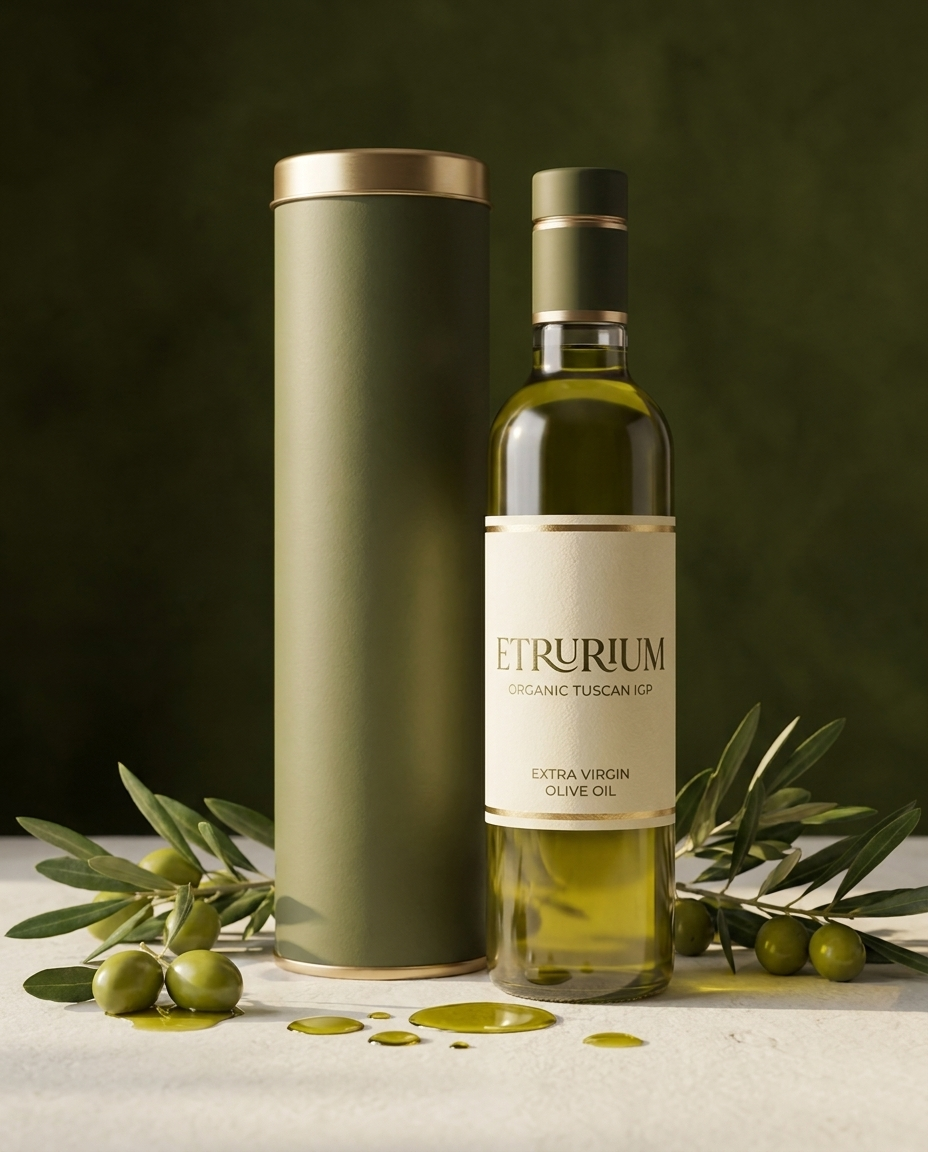
ETRURIUM Organic is bottled in 500ml and 750ml dark glass, and in protective tins for kitchens that cook with it daily or keep a reserve away from the light. Store it capped, cool and out of direct sun, and — this matters more than any seal on the label — use it while it is young. Organic or not, great olive oil is a fresh product, not a cellared one.
It sits alongside its sibling, the ETRURIUM Tuscan IGP, within the full range on our products page. If you are weighing it against a supermarket bottle at a third of the price, our page on why supermarket olive oil is a different product is the honest comparison.
The promise, plainly stated
Certified organic is a promise about how the fruit was grown. Single-source is a promise about where. A stated harvest date is a promise about when. ETRURIUM Organic keeps all three, from a living hillside in Tuscany to the table in front of you.
Six generations. One source. Read our story, or get in touch about early access and wholesale.