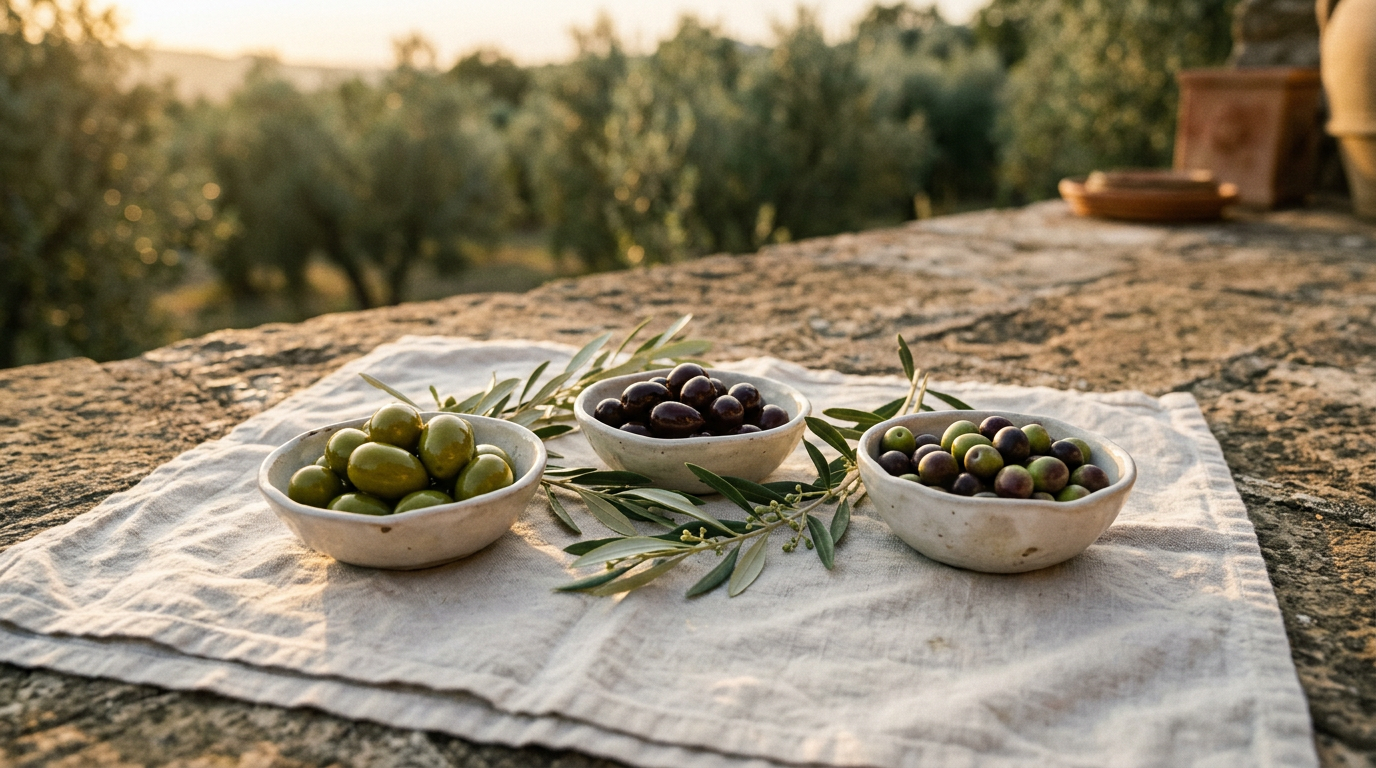
Wine drinkers learned long ago that “red” is not a flavor. Pinot Noir and Nebbiolo are different experiences because the grape is different. Olive oil works exactly the same way — Italy alone grows more than five hundred olive cultivars, more than any other country on earth — yet almost nobody shopping for oil ever asks the question they would never skip with wine: which olive is this? Learn a handful of the great Italian varieties and the label starts speaking to you.
Why the cultivar matters as much as the grape
The variety of olive determines nearly everything about the finished oil: the aromas it can express, the natural level of bitterness and pepper, the polyphenol load that decides how long the oil stays alive, even how forgiving the tree is of drought and altitude. A mill can ruin a great cultivar, but it can never add what the fruit did not bring. That is why serious producers talk about olives the way winemakers talk about grapes — and why a bottle that names its cultivars is quietly telling you it has nothing to hide. A bottle that says only “olive oil,” blended from unnamed fruit across unnamed countries, is telling you something too.
The great Italian cultivars, region by region
Frantoio — Tuscany’s backbone
If Tuscan oil has a signature, Frantoio wrote it. The name literally means “olive mill,” which tells you how central this olive is to the craft. Frantoio oils are intensely fruity and green — cut grass, artichoke, green almond — with a firm, structured bitterness and a peppery finish that announces a high polyphenol content. It is the backbone of most great Tuscan blends, including the classic quartet behind our ETRURIUM Tuscan IGP, where it works alongside three other varieties rather than alone.
Leccino and Moraiolo — the supporting cast that isn’t
Leccino is the diplomat: soft, round, gently fruity, the variety that smooths a blend’s edges and makes it welcoming. Moraiolo is its opposite — a small, stubborn mountain olive that gives fiercely herbaceous, pungent oil with real grip. Blended with Frantoio, they do what a good ensemble does in any craft: each covers the others’ silences. This is the logic of the traditional Tuscan blend — complexity by design, not by accident.
Coratina — Puglia’s polyphenol powerhouse
Head south into Puglia and you meet Coratina, the variety tasters call a “gladiator.” Coratina routinely posts some of the highest polyphenol readings of any olive in the world, and you can taste every milligram: bold bitterness, a pepper finish that can make a newcomer cough twice, and remarkable staying power in the bottle. It is not a beginner’s oil — but for cooks who understand that bitterness and pungency are the signature of antioxidant richness, Coratina is a destination.
Ottobratica and the olives of Calabria
Calabria — the toe of the boot, and one of Italy’s largest oil-producing regions — has cultivars most Americans have never heard of, and that obscurity is a quiet scandal. Ottobratica, native to the Tyrrhenian side of the region where our own grove stands, gives an elegant, aromatic oil: delicate fruit, notes of fresh herbs and tomato leaf, and a fine, balanced pungency. Alongside it grow Carolea and Sinopolese, each with its own accent. These are the olives behind Calabria’s best-kept-secret oils — pressed for centuries for local tables rather than export catalogs, which is precisely why they stayed honest.
One grove, known tree by tree
Knowing the cultivar only matters if you can trust the answer — and that trust comes from traceability. A blend of “EU and non-EU oils” cannot tell you what olive it was pressed from, because its own bottler may not know. A single-source oil can name the variety, the grove, and the week of harvest, because there is nothing to average away. That is the difference between an agricultural product and an industrial one, and it is the entire reason we bottle the way we do.
How to use this knowledge at the shelf
Start simple. If a label names its cultivars, that is a good sign — producers proud of their fruit say so. Match the variety to your table: a robust Frantoio or Coratina oil for grilled meat, beans and bitter greens; a gentler Ottobratica or Leccino-led oil for fish, fresh cheese and raw vegetables. And taste comparatively when you can — two single-variety oils side by side on bread will teach you more in five minutes than a year of labels.
When you are ready to taste what a named cultivar from a named grove actually delivers, explore our range — Calabrian single-source oils and the four-cultivar ETRURIUM from Tuscany, each one traceable to the trees it came from. The olive has a name. We think you deserve to know it.
Leave a Reply