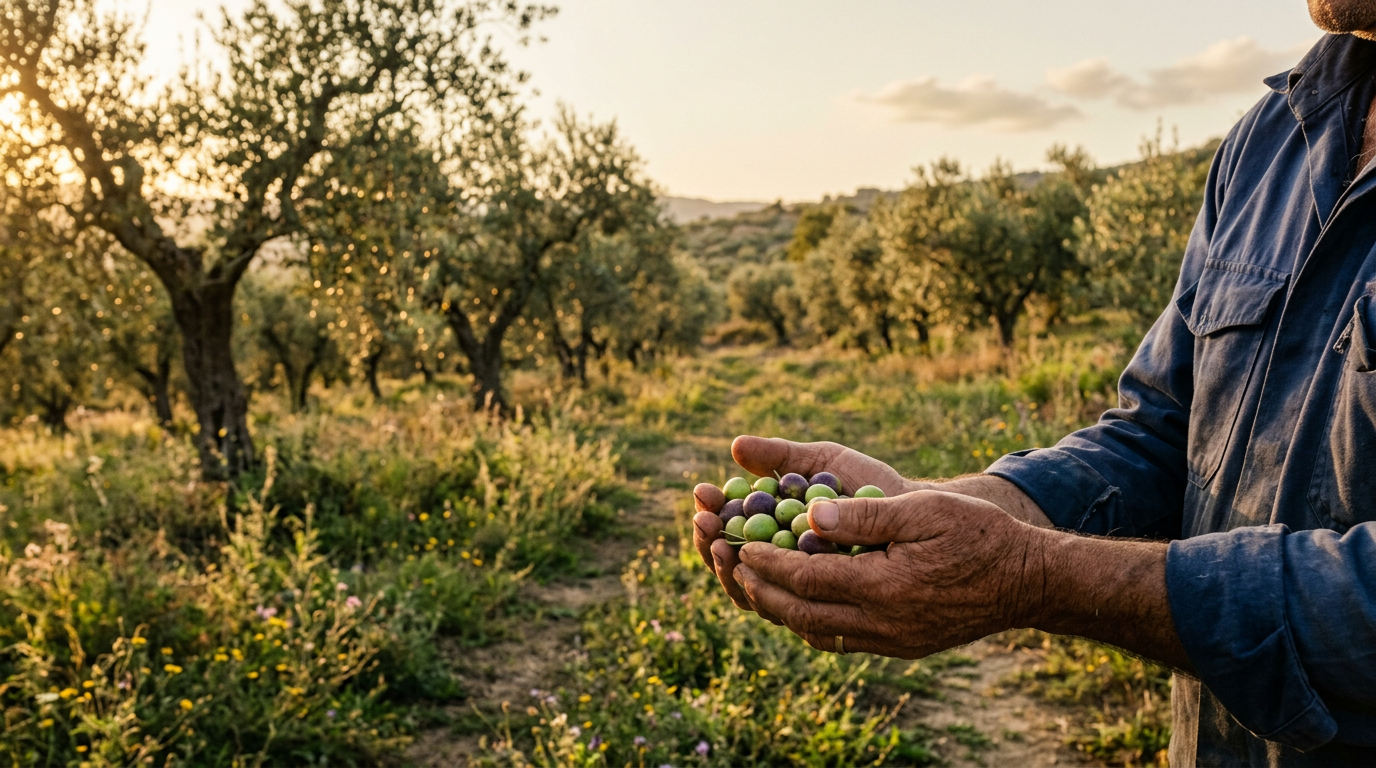
Organic olive oil costs more, and the little green leaf on the label asks you to take a lot on faith. So it is worth asking the question plainly: what does organic certification actually guarantee — and is it worth paying for? We farm organically ourselves, so we clearly have a view. But the honest answer is more nuanced than the marketing on either side, and understanding it will make you a sharper buyer of any olive oil, certified or not.
What “organic” actually guarantees
Organic certification is a legal claim about farming, verified by inspection. For olive oil, it means the grove is managed without synthetic pesticides, herbicides or fertilizers; that pests are controlled with traps, beneficial insects and timing rather than blanket spraying; and that the land is audited, documented and re-inspected, year after year, by an accredited body. In the European Union — where our groves are certified — that paper trail runs from the tree to the bottling line.
That is not nothing. It is a real, enforceable promise about what never touched your food, and in a product you consume raw, by the spoonful, that promise has obvious appeal. It also says something about the farm’s whole posture toward its land: cover crops between the rows instead of scorched, tilled earth; hedgerows and wild grasses that keep the hillside alive. On our own estate, that approach long predates the paperwork — a story we tell in full on our organic and sustainability page.
What organic cannot tell you
Here is the part the green leaf will never say out loud: organic is a farming standard, not a quality standard. Certification tells you how the trees were treated. It tells you nothing about when the olives were picked, how fast they reached the mill, how carefully they were pressed, or how the oil was stored. An organic grove that harvests late and presses slowly will produce a flat, tired oil — certified from the first tree to the last drop, and mediocre in the glass.
The two labels answer different questions
“Extra virgin” answers: is this oil well made? It is defined by laboratory limits and a clean sensory profile — the standards we unpack in what makes quality olive oil. “Organic” answers: how was the land farmed? Neither implies the other. The bottle worth your money answers both — and adds a third answer the regulations do not require: a harvest date, the single most honest number on any label.
So — is it worth it?
If you are choosing between an organic oil and a conventional oil of equal freshness and craftsmanship, we think the organic bottle earns its premium: cleaner farming, audited claims, and a living grove behind it. What is not worth paying for is the leaf alone — an anonymous “organic extra virgin” blended from unnamed sources, with no harvest date and no farm behind the label, is trading on the certification while skipping everything that makes oil great.
The good news: the same signals that mark out honest oil also mark out honest organic oil. A named estate. A single origin. A harvest date. A producer who will tell you their acidity numbers without being asked. When those line up with the certification, the premium stops being a leap of faith and becomes simple arithmetic — careful farming plus fast, cold pressing costs more, and delivers more.
How we do it
Our organic extra virgin comes from one certified grove in San Procopio, Calabria, farmed by the same family for six generations and pressed within hours of picking. It is the oil we pour at our own table, available in bottles for the counter and tins for the kitchens that cook with it daily.
Organic, single-source, and picked green. Taste what certification plus craftsmanship actually delivers — explore the range.
Leave a Reply