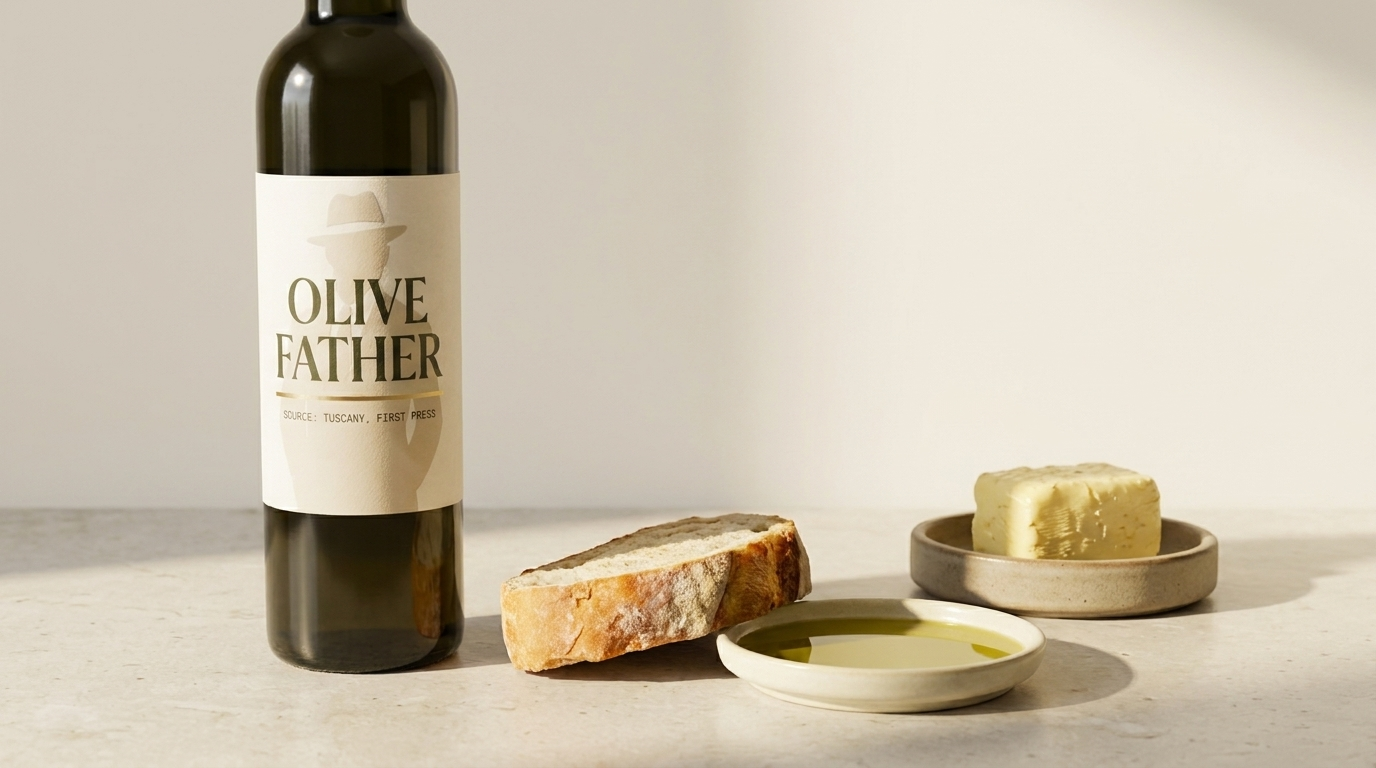
Let us begin with a confession: we press olives for a living, so you know where our heart is. But the butter-versus-olive-oil question deserves a fair answer, not a partisan one — because both are real foods with real kitchens’ worth of history, and the honest comparison is more useful than the internet shouting match. Here is how the two fats actually differ: in the body, in the pan, and on the palate.
Two entirely different things that share a dish
Butter is a dairy fat: cream, churned until the fat separates, roughly 80 percent fat with milk solids and water making up the rest. Extra virgin olive oil is not a manufactured fat at all — it is the fresh-pressed juice of a fruit, 100 percent fat by composition but carrying the fruit’s own antioxidants, pigments and aromas with it. One comes from a barn, the other from a grove, and everything else follows from that difference.
The health question, answered without hysteria
The core difference is the kind of fat. Butter is mostly saturated fat — about 60 to 65 percent of its fatty acids. Extra virgin olive oil is dominated by monounsaturated oleic acid, typically 70 percent or more. Decades of cardiovascular research, including major reviews and the landmark PREDIMED trial, point the same direction: replacing saturated fat with unsaturated fat is associated with better blood-lipid profiles and lower cardiovascular risk. That word replacing matters — the benefit shows up when olive oil takes butter’s place, not when it is poured on top of an unchanged diet.
Extra virgin oil also brings something butter simply does not have: polyphenols, the antioxidant compounds behind its bitterness and peppery bite, which carry a recognized European health claim for protecting blood lipids from oxidative stress. The catch is that only genuine, fresh extra virgin oil delivers them in meaningful amounts — refined “light” olive oil does not. We cover the full evidence in our guide to what the science actually supports, and the compounds themselves on our polyphenols page.
None of this makes butter poison. It makes butter an occasional pleasure, and olive oil a daily foundation — which is precisely how the Mediterranean has eaten for centuries.
In the pan: heat, behavior, and the smoke point myth
Butter burns easily. Its milk solids scorch around 350°F (175°C), which is why recipes clarify it or add oil to the pan. A quality extra virgin olive oil smokes at roughly 375–410°F, and — more importantly — its monounsaturated structure and antioxidants keep it stable under everyday heat. For sautéing, roasting, and frying, olive oil is the more forgiving fat, a point we unpack in the truth about smoke point.
Where butter genuinely wins
Honesty requires the list: laminated pastry, where butter’s solid structure creates the layers; classic French pan sauces mounted with cold butter; brown butter’s nutty magic over sage or scallops; and traditional baking where creamed butter builds the crumb. No olive oil replicates those. A serious kitchen keeps both — it simply reaches for them at different moments, and in different proportions.
Where olive oil wins
Everywhere else, and it is not close: every salad, every roasted vegetable, every soffritto, grilled fish and meat, beans, bread, pasta — and yes, cakes, where olive oil produces a moist, fragrant crumb Italians have baked with for generations. Raw, at the table, is where a great extra virgin does what no butter can: it finishes a dish with aroma, bitterness and pepper that are, quite literally, the taste of its antioxidants.
The verdict
For daily cooking and for your heart, olive oil is the better default — the research is consistent, and so is the tradition behind it. Keep butter for the moments only butter can deliver. And if you are choosing an olive oil to be your daily fat, choose one that actually contains what the science measured: fresh, single-source, genuinely extra virgin. That is the entire idea behind our range — and if you enjoyed this comparison, our avocado oil versus olive oil piece gives the same honest treatment to the other shelf neighbor.
Leave a Reply