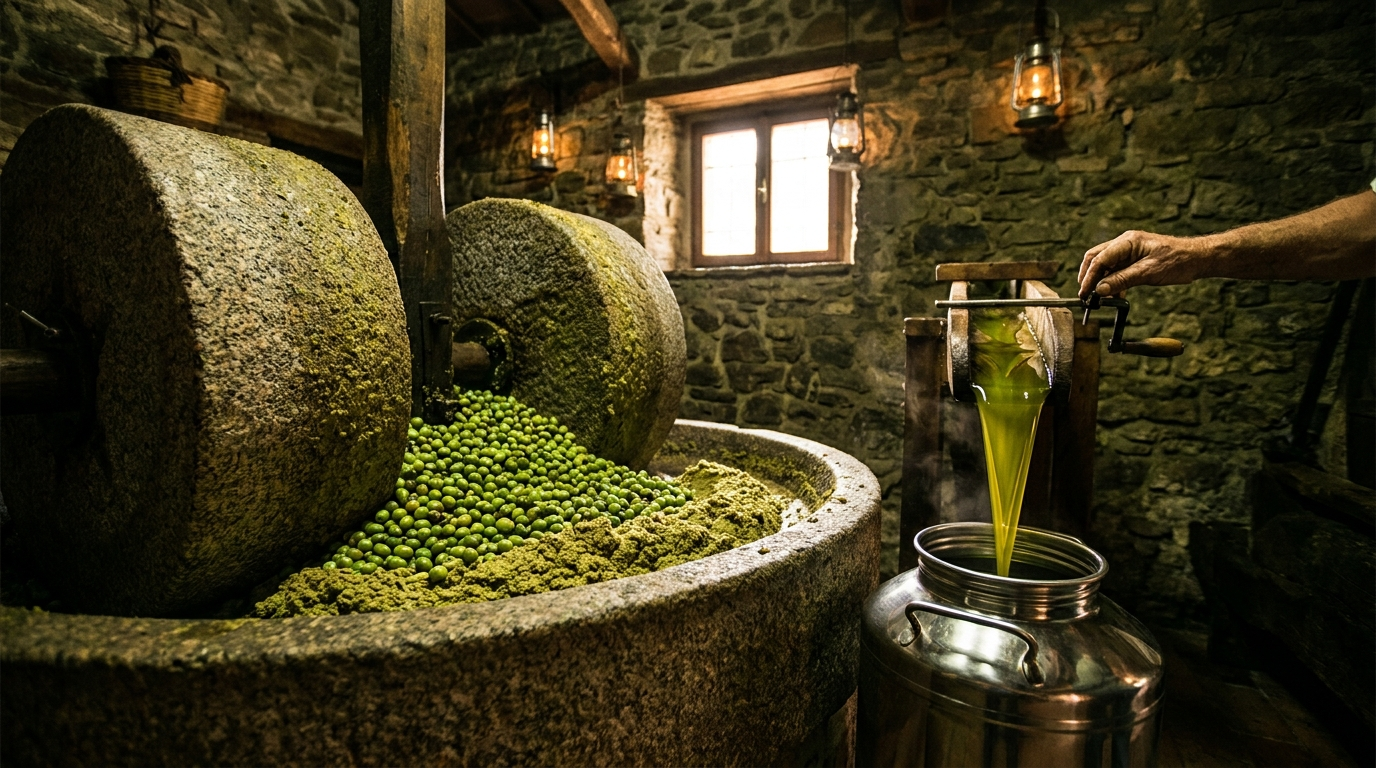
Pick up almost any bottle of extra virgin olive oil and you will find the words cold pressed — or their fancier cousin, first cold pressed — printed somewhere on the label. The phrase sounds artisanal, exclusive, almost secret. Here is the uncomfortable truth: on a modern bottle of extra virgin olive oil, it is one of the least informative claims you can read. Not because cold extraction doesn’t matter — it matters enormously — but because the phrase has been stretched so far that it no longer separates good oil from bad. Let us untangle it.
What Cold Pressing Actually Means
Under European rules, an oil may be labelled “cold extracted” only if the olive paste is worked below 27°C (about 80°F). That threshold exists for a reason. Heat speeds up extraction and squeezes more oil from the same fruit — which is why industrial producers love it — but it does so by cooking away the very things that make extra virgin olive oil worth having: the volatile aroma compounds that smell of cut grass and green tomato, and a meaningful share of the polyphenols that give a great oil its peppery finish and antioxidant power.
Keep the paste cool and you keep the oil alive. Push the temperature and you gain quantity at the direct expense of everything else. Cold extraction, in other words, is a deliberate sacrifice of yield for quality — and it is exactly how the oil in every Olive Father bottle is made, a discipline you can follow step by step on our harvest and cold pressing page.
Why “First Cold Pressed” Is a Museum Piece
“First pressed” made sense a century ago, when mills stacked olive paste between fiber mats and squeezed it under a screw press. The first pressing gave the finest oil; the mats were then pressed again — sometimes with hot water — to wring out lower grades. A second or third pressing was genuinely worse, so “first” meant something.
Almost nobody makes oil that way anymore. Modern mills — ours included — use continuous centrifugal extraction: the paste is spun, the oil separated, and there is simply no second pressing. Every genuine extra virgin olive oil made this way is, by definition, “first” extraction. The phrase survives on labels because it evokes tradition, not because it distinguishes one bottle from the next. It is marketing on a technicality — harmless, but empty.
When the Label Is Pure Theater
Here is where it turns from empty to misleading. “Cold pressed” printed on a blended oil of anonymous origin tells you nothing about the fruit itself — and the fruit is where quality is won or lost. Olives that sat in heaps for days before milling, fruit bruised by rough harvesting, oil from a dozen countries pooled in a tanker: all of it can be processed below 27°C and legally wear the same badge as a single-estate oil pressed within hours of picking. Temperature is one chapter of the story, not the whole book. The rest of that story — and what the big brands leave out of it — is on our why not supermarket oil page.
What to Look For Instead
A Harvest Date, Not Just a Best-By
Olive oil is fresh fruit juice. A producer proud of freshness prints the harvest date on the bottle; a producer hiding age prints only a best-by date, which can sit two years after bottling. If you find no harvest date at all, ask yourself why.
A Named Source
One estate, one grove, one family who answers for the result. A single-source oil can tell you exactly where the fruit grew and when it was milled. A blend, however cold it was processed, cannot.
Numbers a Producer Will Show You
Free acidity well below the 0.8% legal ceiling, low peroxide values, high polyphenols. Serious producers publish these figures; industrial bottlers hope you never ask. The chemistry is less romantic than a stone mill, but it is far harder to fake — we break it down plainly in the chemistry of olive oil quality.
The Bottom Line
Cold extraction is real, it matters, and any oil worth your table is made that way. But as a label, “cold pressed” is table stakes, not a trophy. Judge an oil by its harvest date, its source, its numbers, and above all its taste — that green, peppery vitality no marketing department can print onto a bottle. Ours comes from one Calabrian estate, picked early and pressed within hours, always below 27°C. Taste what cold extraction was meant to protect.
Leave a Reply