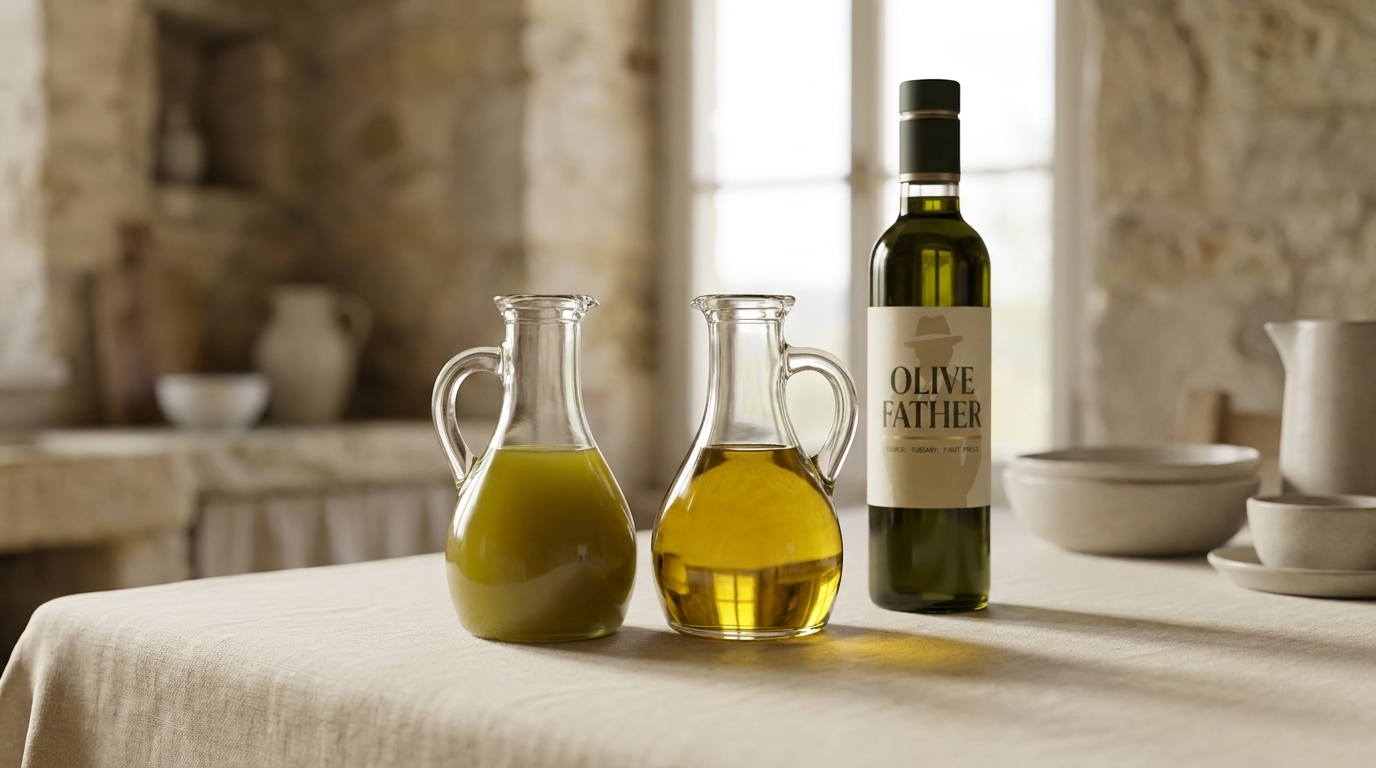
Few things look more authentic than a bottle of cloudy, golden-green olive oil. The haze whispers farmhouse, unprocessed, straight from the press — and next to it, a brilliantly clear oil can seem almost too polished to be honest. But in olive oil, as in most things we love, the romantic answer and the right answer are not always the same. Here is the truth about unfiltered oil, told the way we would tell it at our own table.
What That Cloudiness Actually Is
When olives are crushed and the oil is separated, it carries microscopic passengers out of the mill: tiny fragments of olive flesh, traces of vegetable water, suspended particles too fine to settle right away. Leave them in and you get the hazy, dense look of unfiltered oil — what Italians drink each November as olio nuovo, new oil. Filter them out and you get a clear, jewel-bright oil. The filtration itself is gentle and mechanical — the oil simply passes through cellulose or cotton — nothing is heated, added, or chemically touched. That distinction matters: filtering is not refining, and a filtered extra virgin is every bit as “whole” as an unfiltered one.
The Case for Unfiltered — For a Few Glorious Weeks
Fresh from the press, unfiltered oil is a genuine pleasure. The suspended fruit particles add a rustic texture and a burst of intensity; drizzled over warm bread or white beans in the weeks right after harvest, olio nuovo is one of the great seasonal foods of Italy. If you are ever in the Mediterranean in November, seek it out. It is the taste of the year’s work, uncombed and shouting.
But note the fine print Italians take for granted: olio nuovo is bought fresh, consumed fast, and gone by spring. Nobody expects it to last. That expectation is the entire secret of enjoying unfiltered oil — and the reason it translates so poorly to a supermarket shelf six thousand miles from the mill.
The Problem: Sediment Is Alive
Those suspended fruit particles are organic matter, and they hold moisture. Give them a few months at the bottom of a bottle and they begin to ferment, producing the musty, vinegary defect professional tasters call fusty. The moisture also accelerates hydrolysis, pushing free acidity upward — the very number that defines the extra virgin grade, as we explain in the chemistry of olive oil quality. An unfiltered oil bottled in November can be past its best by the time a filtered oil from the same press is just settling into its stride. Cloudiness, in other words, is not a preservative. It is a clock, ticking faster.
Why Serious Producers Filter on Purpose
This is why most of the world’s finest estates — including ours — filter promptly after extraction. Not to make the oil prettier, but to protect it: removing the water and particles that would otherwise degrade the oil from within, so the polyphenols, aromas and peppery fire of the early harvest survive the journey to your kitchen intact. Filtration is not a shortcut. It is the last act of care in a season of them — the final step of the discipline we describe on what makes quality olive oil.
So Which Should You Buy?
If you can drink it within weeks of pressing — unfiltered, gladly. Fresh olio nuovo from a named estate is a seasonal treat worth planning around. For the bottle that lives on your counter and pours every day for months, choose a filtered, single-source extra virgin with a printed harvest date, stored in dark glass away from heat and light. (Proper storage matters just as much — here is how to store olive oil and spot rancidity.)
Clarity was never the enemy. Age, heat, light and anonymity are. Our oil is pressed within hours of picking on one Calabrian estate, filtered with the same care it was grown, and shipped fresh — so what reaches your table is not a cloudy souvenir of quality, but quality itself. Explore the range.
Leave a Reply