Short answer: yes, olive oil absolutely goes bad. The longer answer is more useful — because most people store their oil in exactly the way that spoils it fastest, then blame the oil. Extra virgin olive oil is not a fine wine that mellows with the years. It is a fresh fruit juice. Like any fresh juice, it is at its best young, and it slowly dies from the moment it is pressed.
Want the full picture? Our complete guide to whether olive oil goes bad covers shelf life from harvest, correct storage temperatures, the refrigerator myth, and exactly what rancidity smells like.
How long does olive oil last?
A well-made extra virgin olive oil, sealed and stored properly, holds its quality for roughly 18 to 24 months from the harvest date — not the bottling date, and not the “best by” date, which can be set two years out regardless of when the olives were actually picked. Once you open the bottle, the clock speeds up. Aim to finish an opened bottle within one to three months, while its aromas are still lively. This is exactly why a real harvest date on the label matters far more than a vague expiry stamp.
What “rancid” really means
Rancidity is oxidation. When olive oil is exposed to oxygen, light and heat, its fats break down and its fragile antioxidants burn off. The fresh, green, peppery character fades first; then off-flavors move in. Rancid oil is not just less pleasant — it has lost much of the polyphenol content that made it worth buying in the first place. It won’t make you sick, but it is a shadow of what it was.
How to tell if your olive oil has gone bad
Trust your nose and your tongue. Fresh oil smells of cut grass, green tomato, artichoke or ripe fruit. Oil that has turned smells and tastes of:
- Crayons, putty or old candle wax — the classic rancid note.
- Stale nuts or cardboard — flat, musty, lifeless.
- Greasy with no finish — none of the peppery catch at the back of the throat that signals live antioxidants.
Pour a little into a spoon, warm it in your hand, and taste. If it is dull, waxy or simply tastes of “nothing,” it is past its best.
The four enemies of olive oil
Everything that spoils olive oil comes down to four forces: light, heat, air and time. Control the first three and you slow the fourth. That single idea is the whole of good storage.
How to store olive oil properly
- Keep it dark. Buy oil in dark glass or a tin, and store it in a closed cupboard — never on a sunny counter or a clear cruet.
- Keep it cool. A steady pantry temperature is ideal. The worst spot in the kitchen is the shelf right next to the stove or oven.
- Keep it sealed. Close the cap tightly after every pour to limit contact with air.
- Buy a size you’ll actually finish. A giant clear bottle that lingers half-used for a year is false economy.
You do not need to refrigerate olive oil. It may turn cloudy and thick in the cold and, while that does no harm, a cool dark cupboard is all a good oil asks for.
Freshness starts before your kitchen
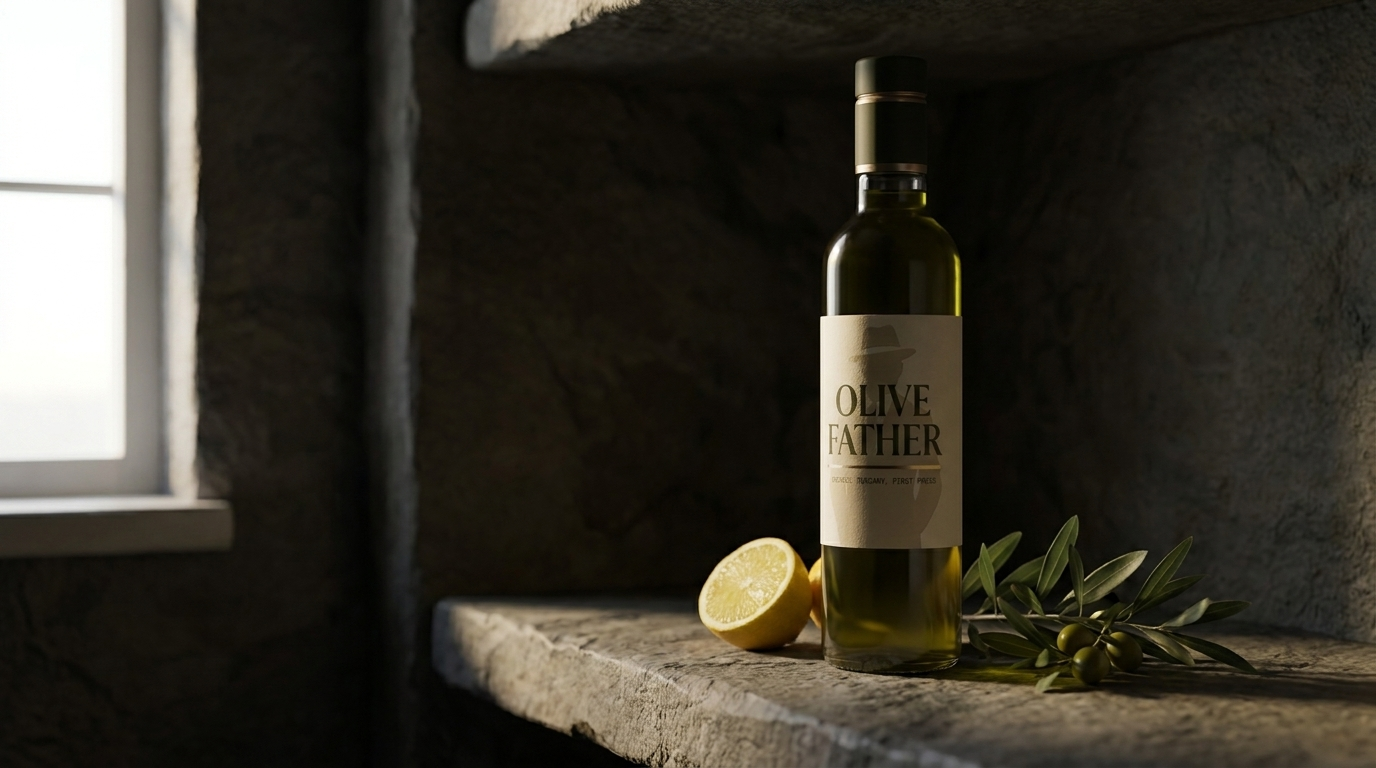
Even perfect storage cannot rescue oil that was old before you bought it. A blended supermarket bottle may have spent many months in transit and on warm shelves under bright light before it ever reached you — one more reason to be wary of generic supermarket oil. Olive Father oil is single-source and traceable to one Calabrian grove and one harvest, bottled in protective dark glass so it reaches you as close to first-press fresh as possible.
Freshness is the whole point of good olive oil. Discover the Olive Father range — harvest-dated, single-source, and made to be enjoyed at its peak.
Leave a Reply