Looking for the full guide? We have since published a longer, more detailed piece — Single-Origin Olive Oil: What It Actually Means, and Why You Can Taste It — covering the three commitments behind the term, what it does not guarantee, and a ten-second label test.
Turn over most supermarket olive oil bottles and you will find, in small print, a curious phrase: “blend of olive oils of European Union and non-European Union origin.” That single sentence is doing a lot of quiet work. It means the oil in your hand could come from anywhere, pressed by anyone, in any year the blender found convenient. Single origin oil is the opposite of that sentence — and once you understand the difference, it is hard to go back.
What “single origin” actually means
A single origin — or single source — olive oil comes from one place: one estate, one grove, one harvest, one mill. The olives are grown, picked, and pressed by the same hands, and the oil in the bottle is traceable back to specific trees on specific hillsides. Nothing is bought in, nothing is blended away, and nothing hides. Our page on single source and traceability walks through exactly how that chain of custody works from tree to bottle.
Contrast that with the industrial model. Most large brands are not farms; they are blending houses. Tankers of oil from multiple countries — often of varying age and quality — are combined to hit a target flavor profile and, above all, a target price. The result is engineered to be inoffensive. It is also anonymous by design: when oil from five countries goes into one bottle, no one is accountable for any of it.
Why it matters for flavor
Wine drinkers understand terroir instinctively: a Barolo does not taste like a Rioja, and no one wishes it did. Olive oil works the same way. Cultivar, soil, altitude, and harvest timing give a single-estate oil a personality — grassy or buttery, gentle or peppery — that is the signature of one place in one year. Blending erases that signature on purpose. A blend can be consistent; it can never be distinctive.
There is a freshness argument too. A single-estate producer presses within hours of picking and bottles one harvest at a time, so the harvest date on the label means something. Blends routinely combine older stock with newer oil, and the “best by” date tells you when it was bottled — not when the olives came off the tree. If you have read our guide on how to spot fake olive oil, you already know why that distinction matters.
Why it matters for honesty
Traceability is not romance; it is accountability. When a University of California, Davis study tested imported oils labeled “extra virgin,” a majority of the samples failed to meet the standard for that grade. The common thread among the failures was anonymity — long, opaque supply chains where responsibility dissolved somewhere between the grove and the shelf. A single origin oil closes that gap. One farm made it. Their name is on it. There is nowhere to hide, which is precisely the point.
How to read a label for real provenance
Look for a named estate or farm, not just a country. Look for a harvest date, not only a best-by date. Look for the cultivar. And be wary of the word “imported from Italy” alone — oil can be blended from many countries and merely bottled in Italy. Our walkthrough of how olive oil is made, from grove to bottle, shows every step a label should be able to answer for.
One family, one grove, one bottle
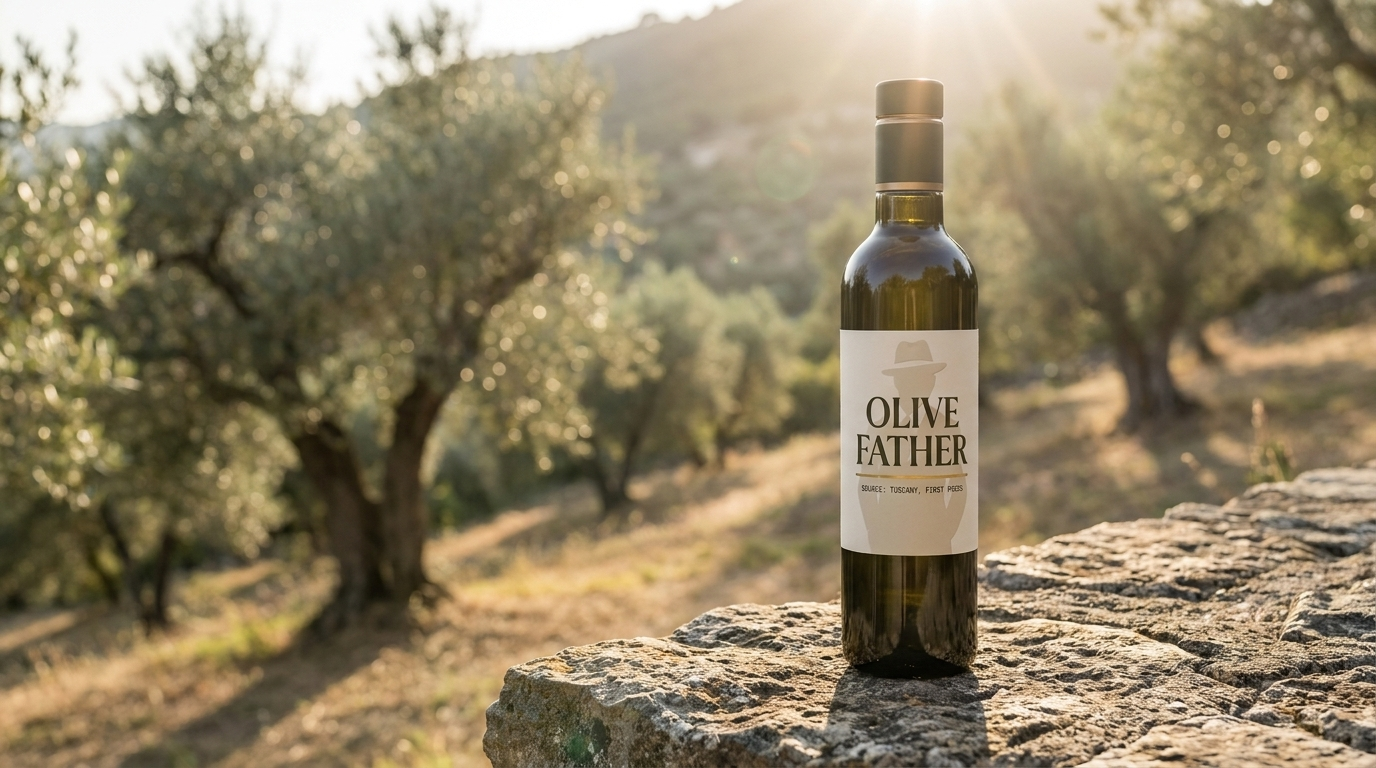
Olive Father exists because we believe the single origin standard is the only honest way to make oil. Every bottle we produce comes from the Posterino family’s own groves in San Procopio, Calabria — six generations on the same land — picked early and pressed cold within hours, as we describe on our harvest and cold pressing page. The lot, the harvest, and the acidity are stamped on the label because we can prove all three.
Taste what one place, one family, and one harvest actually taste like. Explore the Olive Father range and join the early access list.
Leave a Reply