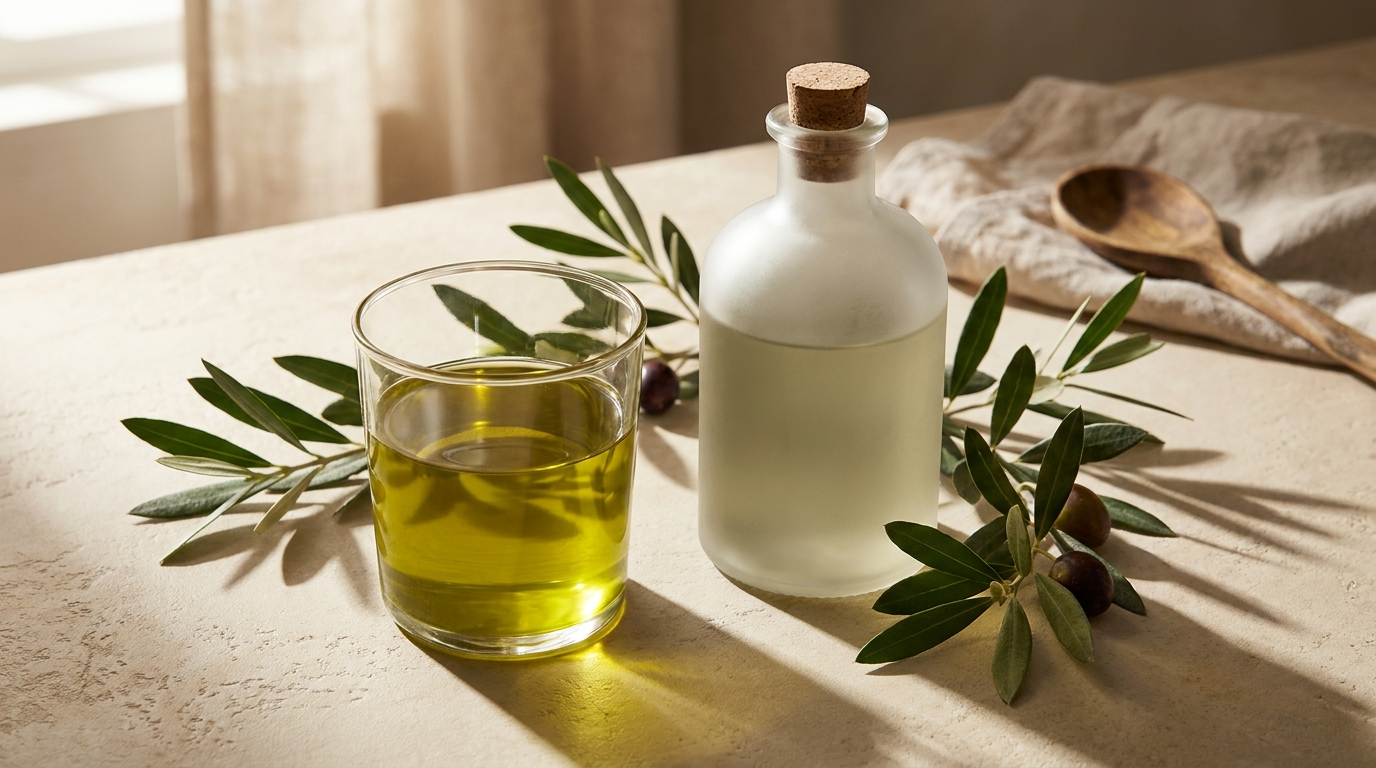
That bottle marked “extra virgin” on the supermarket shelf may not be extra virgin at all. Olive oil is one of the most adulterated foods in the world — and once you know what to look for, the fakes are easy to spot.
The uncomfortable truth about “extra virgin”
In a landmark University of California, Davis study, the majority of imported “extra virgin” olive oils tested failed to meet extra-virgin standards. Some were watered down with cheaper oils; others were old, oxidized, or simply mislabeled. “Extra virgin” is a legal grade — but enforcement is thin, and plenty of oil that clears the label tastes like nothing at all.
7 signs your olive oil might be fake
1. There’s no harvest date
Real olive oil is a fresh juice with a season. If the label shows only a “best by” date and never a harvest date, the producer is hiding how old it is.
2. You can’t trace the origin
“Imported from Italy” or “bottled in Italy” is not the same as grown in Italy. Great oil names a single estate or region. If the origin is vague, it’s usually a blend of anonymous oils from several countries.
3. It’s suspiciously cheap
Hand-harvesting, low yields, and cold pressing cost money. If a large bottle costs less than a sandwich, something was cut — usually quality.
4. It tastes like nothing
Good extra virgin olive oil is fruity, a little bitter, and peppery enough to catch the back of your throat. That pepper is polyphenols — antioxidants. Flat, greasy, buttery oil with no bite has usually lost (or never had) them.
5. It’s sold in clear glass under bright light
Light degrades oil fast. Serious producers use dark glass or tins and protect it. A clear bottle baking under supermarket lights is a bad sign.
6. There’s no acidity figure
Free acidity is the clearest measure of quality — real extra virgin sits well below 0.8%, and the best runs far lower. If it’s not on the label, ask why.
7. There’s no lot number or story
Traceability is design. A named farm, a harvest year, an acidity, a lot number — that’s a producer who has nothing to hide.
How to buy the real thing
Buy single-source, dated, and traceable — and taste for the pepper. That’s exactly the standard we hold at Olive Father: one family, one grove, harvest date and acidity on every bottle. Read more on what actually makes quality olive oil, why we say no to supermarket oil, or explore our range.
Leave a Reply