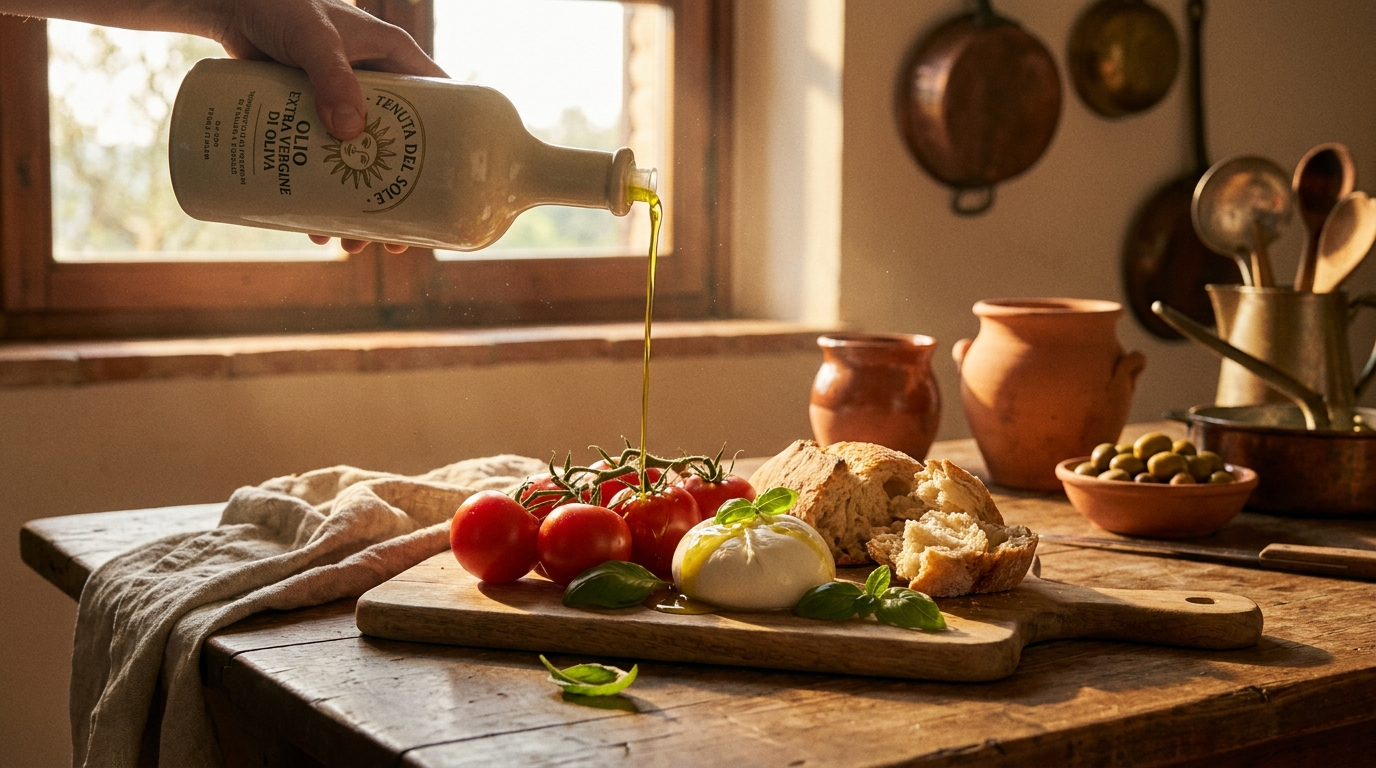
Ask a chef where the world’s best olive oil comes from and the answer is almost always the same: Italy. It isn’t national pride — it’s terroir, tradition, and an obsession with doing things the slow way. Here’s why.
The land does half the work
Italy’s olive country — from the hills of Tuscany between Siena and Florence to the sun-soaked slopes of Calabria — gives olives a rare balance of sun, altitude, and cool nights. That balance builds the complexity you taste in a great oil: grass, artichoke, green almond, and a clean peppery finish.
Cultivars you can’t fake
Frantoio, Leccino, Moraiolo, Correggiolo — Italy’s classic cultivars each bring something distinct, and blended by a skilled hand they produce oils of remarkable depth. Protected-origin (IGP and DOP) rules tie those varieties to specific regions, so the character stays honest.
The craft: cold, fast, and careful
The best Italian producers hand-harvest green olives and press them cold — under 27°C — within hours. Speed and low heat protect the aromas and the polyphenols. Lower yield, higher quality: a trade the great estates make every single year.
Why it’s good for you, too
Real Italian extra virgin olive oil is the heart of the Mediterranean diet — rich in the polyphenols behind that peppery finish. The flavor and the health benefits come from the same place, which is why cheap, refined oil loses both.
How to choose a great one
Look for a single estate, a harvest date, a stated acidity, and a taste with real bitterness and pepper. That’s the standard behind Olive Father — six generations, one source, from Tuscany and Calabria. Explore our range, read what makes quality olive oil, or meet the Olive Father.
Leave a Reply