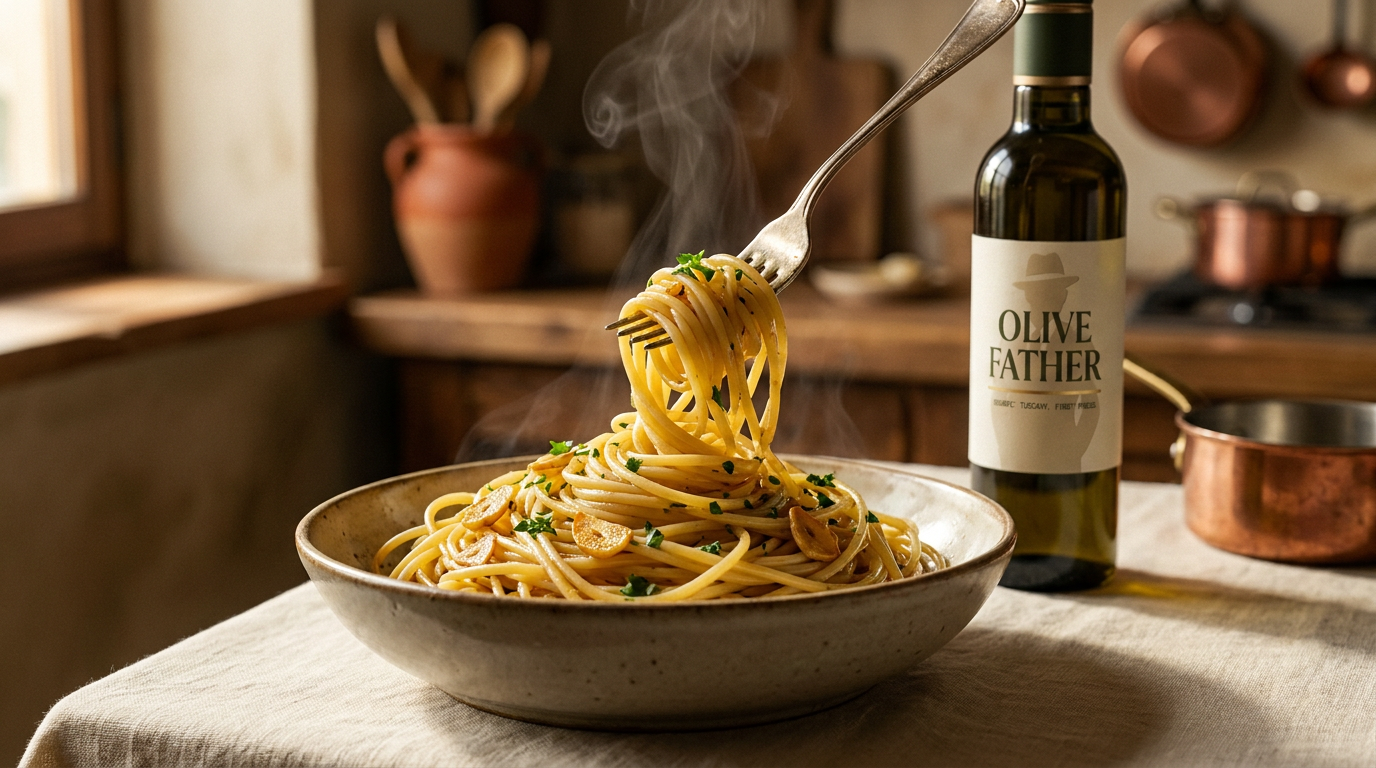
Every food culture has a dish that functions as a lie detector. For Italy, it is pasta dressed in olive oil. Spaghetti aglio e olio — garlic and oil — asks for five ingredients and about fifteen minutes, and precisely because there is nowhere to hide, it tells you the truth about every one of them. The garlic can be forgiven for being ordinary. The parsley is a garnish. The pasta and the oil are the dish, and if either one is mediocre, dinner will say so out loud.
The dish is really an emulsion
The secret that separates a glistening, silky olive oil pasta from a greasy one is not an ingredient at all. It is starch. When you finish the pasta in the pan with a ladle of its own cooking water, the starch in that water binds with the oil and emulsifies it into a light sauce that clings to every strand instead of pooling at the bottom of the bowl. This is the same principle behind every great Roman pasta, and it costs nothing. Save a cup of pasta water. Always.
How we make it at home
The method
Boil the spaghetti in well-salted water, one minute short of the package’s al dente time. While it cooks, warm a generous pour of extra virgin olive oil in a wide pan over gentle heat with thinly sliced garlic — the garlic should turn fragrant and barely golden, never brown, because burnt garlic is bitter in the wrong way. Add chili flakes if you like heat. Transfer the pasta straight into the pan with a ladle of cooking water, raise the heat, and toss hard for a full minute until the liquid tightens into a sauce that coats the strands. Off the heat, add parsley and — this is the part most recipes miss — one more pour of raw oil, so its aroma arrives at the table alive. That final flourish is the finishing-oil principle we explored in why your best olive oil goes on last.
The pasta matters more than you think
A dish this minimal exposes industrial pasta instantly. Teflon-extruded spaghetti is smooth and glassy, and sauce slides off it. Bronze-cut pasta — extruded through traditional bronze dies — has a rough, porous surface that drinks in the emulsion and releases more starch into the cooking water, which makes the sauce itself better. It is a compounding advantage, and it is the entire reason we make bronze-drawn pasta the way we do. If you are curious which shapes suit which sauces, our pasta shapes guide goes deep.
The oil is the recipe
Here is the honest arithmetic: in a plate of aglio e olio, olive oil is the largest flavor contributor by far. A tired, refined, anonymous oil gives you hot greased noodles. A fresh extra virgin — green, slightly bitter, peppery at the back of the throat — gives you a sauce with fruit, spice and length, from exactly the same recipe. The bitterness and pepper are not flaws; they are the taste of the polyphenols that make great oil worth seeking out, and they bloom beautifully against sweet garlic and wheat. If you want to train your palate to recognize that character, start with our tasting guide.
Beyond aglio e olio
Once the emulsion technique is in your hands, a whole family of suppers opens up: spaghetti with oil and lemon zest; orecchiette with oil, anchovy and breadcrumbs; cold summer spaghetti dressed like a salad with oil, tomato and basil. Each one is the same lesson repeated — good pasta, good oil, starch, motion — and each takes less time than delivery. You will find more of them among our recipes.
Five ingredients, fifteen minutes, no place to hide. Cook it once with a supermarket blend and once with a single-estate oil pressed hours after harvest, and you will understand our entire company in one bite. When you are ready for the second version, explore the Olive Father range — the oil and the bronze-drawn pasta were made for exactly this plate.
Leave a Reply