Category: Uncategorized

  • Avocado Oil vs Olive Oil: An Honest Comparison From People Who Press Olives

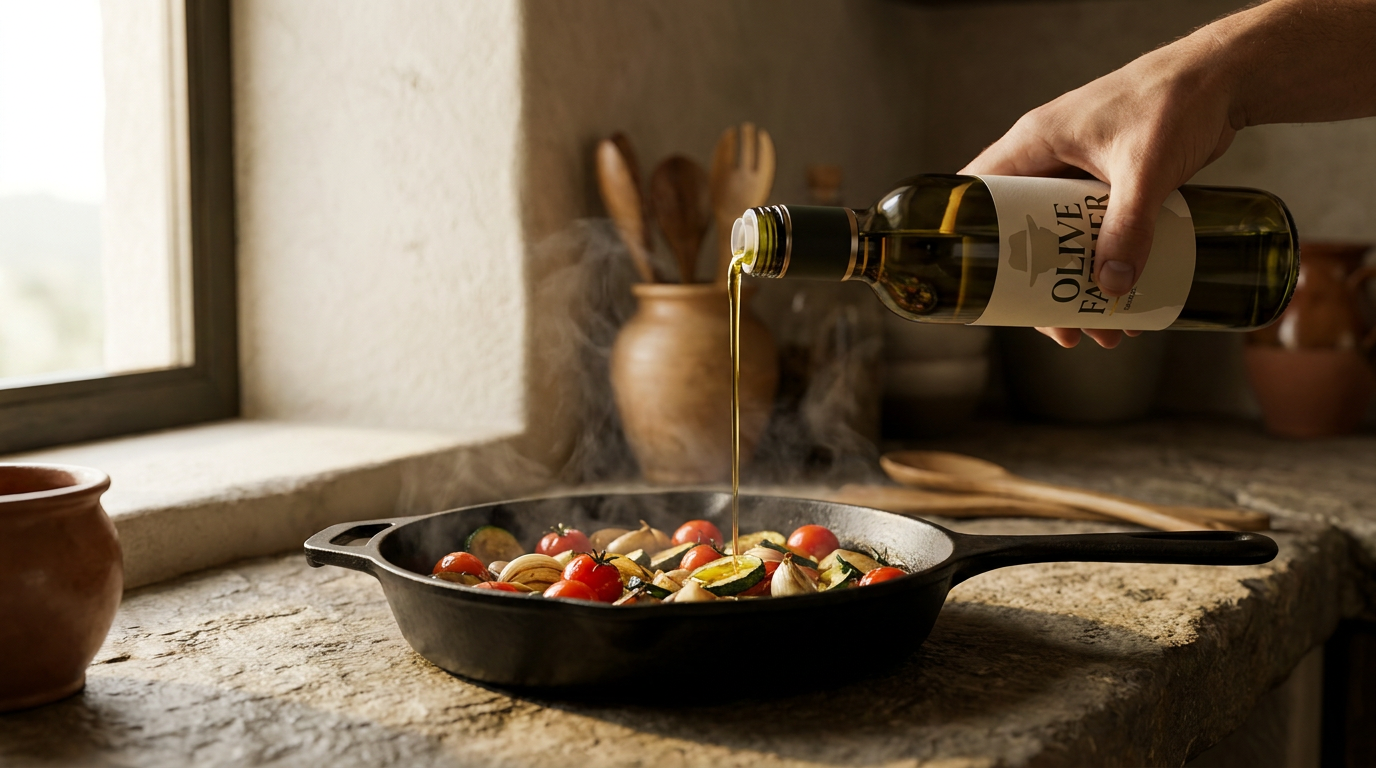
    A golden ribbon of extra virgin olive oil poured from an Olive Father bottle into a cast-iron skillet of searing vegetables

    Let us say it plainly before we say anything else: we press olives for a living, so you know where our heart is. But the avocado oil vs olive oil question deserves a straight answer, not a sales pitch — and the truth is that these two oils have more in common than the internet’s endless versus-battles suggest. Both are pressed from a fruit rather than extracted from a seed. Both are rich in the same heart-friendly monounsaturated fat. Where they part ways is in flavor, in the compounds that survive the journey to your bottle, and in how honestly each category is labeled. That is where the interesting differences live.

    What they share: two fruit oils in a world of seed oils

    Avocado oil and olive oil belong to the same small, distinguished club: oils that can be pressed mechanically from the flesh of a fruit, no solvent extraction required. Their fatty-acid profiles are remarkably similar — both are dominated by oleic acid, the monounsaturated fat that makes them stable in the pan and well regarded in nutrition research. If your alternative is a refined seed oil, either of these is a step up, for reasons we lay out in our piece on why olive oil is not a seed oil.

    The smoke point argument is weaker than it looks

    The case usually made for avocado oil is its high smoke point. It is real — refined avocado oil smokes at a very high temperature — but it needs two footnotes. First, the avocado oil with the towering smoke point is the refined kind, which has been processed in ways that strip most of its character; unrefined avocado oil sits much closer to extra virgin olive oil. Second, smoke point is a far less useful measure of cooking safety than people assume: an oil’s stability under heat depends more on its fat profile and antioxidant content than on the moment it visibly smokes, and extra virgin olive oil performs remarkably well on both counts. Everyday sautéing, roasting and pan-frying sit comfortably within EVOO’s range — a case we make in full in our guide to cooking with extra virgin olive oil.

    Where they truly differ

    Flavor

    Good avocado oil tastes mild — buttery, faintly grassy, deliberately quiet. That neutrality is its selling point. Extra virgin olive oil is the opposite: a fresh, early-harvest oil arrives with green fruit, a clean bitterness and a peppery finish that can carry an entire dish on its own. One is a background player; the other is an ingredient with a point of view. Neither is wrong, but only one of them can turn sliced tomatoes and bread into dinner.

    Polyphenols

    This is the widest gap between the two. Fresh extra virgin olive oil carries a family of antioxidant compounds — oleocanthal, oleacein, hydroxytyrosol — that are responsible for both its peppery bite and much of the research interest in the Mediterranean diet. Avocado oil, especially once refined, simply does not compete in this department. If polyphenols are new to you, our deep dive on polyphenols and health explains what they are and why cheap processing destroys them.

    Labeling honesty

    Olive oil has a real, enforceable grading system — extra virgin has a legal definition, laboratory limits and a taste-panel standard behind it. Avocado oil has almost none of that. A widely cited 2020 study from UC Davis tested avocado oils sold in the United States and found that a large majority were either stale before their best-by date or blended with other oils entirely, with no grade standards to hold producers to account. Olive oil has its own fraud problems — we wrote a whole guide on spotting fake olive oil — but at least the honest producers have a standard to be measured against, and the tools to prove themselves: harvest dates, lot numbers, single-estate traceability.

    So which should be on your counter?

    If you want one oil that does everything — cooks beautifully, finishes plates, carries flavor, and brings the antioxidant profile that made the Mediterranean diet famous — that is extra virgin olive oil, and it is not close. Avocado oil earns a place as a neutral understudy for the rare dish where you want no flavor at all. Our kitchen keeps both jobs filled with one bottle.

    Whichever side of the debate you land on, apply the same rule: buy fresh, buy traceable, buy from someone who tells you where the fruit grew. That is the entire philosophy behind the Olive Father range — single-estate Italian extra virgin olive oil with the harvest date stamped on every lot. Taste what a fruit oil can be when nobody cuts corners.
  • Olive Oil in Coffee: Fad, Tradition, or Genuinely Worth Trying?

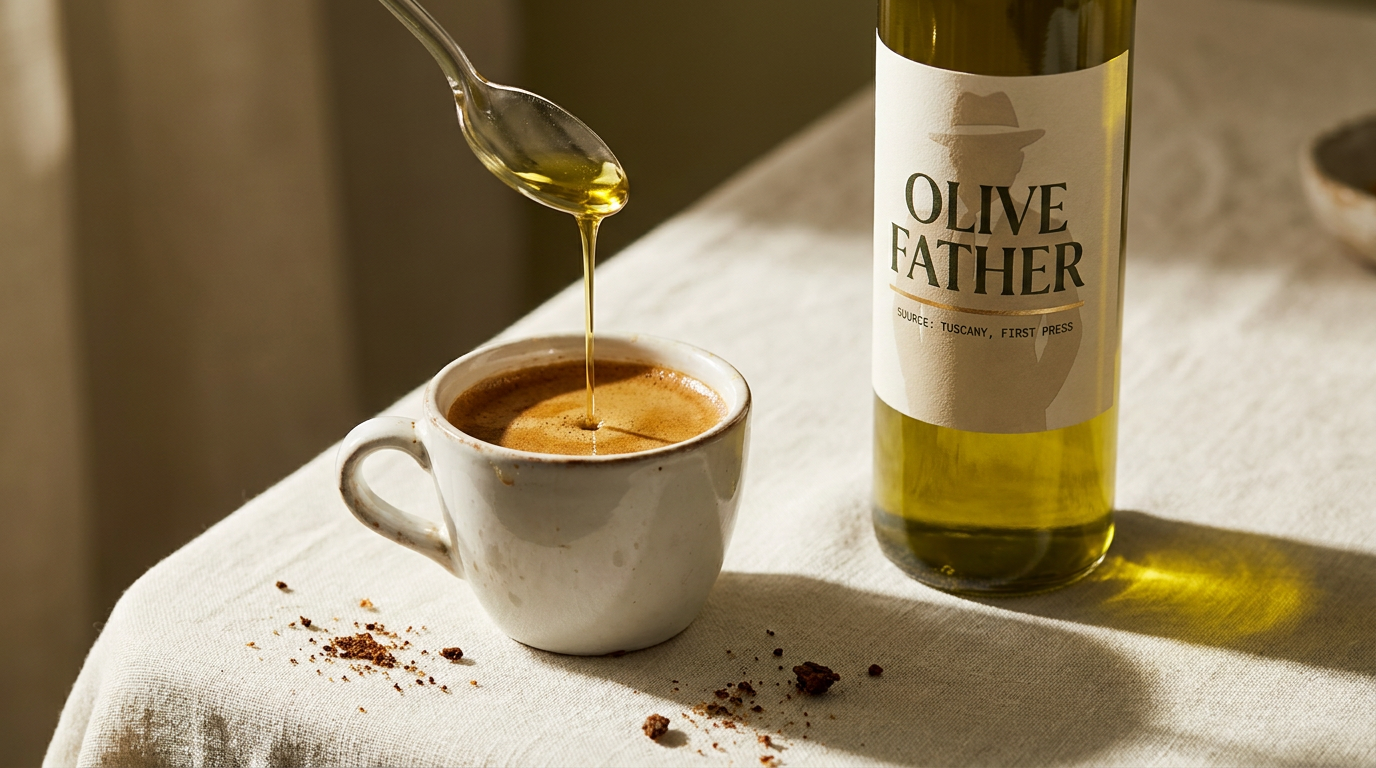
    A spoon drizzling golden extra virgin olive oil into an espresso beside a bottle of Olive Father olive oil

    Few food ideas have traveled faster in recent years than this one: a spoonful of extra virgin olive oil, stirred into coffee. When a global coffee chain launched an olive-oil coffee line in 2023, the reaction split neatly in two — half the internet was intrigued, the other half horrified. Both camps were mostly missing the real story. Olive oil and coffee is neither a lab-grown marketing stunt nor a miracle health hack. It is an old Mediterranean habit that deserves an honest look — and, like everything involving olive oil, it works exactly as well as the oil you use.

    Where the idea actually comes from

    The inspiration usually cited is Sicily, where some islanders have long taken a spoonful of olive oil in the morning — sometimes before coffee, sometimes alongside it, occasionally in it. The practice belongs to a broader Mediterranean instinct we write about often: treating extra virgin olive oil not as a frying medium but as a daily food in its own right, taken deliberately, the way others take a vitamin. If that sounds familiar, it is the same tradition behind the Mediterranean pattern of eating that researchers have studied for decades.

    So the trend is not an invention — it is an amplification. What was new was putting it on a menu, foaming it into lattes, and asking millions of people to try it at once.

    What olive oil actually does to a cup of coffee

    Texture, first. Oil is fat, and fat carries flavor and coats the palate. A teaspoon of extra virgin olive oil stirred into black coffee rounds off the sharp edges of bitterness and acidity and leaves a silkier, longer finish — the same reason people add butter or cream, but with a completely different aromatic signature. Instead of dairy sweetness, a good oil brings green, grassy, faintly peppery notes that sit surprisingly comfortably next to dark-roast flavors.

    Second, aroma. Coffee is hot, and heat lifts an oil’s volatile aromatics straight to your nose — which means the character of the oil is amplified, not hidden. This is precisely why the choice of oil decides the entire experiment. A flat, tired, refined oil adds nothing but grease. A fresh extra virgin with real personality adds a layer of flavor that genuinely belongs there. The difference between those two oils is the entire subject of our guide to quality.

    The health question, honestly

    Let us be careful here, because this corner of the internet is not. Extra virgin olive oil is a well-studied food: it is rich in monounsaturated fat and, when fresh and properly made, in polyphenols — antioxidant compounds with genuinely interesting research behind them. Putting it in coffee does not destroy any of that; coffee’s heat is far below cooking temperatures.

    But adding olive oil to coffee does not make coffee a health drink, and it does not add anything you would not get from the same spoonful taken with food. It is also roughly 40 extra calories per teaspoon — fine if it replaces cream, worth noticing if it is stacked on top. Our full, sober reading of the evidence lives on our olive oil and health page. The honest summary: drink it because you enjoy it, not because an influencer promised transformation.

    How to try it properly

    The simple version

    Brew your usual coffee — espresso and dark, chocolatey roasts work best. Stir in one teaspoon of genuinely fresh extra virgin olive oil. Taste before you judge; the first sip is unfamiliar, the third is where most people decide they like it.

    The better version

    Blend rather than stir — ten seconds with a milk frother emulsifies the oil into a silky, almost latte-like texture with no separation. Over ice with a splash of oat milk, it is the version that converted the skeptics on our own team.

    The rule that is not optional

    Use an oil you would be proud to pour over food, or do not bother. Hot coffee will broadcast every flaw — staleness, rancidity, the cardboard dullness of a cheap blend — as faithfully as it broadcasts freshness. If you are unsure how to recognize a fresh, honest oil, our tasting guide will train your palate in one sitting.

    Our verdict

    Olive oil in coffee is neither a revolution nor a joke. It is a small, pleasant ritual with old roots, a genuinely interesting flavor when done well, and a five-second experiment that costs you one teaspoon. Just make the teaspoon count: single-estate, early-harvest, with a harvest date on the label. That is the oil we make. Explore the Olive Father range — and if you try it in tomorrow’s espresso, you will know within one sip why the oil was the whole point.

  • What Is a Finishing Oil? Why Your Best Olive Oil Goes On Last

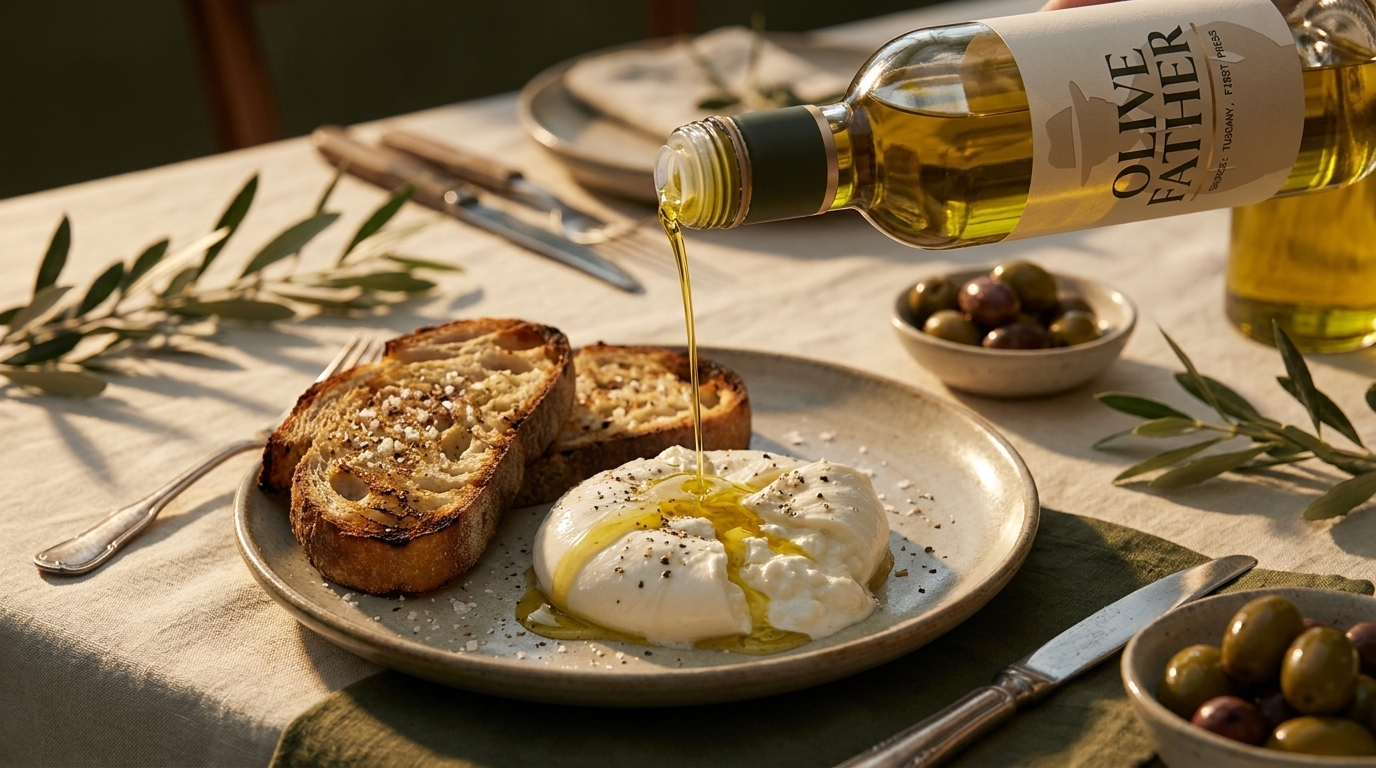
    A golden thread of extra virgin olive oil being poured from a bottle over burrata and charred bread at golden hour

    Walk into a serious Italian kitchen and you will usually find two olive oils. One lives beside the stove and goes into the pan. The other lives away from the heat, is guarded a little jealously, and only appears at the very end — poured in a thin golden thread over the finished plate, seconds before it reaches the table. That second bottle is the finishing oil, and once you understand what it is for, you will never plate a meal quite the same way again.

    What “finishing oil” actually means

    A finishing oil is not a separate grade or a legal category. It is a role: an extra virgin olive oil good enough to be used raw, as the last ingredient a dish receives. Nothing is cooked in it. Nothing is hidden under it. It lands on warm food, blooms in the rising heat, and delivers everything a great oil has to offer — aroma, fruit, bitterness, that peppery catch at the back of the throat — completely intact.

    That role is unforgiving. In a sauté, a mediocre oil can hide behind garlic and heat. Poured raw over white beans or a piece of grilled fish, an oil has nowhere to hide at all. Which is exactly why the finishing bottle is where quality matters most.

    Why finishing works: the science of the last pour

    The most precious things in a truly fresh extra virgin oil are also the most fragile. Its volatile aromatics — the green, grassy, tomato-leaf notes — begin to evaporate the moment the oil gets hot. Its polyphenols, the antioxidant compounds responsible for both the healthy reputation and the pleasant bite of real extra virgin oil, survive cooking better than people think, but they are still gradually spent by prolonged heat.

    Pour the oil over food that is warm but no longer cooking, and the equation flips. The residual heat becomes an ally: it lifts the aromatics off the plate and straight to your nose, the way warmth opens up a glass of wine, while the polyphenols arrive at your table untouched. Same bottle, same pour — dramatically more of everything you paid for.

    What makes an oil worth finishing with

    Freshness above everything

    A finishing oil should come from the most recent harvest, with the harvest date printed on the label. Olive oil is a fresh fruit juice, not a wine; its brightness fades month by month. An oil pressed last autumn still tastes alive. An oil of unknown age tastes like regret.

    A single, named source

    Blends assembled from many countries are engineered to taste like nothing in particular, which is precisely what you do not want in the starring role. An oil from one estate — one grove, one harvest, one press — carries a personality: our Calabrian oil brings green almond, cut grass and a firm peppery finish that stands up on the plate. That is what single-source traceability buys you: not just honesty, but character.

    Real intensity

    Professional tasters judge oil on three qualities: fruitiness, bitterness, pungency. A finishing oil should have all three in confident measure. If an oil tastes merely “smooth” — a polite word for flat — it will vanish on food. If it makes you cough a little on the first taste, congratulations: that is oleocanthal, and it is exactly what you want. Our tasting notes and pairings page shows you how to judge this like the professionals do.

    How to finish like an Italian

    There is no technique to learn, only timing. Plate the food, then pour — a thin, deliberate thread, held a little high so the oil ribbons. Where it belongs: over pasta the moment it is tossed; on soups and white beans, where a spiral of green-gold oil transforms humble into luxurious; across grilled fish, steak or vegetables straight off the heat; over burrata or mozzarella with nothing but salt; on charred bread, thick enough to pool. Even vanilla gelato, with good oil and flaky salt, becomes something people talk about. You will find more ideas in our recipes.

    One rule above all: the finishing oil never goes back over heat. Cook with a good honest oil; finish with your best one.

    One bottle changes every meal

    The beauty of a finishing oil is its economics: because it is used in threads and spirals rather than cupfuls, a single bottle elevates dozens of meals. It is the cheapest upgrade a kitchen can make — provided the oil is real. Ours comes from one family estate in Calabria, harvested early, pressed within hours and bottled with its harvest date on the label. Explore the range and give your table the last pour it deserves.

  • Extra Virgin Olive Oil Benefits: What the Science Actually Supports

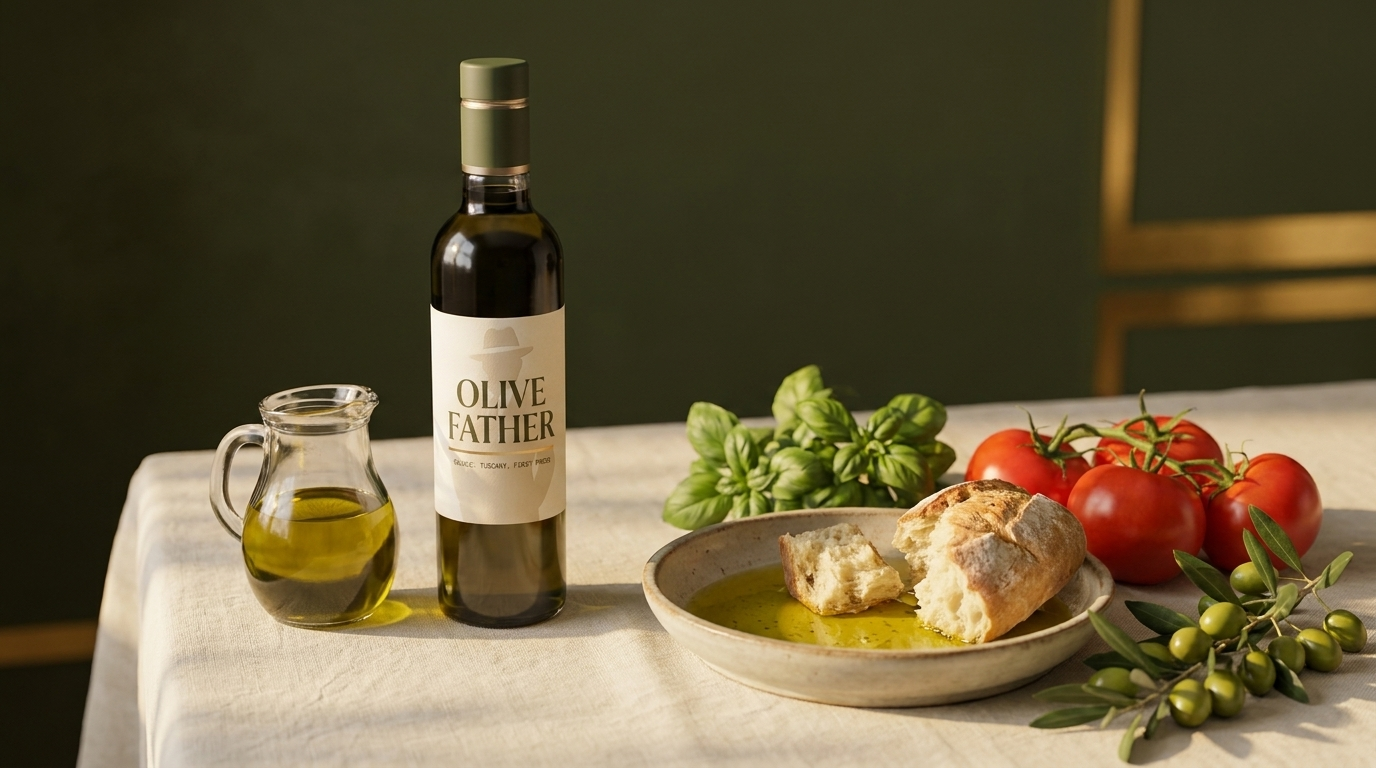
    A bottle of Olive Father extra virgin olive oil on a sunlit Mediterranean breakfast table with bread, tomatoes and a bowl of golden oil

    Few foods carry a health reputation as old as olive oil — and few reputations are so routinely stretched past what the evidence says. The truth is better than the hype: the benefits of extra virgin olive oil are real, specific, and unusually well studied. But they belong to a particular kind of oil, consumed a particular way. Here is the honest version.

    The headline evidence: a landmark trial, not a legend

    The strongest single piece of evidence is the Spanish PREDIMED trial, one of the largest dietary intervention studies ever run. Thousands of people at high cardiovascular risk followed a Mediterranean diet supplemented with extra virgin olive oil, and experienced roughly a 30 percent lower rate of major cardiovascular events — heart attack, stroke, cardiovascular death — compared with a low-fat control diet. That is a remarkable result for a food, and it was achieved with genuine extra virgin oil, poured generously, inside a whole pattern of eating. We unpack the full body of research on our olive oil and health page.

    What regulators actually allow producers to say

    Health agencies are conservative by design, which makes the claims they do permit meaningful. In the United States, the FDA allows a qualified health claim: supportive but not conclusive evidence that consuming about 1.5 tablespoons (20 g) a day of oils high in oleic acid — olive oil chief among them — may reduce the risk of coronary heart disease, when it replaces saturated fat rather than adding calories on top. In Europe, EFSA recognises a claim for olive oil polyphenols: at a defined daily intake of hydroxytyrosol and its derivatives, they help protect blood lipids from oxidative stress.

    Read those carefully and two themes emerge. The monounsaturated fat matters — and so does the phenolic fraction, the bitter, peppery compounds found only in real extra virgin oil. Our deep dive on polyphenols explains what they are and how careless production destroys them.

    The benefits, briefly and honestly

    Heart and blood vessels

    This is where the evidence is deepest: replacing saturated fats and refined oils with EVOO is consistently associated with better lipid profiles and lower cardiovascular risk, and the polyphenols protect LDL cholesterol from the oxidation that makes it dangerous.

    Inflammation

    Fresh, robust extra virgin oil contains oleocanthal — the compound behind the peppery catch in your throat — which researchers writing in Nature showed acts on the same COX enzymes as ibuprofen. A culinary serving is nowhere near a pharmacological dose, and no honest producer will tell you otherwise. But it is a real mechanism, and it links the flavor of good oil directly to its biology.

    The wider Mediterranean pattern

    Observational research ties olive-oil-centred diets to better outcomes across metabolic health and healthy ageing. The fairest reading: EVOO is not a magic ingredient but the cornerstone fat of the best-studied eating pattern in the world. Some people take it further with a daily spoonful — we wrote honestly about what a tablespoon a day actually does.

    The catch: most bottles can’t deliver

    Here is the part the supermarket aisle never mentions. Nearly all of this research rests on fresh, phenol-rich extra virgin oil. Refined “pure” and “light” olive oils have had their phenolic fraction stripped away almost entirely. Old, oxidised, or carelessly blended oil loses it by the month. A bottle can legally say “extra virgin” and still carry only a fraction of the compounds the studies were built on. The fat remains; much of the rest is gone.

    That is why the markers of quality — early harvest, cold extraction, a real harvest date, dark glass, a named source — are not gourmet niceties. They are the difference between the oil in the research and an oil that merely resembles it.

    How to actually get the benefits

    Use extra virgin olive oil as your default fat, in the place of butter, seed oils and refined blends — not on top of them. Choose an oil bitter and peppery enough that you can taste the polyphenols. Store it away from light and heat, and use it while it is young. And buy from someone who can tell you exactly where it grew: our oil comes from one named estate, pressed within hours of harvest, with the harvest date on every bottle.

    If you are going to make one upgrade for your health this year, make it the oil you pour every day. Explore our organic single-estate extra virgin — the kind of oil the science was actually written about.

  • Refined Olive Oil: What It Actually Is — and Why We’d Never Bottle It

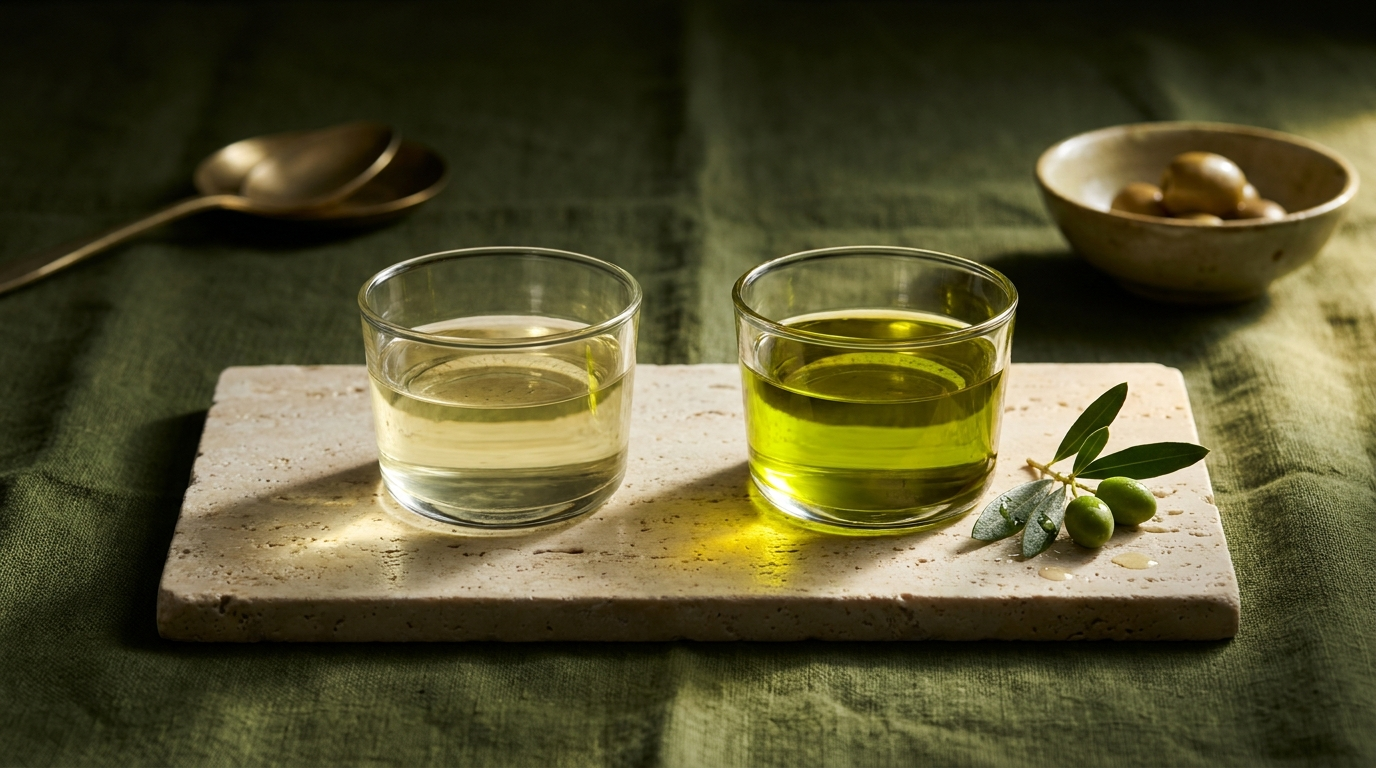
    Two tasting cups compared side by side: pale refined olive oil next to vivid green-gold extra virgin olive oil

    Somewhere in every supermarket there is a shelf of bottles labeled “olive oil,” “pure olive oil” or “light tasting olive oil,” priced comfortably below the extra virgin next to them. The words sound gentle, even virtuous. What they actually describe is one of the least understood products in the aisle: refined olive oil — oil that could not qualify as extra virgin, sent through an industrial correction process to make it sellable. There is nothing illegal about it. But once you understand what refining is, you will read those labels very differently.

    What refining actually does

    Extra virgin olive oil is, at heart, fresh fruit juice: olives crushed and cold-extracted, nothing added, nothing removed. It must pass strict laboratory limits and a formal taste panel with zero sensory defects. Oil that fails — because the fruit was overripe, damaged, fermented, or the oil turned rancid — is called lampante, from the Italian for lamp oil, a nod to the days when it was fit only for burning.

    Lampante oil cannot legally be sold as food in that state. So it is refined: treated with heat and processes such as neutralization, bleaching and deodorization until the defects — and nearly everything else — are gone. Out go the off-flavors, but with them go the aromas, the color, the bitterness, the pepper, and the great majority of the polyphenols that make real olive oil worth seeking out. What remains is a neutral, stable, nearly flavorless fat.

    Then a splash of the real thing

    Refined olive oil on its own is so characterless that producers blend a small percentage of virgin oil back in for color and a hint of flavor. That blend is what the label calls “olive oil” or “pure olive oil.” Read that again: “pure” on an olive oil label typically marks the refined blend, not the premium product. It may be the single most successful piece of wordcraft in the food business.

    Decoding the grades on the shelf

    Stripped of marketing, the grades you will actually meet are simple. Extra virgin is the top grade: mechanically extracted, defect-free, chemically within strict limits — the only grade we make, and the only one we would put our name on. Virgin is honest oil with minor sensory flaws, rarely seen in US stores. “Olive oil” / “pure olive oil” is refined oil with a splash of virgin. And “light” or “extra light” olive oil is the most refined of all — “light” describes the taste, not the calories, which are identical. If you have ever wondered why a “light” oil costs less than the extra virgin beside it, now you know: you are paying less because there is less in it.

    Does refined oil have any place?

    We will be fair: refined olive oil is not dangerous, and its neutrality and stability suit industrial kitchens frying at scale. But in a home kitchen the case collapses. A good extra virgin handles everyday cooking beautifully, and everything the refined bottle lacks — aroma, pepper, antioxidants, character — is precisely what you buy olive oil for. Choosing “light” oil to be healthy is like buying a guitar with no strings to enjoy quietly.

    The test refining cannot pass

    Here is the taste that tells the whole story. Pour a little refined blend into one cup and a fresh single-source extra virgin into another. One is pale, slick and silent. The other is green-gold, smells of cut grass and artichoke, turns pleasantly bitter mid-palate and finishes with a peppery catch in the throat. That pepper is oleocanthal, part of the polyphenol family that refining destroys and no blender can restore. It is the difference between a juice and an ingredient-grade fat — and once you taste it side by side, no label will fool you again.

    This is why we are fanatical about what makes quality olive oil, and why every bottle we sell is traceable to a single named grove in Calabria — harvested green, cold-extracted within hours, never corrected, never blended. If your current bottle says “pure” or “light,” consider this your invitation to taste what olive oil is actually supposed to be. Start with the Olive Father range — the comparison will do the rest.

  • Why Does Good Olive Oil Burn Your Throat? Meet Oleocanthal

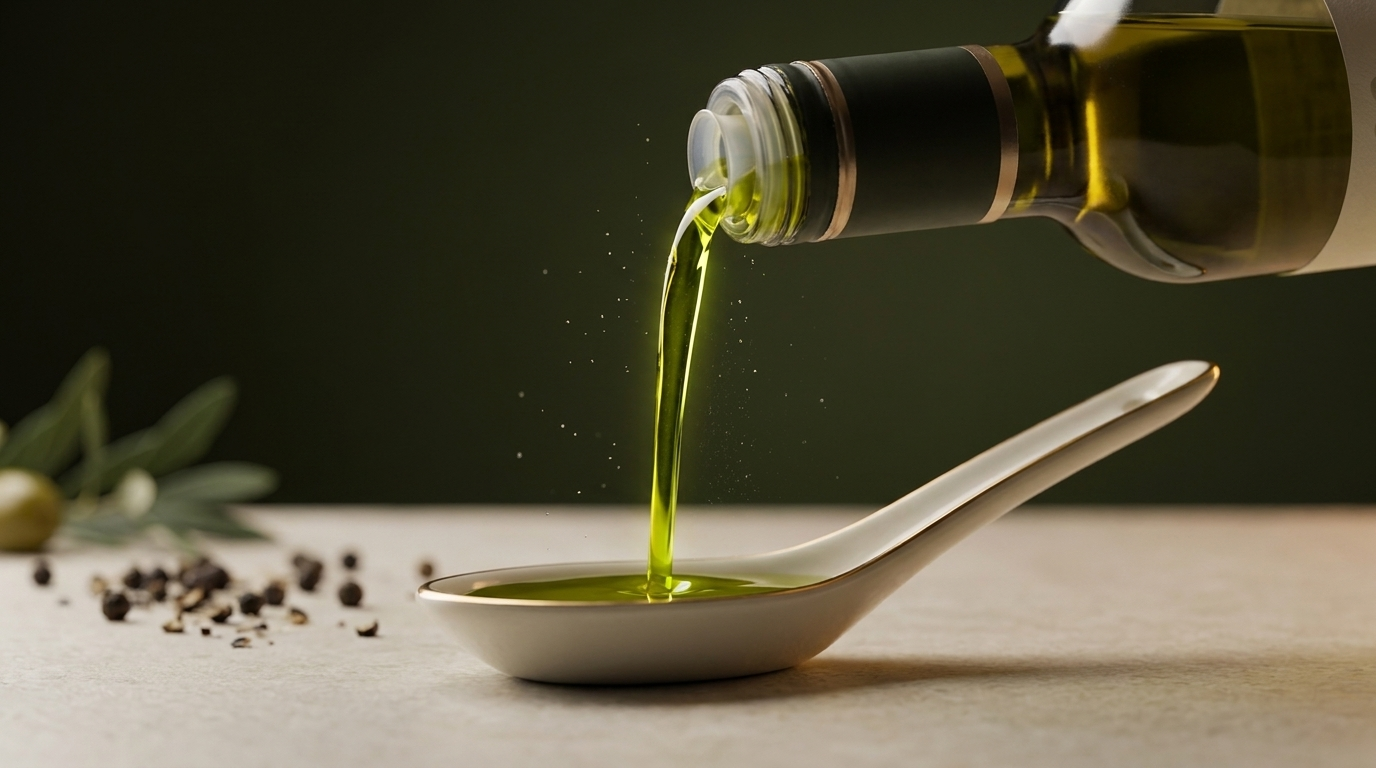
    Green-gold extra virgin olive oil pouring onto a tasting spoon, backlit to show its peppery intensity

    The first time someone tastes a serious extra virgin olive oil, there is almost always a moment of alarm. The oil goes down smoothly, green and fruity — and then, a second later, a peppery sting flares at the back of the throat, sharp enough to make you cough. Many people assume something is wrong with the oil. In fact, the opposite is true. That burn has a name, a fascinating piece of science behind it, and a very practical use: it is one of the most honest quality signals you will ever get from a food.

    The compound behind the cough

    The sting comes from oleocanthal, a natural phenolic compound found in fresh, well-made extra virgin olive oil and essentially nowhere else in the human diet. Researchers formally identified and named it in 2005, after noticing that the throat sting of fresh olive oil felt strangely similar to the sting of liquid ibuprofen. That was not a coincidence of flavor; the two act on the same sensory pathway, and oleocanthal has been studied ever since for its naturally occurring anti-inflammatory properties. Olive oil is a food, not a medicine — but the fact that scientists keep returning to this one compound tells you how unusual it is.

    Why the throat, and only the throat?

    Here is the part that surprises even seasoned cooks. Oleocanthal does not burn your tongue or lips the way chili does. It fires a specific irritant receptor — one that, in humans, happens to be concentrated in the tissue at the back of the throat. That is why the sensation waits until you swallow, and why it lands in exactly the same spot every time. Italian tasters have known the effect for generations: a robust oil is affectionately graded by the cough it provokes. A one-cough oil is good. A due tosse — two-cough — oil is something to talk about.

    The burn is a freshness meter

    Oleocanthal belongs to the same family of compounds as the polyphenols we go to great lengths to protect — the antioxidants that make a great oil taste alive and help it resist rancidity. We wrote a full guide to polyphenols and why they matter, but the short version is this: they are abundant in olives picked early and milled within hours, and they fade with time, heat, light and neglect.

    That is what makes the throat sting so useful. It cannot be faked and it cannot be added back. An oil made from overripe fruit, or milled days after picking, or blended from tired tanker oil, arrives on your palate smooth, flat and buttery — pleasant, perhaps, but silent where the pepper should be. A refined or heavily processed oil has lost the compound almost entirely. The burn survives only in oil that was made the hard way: picked green and cold-pressed fast, then protected in dark glass. In other words, when your throat catches, it is telling you the truth about the harvest.

    Bitter, peppery, alive: how to taste for it

    Professional panels judge every oil on three qualities: fruitiness, bitterness and pungency. Oleocanthal is the pungency. To find it, take a spoonful of oil on its own — no bread — warm it briefly in your mouth, then swallow and wait. Count the seconds before the pepper arrives and notice where it lands. A fresh, high-polyphenol oil announces itself within moments. If you want to build the skill properly, our guide to tasting olive oil walks through the full ritual, and our deeper dive into the science of extra virgin olive oil explains what each sensation maps to chemically.

    What the supermarket shelf is missing

    Once you know the burn, a quiet test becomes available to you in every kitchen. Taste a mass-market “extra virgin” blend and you will very often find it does not sting at all. Nothing about that is illegal — but it tells you the polyphenols, and much of the point of extra virgin oil, left the building long before the bottle reached you. Freshness, early harvest and careful milling cost money, and oil engineered to a price point is the first place those costs get cut.

    Our oil comes from a single named grove in Calabria, harvested green and milled within hours, precisely because that is the only way the pepper survives the journey. Pour a spoonful of our Organic Extra Virgin Olive Oil, swallow, and count your coughs. We are confident you will get at least one — and we mean that as the highest compliment an olive oil can pay you.

  • DOP, IGP, PDO: What Italian Olive Oil Certifications Actually Mean

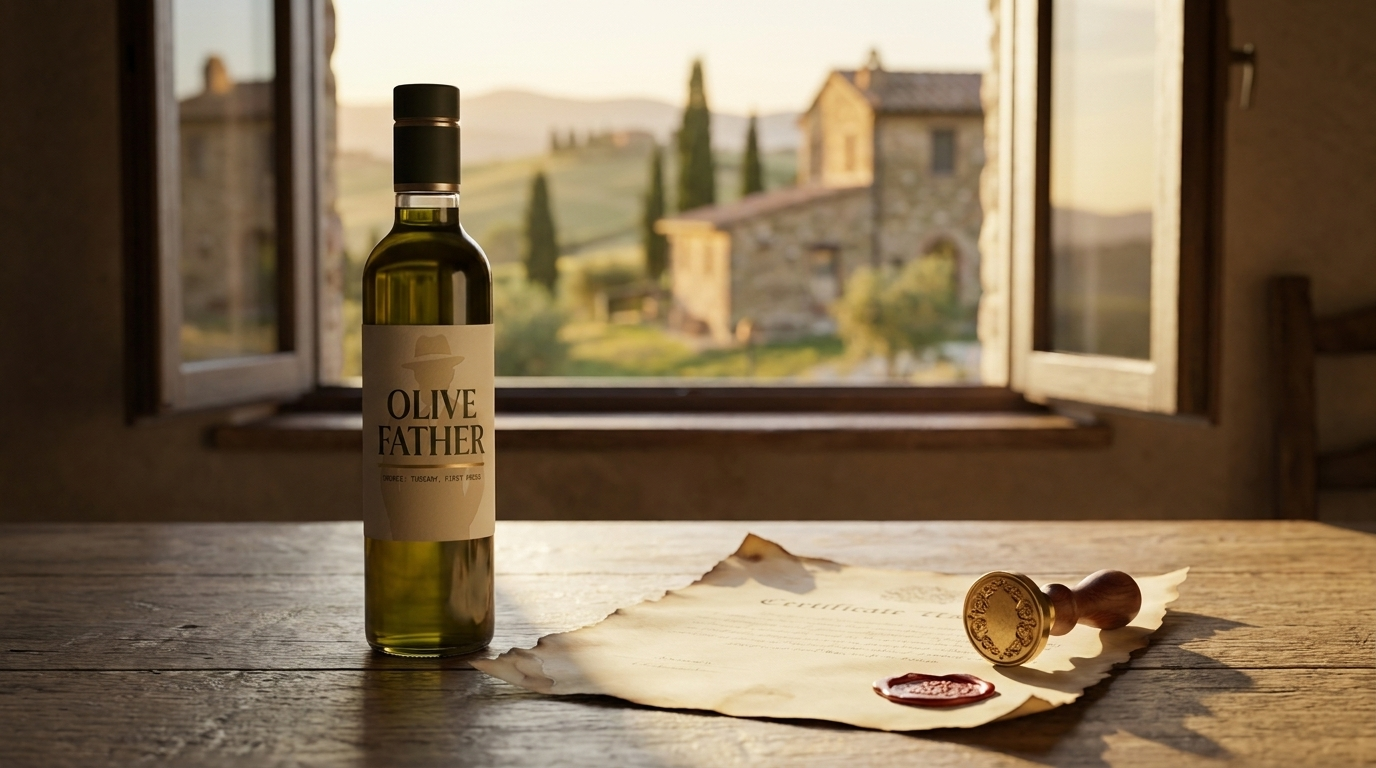
    Protected-origin Italian olive oil bottle beside a wax-sealed certificate in a Tuscan farmhouse

    Turn an Italian olive oil bottle in your hands and you may find a small colored seal: red and gold, or blue and gold, carrying letters like DOP or IGP. Most shoppers skate right past them. They shouldn’t. These seals are the closest thing olive oil has to a legally enforced promise — and once you can read them, an entire tier of the market comes into focus.

    The alphabet, untangled

    The confusion starts with language. The European Union runs two protected-origin schemes, and each has an Italian and an English name for the same thing. DOP (Denominazione di Origine Protetta) is the Italian rendering of PDO — Protected Designation of Origin. IGP (Indicazione Geografica Protetta) is the Italian rendering of PGI — Protected Geographical Indication. Same seal, same law, two tongues.

    DOP / PDO: the strictest tie to place

    A DOP oil must be produced, processed, and prepared entirely within one defined territory, from olive varieties named in its legal specification, using methods written into that specification. Every stage — grove, mill, bottling — happens inside the zone, and an independent certifying body verifies it. Italy has dozens of olive oil DOPs, each tied to a specific landscape and its traditional cultivars.

    IGP / PGI: a region’s character, certified

    An IGP requires that at least one key production stage happen in the named region, with the product’s reputation and character genuinely linked to that place. The best-known olive oil example is Toscano IGP: fruit grown and milled under Tuscan rules, chemically tested and blind-tasted by certified panels before it may wear the seal. It is the certification our own Tuscan line carries — you can read how it shapes ETRURIUM, our Tuscan IGP extra virgin, and its certified-organic sibling.

    What the seals actually buy you

    Three things, and they are not small. Origin: the oil demonstrably comes from where the label says — no anonymous tanker blends, a problem we unpacked in what “imported from Italy” really means. Standards: DOP and IGP oils must pass chemical analysis and a professional taste panel, typically to thresholds stricter than the baseline extra virgin grade. Accountability: an independent body audits producers, and every certified bottle is numbered and traceable. Fraud against these seals is prosecuted, and in Italy it regularly is.

    What they don’t tell you

    Honesty requires the other half. A seal certifies origin and minimum standards — not that a given bottle is the freshest or most vibrant oil you can buy. A tired DOP oil from an old harvest can be duller than a brilliant uncertified oil from a great farm; plenty of superb small estates never certify because the paperwork outweighs the benefit for them. The seal is a floor, not a ceiling. You still want the fundamentals we lay out in What Makes Quality Olive Oil: a harvest date, low acidity, dark glass, and a producer willing to name the grove.

    How to use certifications when you buy

    Treat the seal as one strong signal in a cluster. A DOP or IGP mark plus a harvest date plus a named estate is about as close to a guarantee as olive oil gets. A bare “product of Italy” with none of the above is a shrug in label form. And a certified oil from a producer who also shows you the farm, the mill, and the numbers — that is the standard we hold ourselves to on our Single Source & Traceability page.

    Taste a certified Tuscan original. ETRURIUM is our Toscano IGP extra virgin olive oil — grown, milled, and bottled under one of Italy’s most demanding regional specifications, from an estate we can name. Explore the range and let the seal be the second-best guarantee on the bottle. The first is knowing exactly who made it.

  • Olive Oil vs Vegetable Oil: The Real Difference, Explained

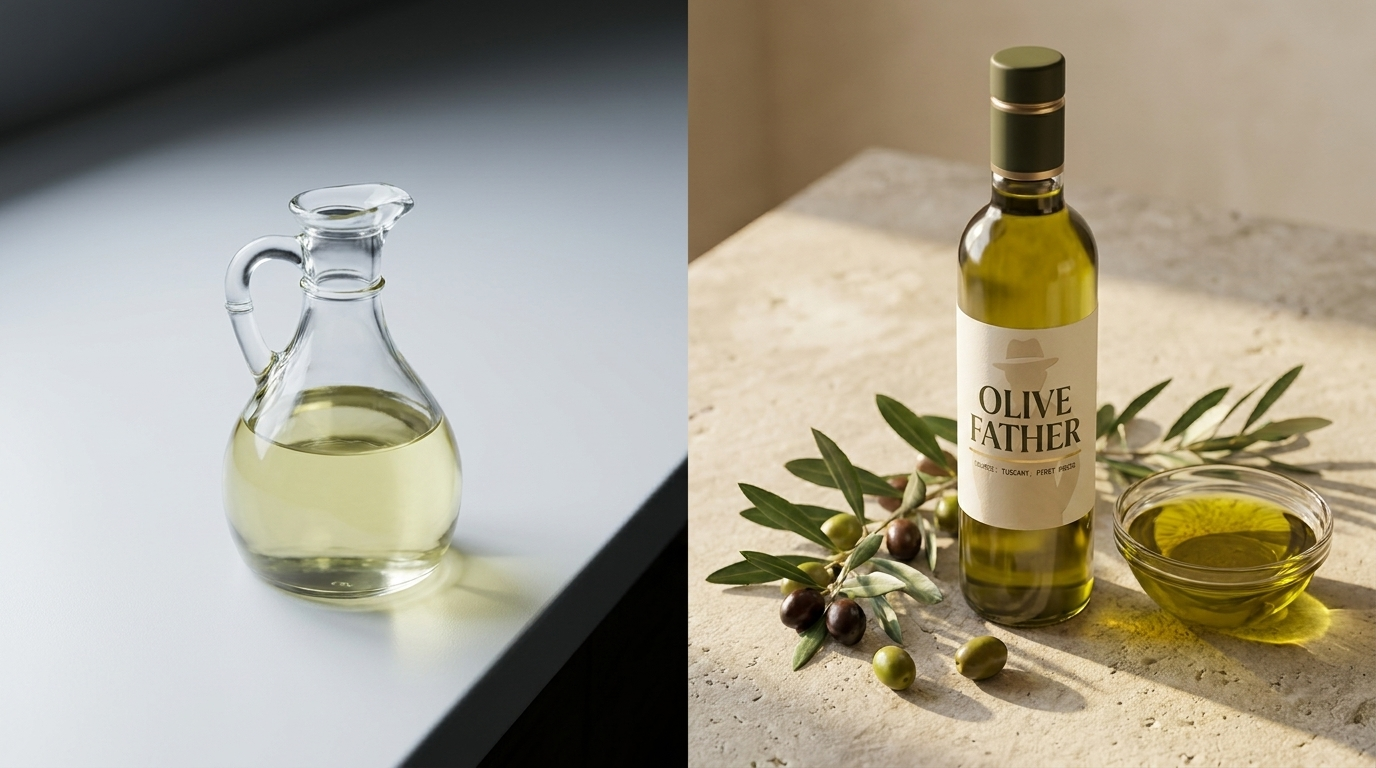
    Pale refined vegetable oil beside a bottle of vivid green-gold extra virgin olive oil

    Stand them side by side and they look like cousins: two bottles of golden cooking fat. But olive oil and vegetable oil are not two versions of the same thing. One is a juice, pressed from a fresh fruit and bottled with its character intact. The other is an industrial product, extracted and refined until almost nothing of the original seed remains. Understanding that difference changes how you shop, how you cook, and how your food tastes.

    How each one is actually made

    Extra virgin olive oil: pressed, not processed

    Real extra virgin olive oil is made the way it has been made for millennia, with better machinery: olives are picked, crushed, and the oil is separated mechanically at low temperature — no heat treatment, no chemistry. What lands in the bottle is essentially fresh fruit juice. That is why a genuine oil tastes of something: grass, artichoke, green tomato, a peppery catch at the back of the throat. We walk through every step of our own process in From Grove to Bottle.

    Vegetable oil: extracted and refined

    “Vegetable oil” is usually soybean, canola, sunflower, corn, or a blend. The seeds hold their oil tightly, so industry gets it out with heat and, in most large-scale production, a solvent — typically hexane. The crude oil that results is not pleasant to eat, so it is then refined, bleached, and deodorized: degummed, treated to strip color, and steamed at high temperature until it is pale, neutral, and stable. That process is precisely the point. The goal is an oil with no flavor, no aroma, and no personality — a blank cooking medium.

    What refining takes away

    Neutrality has a cost. The refining that makes vegetable oil bland also strips out most of the minor compounds that make a fat interesting — the aromatics, the pigments, and the natural antioxidants. Extra virgin olive oil, because it is never refined, keeps its polyphenols: the bitter, peppery compounds that protect the oil in the bottle and are central to why olive oil holds the place it does in Mediterranean eating. A refined oil is calories with a neutral face. A great extra virgin is an ingredient.

    There is also a category difference worth naming: olive oil is a fruit oil, not a seed oil. It comes from the flesh of a fresh fruit and can be consumed exactly as it leaves the press. We covered that distinction in depth in Is Olive Oil a Seed Oil?

    In the pan: heat, flavor, and the smoke point myth

    The standard argument for vegetable oil is heat tolerance. It is weaker than it sounds. A fresh, low-acidity extra virgin olive oil has a smoke point comfortably above the temperatures of everyday sautéing and roasting, and its natural antioxidants help it resist breakdown while it is hot. Meanwhile, everything you cook in it picks up flavor instead of nothing. For deep frying at very high temperatures in large volumes, a neutral oil is a defensible economic choice — but for the daily pan, the “you can’t cook with olive oil” rule belongs to marketing, not chemistry.

    Why the price gap is honest

    Vegetable oil is cheap because it is engineered to be cheap: commodity seeds, solvent extraction, continuous refining, global scale. Real extra virgin olive oil is expensive for the opposite reason — it is agriculture, not industry. Trees must be tended all year for one harvest, picked at the right moment, and milled within hours. When an “olive oil” is priced like a vegetable oil, the label deserves your suspicion, a problem we explore in Why Not Supermarket Oil.

    How to choose, honestly

    If you want one everyday fat that improves nearly everything it touches, choose a real extra virgin olive oil: look for a harvest date, a named origin, and the measurable standards we describe in What Makes Quality Olive Oil. Keep a neutral oil around for the rare jobs that truly need one, and let the olive oil do the daily work — the eggs, the vegetables, the pasta, the finishing pour.

    Taste the difference a single grove makes. Olive Father is a single-source Italian extra virgin olive oil — grown, pressed, and bottled by one family in Calabria, traceable to the tree. Explore the range and put a fruit juice, not a factory product, on your table.

  • Olive Oil From Italy: What “Imported From Italy” Really Means

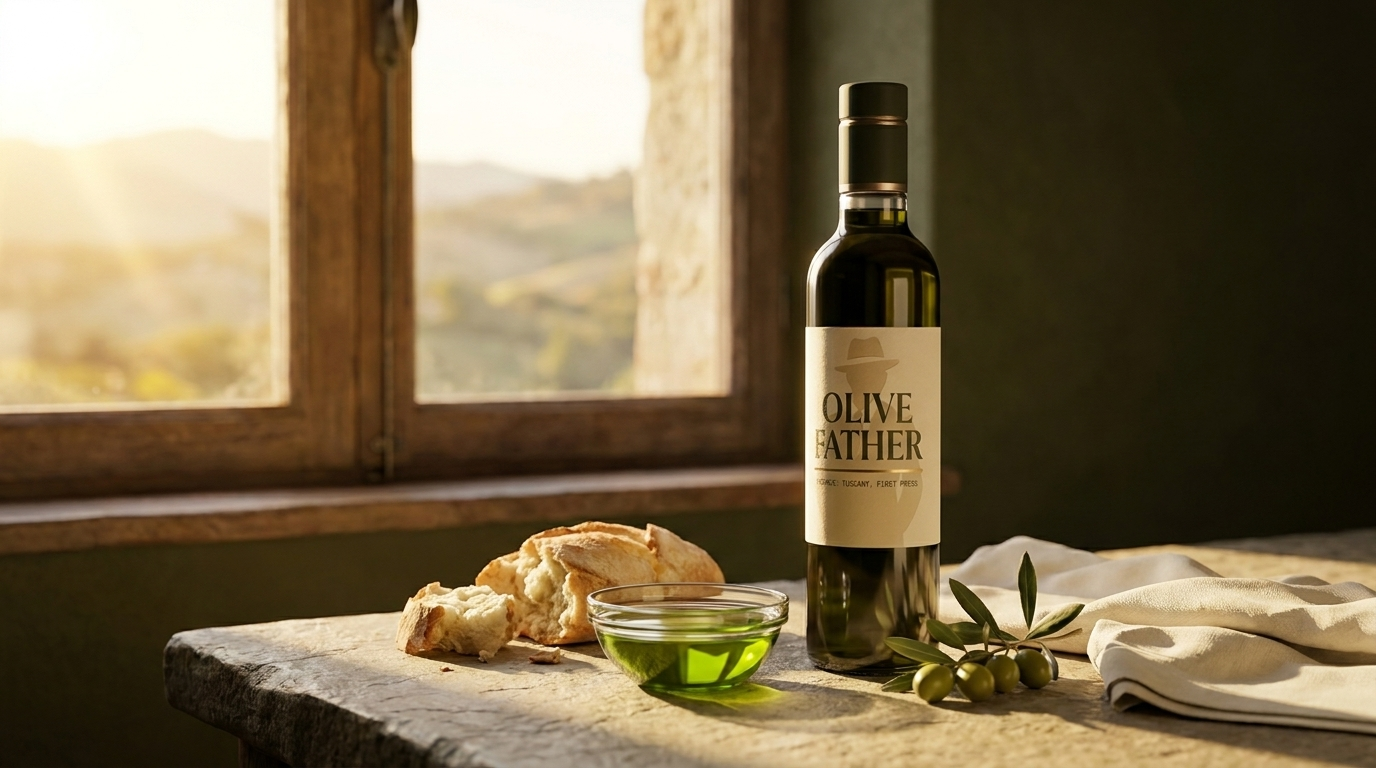
    Olive Father bottle on a stone farmhouse table with green olive oil, bread and olives, Calabrian hills through the window

    Few phrases sell more olive oil in America than “Imported from Italy.” The tricolor ribbon, the Tuscan farmhouse on the label, the Italian family name — they promise a bottle with roots. But under the labeling rules of the global oil trade, “imported from Italy” can legally describe nothing more than the place the oil was put into the bottle. The olives may have grown in three other countries. Here is how to read past the flag — and find oil that is actually Italian.

    The loophole in plain sight

    Italy is both a great producer of olive oil and one of the world’s great importers of it. Tanker loads of bulk oil arrive from around the Mediterranean, are blended in Italian facilities to a target flavor and price, and leave as “product of Italy” in the loose commercial sense — packed there, not grown there. EU rules do require an origin statement on the back label, but it is often a whisper in small print: “blend of EU olive oils” or “blend of EU and non-EU olive oils.” The front of the bottle tells a story; the back of the bottle files a disclosure. Most shoppers never cross-examine the two.

    Quality is a separate problem on top of origin. In the University of California, Davis Olive Center’s well-known 2010 study, the majority of imported oils sampled from California shelves and labeled “extra virgin” failed to meet international sensory standards for the grade. The two problems feed each other: anonymous blending makes both origin and grade easy to blur. We list the tell-tale signs in how to spot a fake olive oil.

    What the honest labels look like

    “100% Italian” — and a named place

    Real Italian oil says so plainly: grown, pressed, and bottled in Italy, ideally with the region and estate named. A producer proud of the origin does not make you hunt for it. Better still is a bottle that names a single grove — the standard we hold ourselves to on our single source and traceability page.

    DOP and IGP: origin with legal teeth

    Italy’s strongest origin guarantees are the EU protected designations. DOP (Denominazione di Origine Protetta) requires the entire chain — growing, milling, bottling — to happen inside a defined territory to a defined standard. IGP (Indicazione Geografica Protetta) ties the oil to a certified region with independent inspection. These marks cannot be printed on a whim; they are audited. Our Tuscan ETRURIUM line carries the IGP Toscano mark for exactly this reason — and our guide to Tuscan olive oil explains what that certification demands.

    A harvest date and an acidity figure

    Origin tells you where; freshness and chemistry tell you how well. A stated harvest date and a published free-acidity number are the two disclosures blenders almost never volunteer, because a pooled oil has no single honest answer to either question.

    Why real Italian oil is worth the hunt

    This is not flag-waving. Italy’s olive country — from the Tuscan hills to the terraced groves of Calabria — grows hundreds of native olive varieties on old trees, in microclimates that industrial groves cannot imitate, picked by families who mill within hours. That is what produces the grassy, peppery, alive character that made Italian oil famous in the first place. The imitation exists because the original is worth imitating. The tragedy is that most Americans have only ever tasted the imitation — a point we make at length on why not supermarket oil.

    One family, one answer

    When someone asks where our oil comes from, we do not name a hemisphere. We name a village: San Procopio, Calabria, where the same family has tended the same groves for six generations — and a certified Tuscan estate for ETRURIUM. Grown in Italy, milled in Italy, bottled in Italy, stamped with harvest and lot. If that is what you thought you were buying all along, meet the real thing and join our early access list.

  • Early Harvest Olive Oil: Why the Best Producers Pick Green

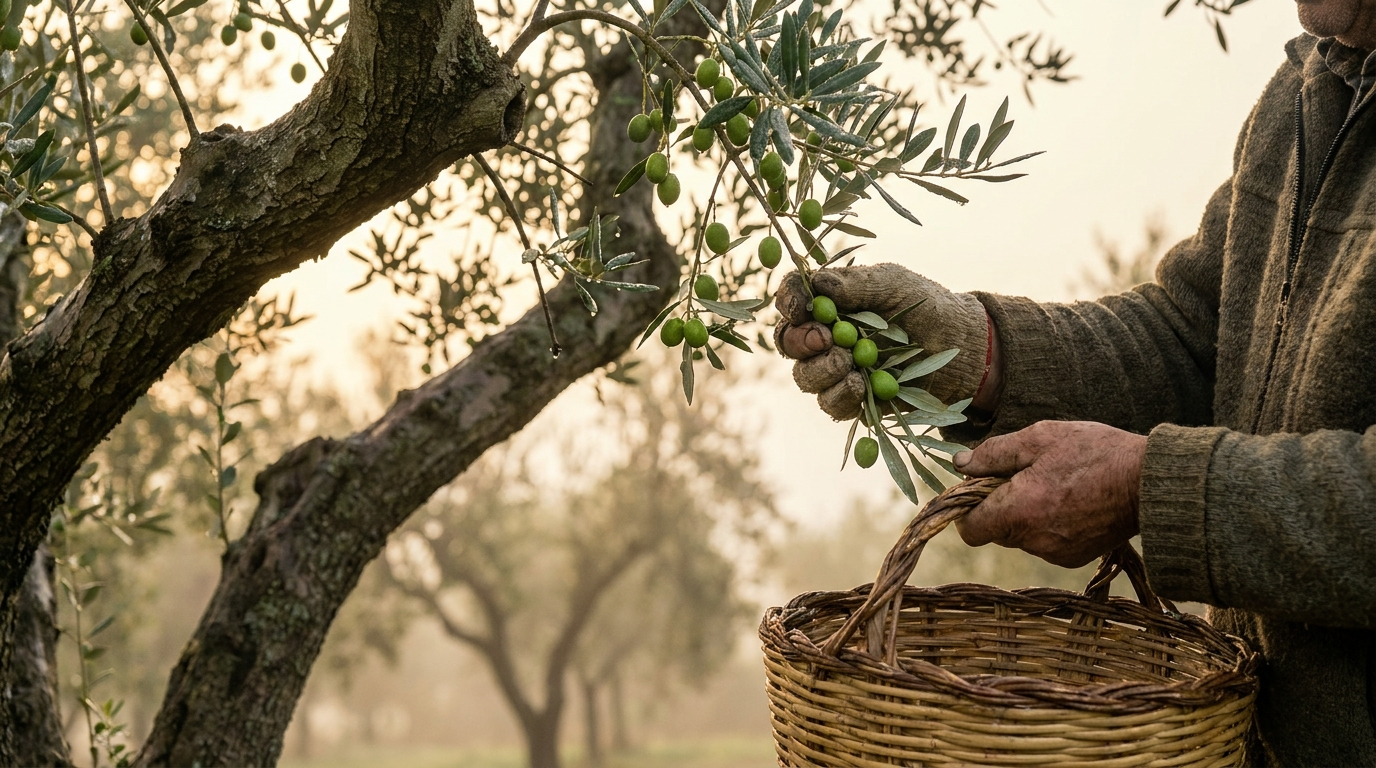
    Farmer's hands picking hard green olives into a woven basket at dawn in a Calabrian grove

    Every autumn, an olive farmer faces the same quiet temptation. Wait a few more weeks and the olives darken, swell, and give up noticeably more oil at the press. Pick now, while the fruit is still hard and green, and the yield drops — sometimes by a third — but what comes out of the mill is a different substance altogether: vivid, peppery, almost electric. Early harvest olive oil is what happens when a producer resists the temptation. Here is why that decision matters more than almost anything printed on the front of a label.

    What “early harvest” actually means

    Olives do not ripen all at once; they turn from green to purple to black over weeks, a process called veraison. “Early harvest” simply means the fruit is picked at the green or just-turning stage — in much of Italy, October into early November — rather than fully ripe in December or January. There is no legal definition, which is why the phrase only means something when a producer also tells you the actual harvest window and stands behind it. We put ours in writing; our guide to the harvest date on the label explains why that one number outranks every medal on the bottle.

    What picking green buys you

    More polyphenols, by a wide margin

    Green olives are richer in phenolic compounds — the antioxidants behind olive oil’s bitterness, its peppery catch, and most of the health research around it. As the fruit ripens, phenolic content falls steadily. An early-harvest oil therefore starts life with a larger reserve of the very molecules that make extra virgin worth paying for. Our polyphenols page covers what these compounds are and what the evidence actually supports.

    Flavor with a spine

    Ripe-picked oil tends toward soft, buttery, and forgettable. Green-picked oil tastes of cut grass, artichoke, green tomato leaf — and it finishes with that unmistakable pepper at the back of the throat. That sting is not a flaw. It is the sensory signature of a fresh, phenol-rich oil, and professional tasting panels score it as a virtue.

    A longer, more stable life

    The same phenolics that give early-harvest oil its bite also defend it against oxidation. A robust early-harvest oil holds its character across the year in your kitchen far better than a mild late-harvest oil, which starts with less protection and fades faster.

    What it costs the farmer

    Here is the honest arithmetic: green olives contain less oil. Picking early can mean giving up a meaningful share of the season’s volume — and the fruit is harder, so harvest takes more labor per liter. Then the clock starts. Green fruit must reach the mill within hours, because its bright compounds are exactly the ones that degrade first. That is why serious early-harvest oil almost always comes from producers who control both grove and mill, the way we describe on our harvest and cold pressing page. An industrial blender buying pooled oil on the commodity market simply cannot make these choices — nobody in that chain is paid to sacrifice yield for quality.

    How to spot a true early-harvest bottle

    Look for a stated harvest month, not just a best-by date. Look for a named estate and a single origin. Expect a vivid green-gold color, though color alone can be gamed, and expect a real price — early harvest and bargain-bin cannot coexist, for the yield reasons above. Most of all, taste it: bitterness and pepper are the proof. A “robust” oil that tastes flat is telling you the label is doing the work the fruit never did.

    Picked green, on purpose

    Our family’s oil is picked deliberately early in the Calabrian hills, milled within hours of leaving the branch, and stamped with its harvest and lot so you can hold us to it. If you want to taste what a grove gives up a third of its yield to achieve, explore the range — and join the early access list before the next harvest lands.