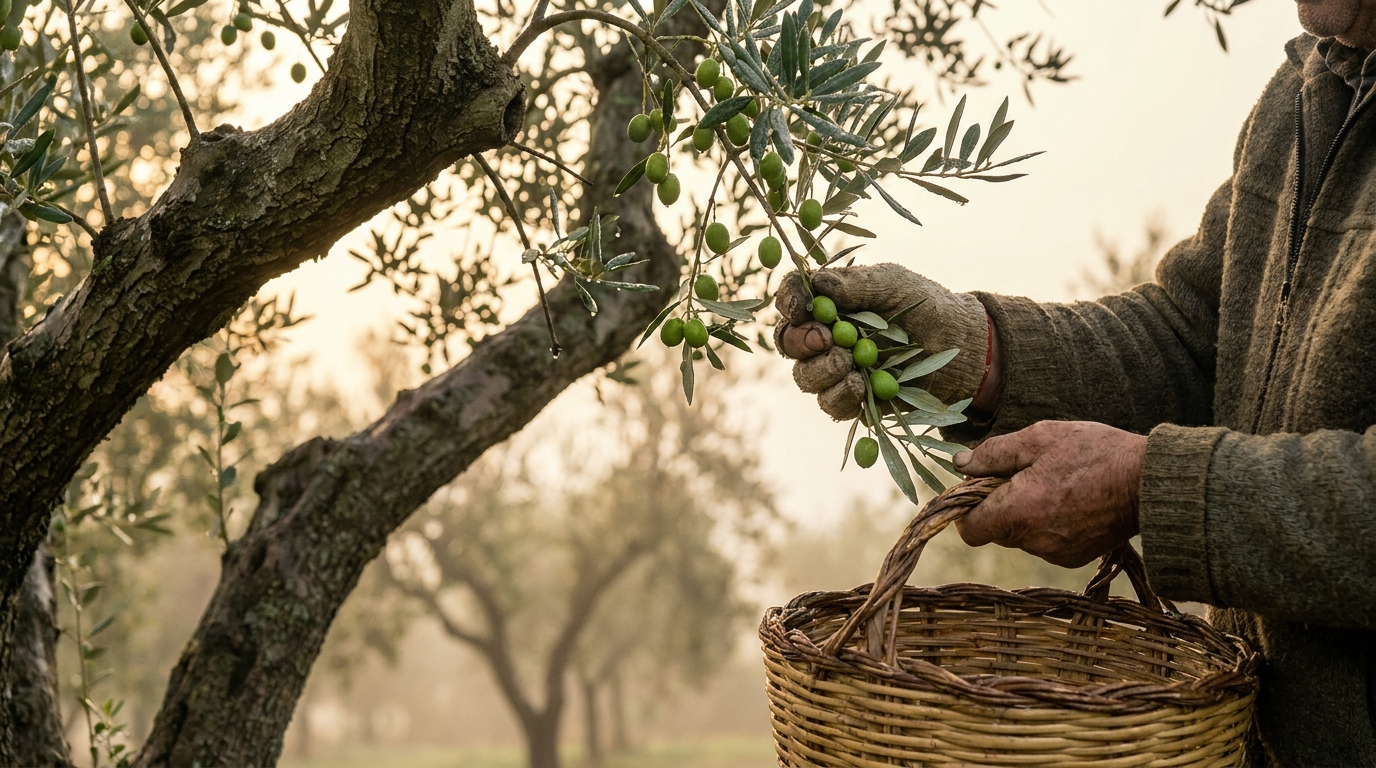
Every autumn, an olive farmer faces the same quiet temptation. Wait a few more weeks and the olives darken, swell, and give up noticeably more oil at the press. Pick now, while the fruit is still hard and green, and the yield drops — sometimes by a third — but what comes out of the mill is a different substance altogether: vivid, peppery, almost electric. Early harvest olive oil is what happens when a producer resists the temptation. Here is why that decision matters more than almost anything printed on the front of a label.
What “early harvest” actually means
Olives do not ripen all at once; they turn from green to purple to black over weeks, a process called veraison. “Early harvest” simply means the fruit is picked at the green or just-turning stage — in much of Italy, October into early November — rather than fully ripe in December or January. There is no legal definition, which is why the phrase only means something when a producer also tells you the actual harvest window and stands behind it. We put ours in writing; our guide to the harvest date on the label explains why that one number outranks every medal on the bottle.
What picking green buys you
More polyphenols, by a wide margin
Green olives are richer in phenolic compounds — the antioxidants behind olive oil’s bitterness, its peppery catch, and most of the health research around it. As the fruit ripens, phenolic content falls steadily. An early-harvest oil therefore starts life with a larger reserve of the very molecules that make extra virgin worth paying for. Our polyphenols page covers what these compounds are and what the evidence actually supports.
Flavor with a spine
Ripe-picked oil tends toward soft, buttery, and forgettable. Green-picked oil tastes of cut grass, artichoke, green tomato leaf — and it finishes with that unmistakable pepper at the back of the throat. That sting is not a flaw. It is the sensory signature of a fresh, phenol-rich oil, and professional tasting panels score it as a virtue.
A longer, more stable life
The same phenolics that give early-harvest oil its bite also defend it against oxidation. A robust early-harvest oil holds its character across the year in your kitchen far better than a mild late-harvest oil, which starts with less protection and fades faster.
What it costs the farmer
Here is the honest arithmetic: green olives contain less oil. Picking early can mean giving up a meaningful share of the season’s volume — and the fruit is harder, so harvest takes more labor per liter. Then the clock starts. Green fruit must reach the mill within hours, because its bright compounds are exactly the ones that degrade first. That is why serious early-harvest oil almost always comes from producers who control both grove and mill, the way we describe on our harvest and cold pressing page. An industrial blender buying pooled oil on the commodity market simply cannot make these choices — nobody in that chain is paid to sacrifice yield for quality.
How to spot a true early-harvest bottle
Look for a stated harvest month, not just a best-by date. Look for a named estate and a single origin. Expect a vivid green-gold color, though color alone can be gamed, and expect a real price — early harvest and bargain-bin cannot coexist, for the yield reasons above. Most of all, taste it: bitterness and pepper are the proof. A “robust” oil that tastes flat is telling you the label is doing the work the fruit never did.
Picked green, on purpose
Our family’s oil is picked deliberately early in the Calabrian hills, milled within hours of leaving the branch, and stamped with its harvest and lot so you can hold us to it. If you want to taste what a grove gives up a third of its yield to achieve, explore the range — and join the early access list before the next harvest lands.
Leave a Reply