“Acidity” may be the most misunderstood word in olive oil. It sounds like a taste — something sharp or sour — and producers happily let the confusion stand. In truth, you cannot taste acidity at all. It is a laboratory number, and it is one of the most honest numbers in the entire food world. Here is what it actually measures, and why the difference between 0.8% and 0.2% tells you more than most labels ever will.
What free acidity actually measures
Olive oil is built of triglycerides — glycerol molecules holding three fatty acids each. While the olive is whole and healthy, that structure stays intact. But when fruit is bruised, overripe, attacked by the olive fly, left in heaps before milling, or handled carelessly, enzymes and oxidation begin snapping fatty acids loose. The loose ones are called free fatty acids, and “acidity” is simply their weight as a percentage of the oil, expressed as oleic acid.
So a low number does not mean a mild-tasting oil. It means intact fruit, handled fast. Acidity is a damage report: every careless hour between branch and mill shows up in it. That is why it sits at the heart of the official grading system — alongside peroxide value, which we unpack on our page about the chemistry of olive oil quality.
The thresholds: 0.8%, 2.0%, and beyond
Under the international standard, extra virgin olive oil must have free acidity of no more than 0.8% — along with a clean bill from a trained tasting panel, because chemistry alone is not enough. Plain virgin oil may reach 2.0% and may carry slight sensory flaws. Above that sits lampante — literally “lamp oil” — unfit to eat until it has been industrially refined, deodorized and stripped of nearly everything that made it olive oil, then blended back into cheerful bottles labeled simply “olive oil.”
Read that again the next time a bargain bottle seems too good: refining exists precisely to rescue damaged oil. The full story of what those grades hide is on our guide to what makes quality olive oil.
Why 0.8% is a ceiling, not a target
Here is what the industry rarely says out loud: 0.8% is the legal maximum, and a well-made oil should not be anywhere near it. Olives picked green, carried whole to the mill and pressed cold within hours routinely come in at 0.3% or below — the finest lots closer to 0.1–0.2%. An oil scraping the limit passed the exam; an oil at 0.2% never needed the curve.
This is why serious producers print their acidity, harvest date and lot right on the label. The number is expensive to earn — it is bought with hand harvesting, fast milling and cold extraction, the discipline we describe on our harvest and cold pressing page — and cheap oil simply cannot afford it.
What acidity can’t tell you
One caution from our side of the mill: acidity is necessary, not sufficient. Because refining can chemically strip acidity to nearly zero, a refined oil can post a beautiful number while being sensorially dead. Acidity only means what it says in a true, unrefined extra virgin — verified by panel test, ideally from a single named source. Judge the whole label: origin, harvest date, acidity, and the peppery bite of living polyphenols when you taste it.
The number we put our name on
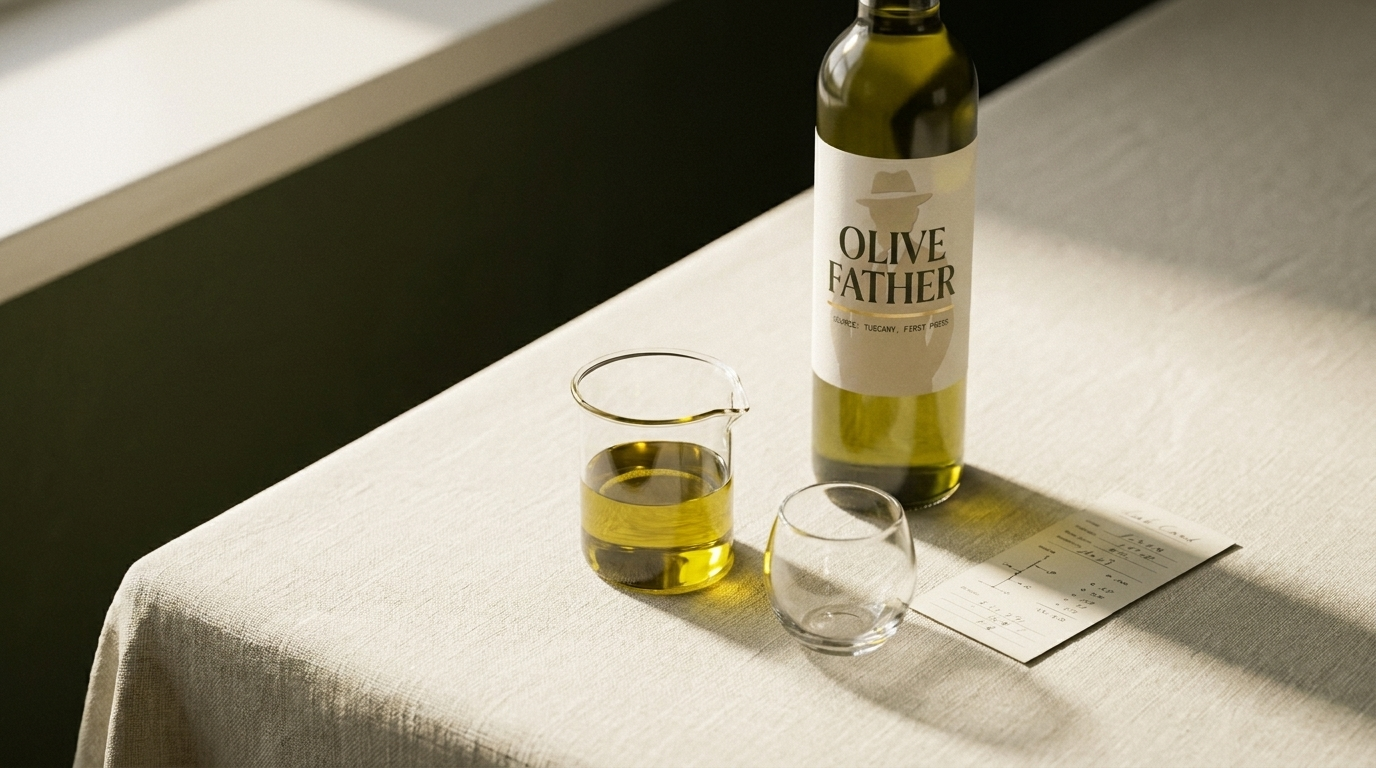
Every Olive Father lot is pressed from one family estate’s fruit within hours of picking, cold, and tested — acidity stamped on the label like a signature, typically a fraction of the legal limit. That is what a damage report looks like when there was no damage. See our organic extra virgin olive oil or explore the full range — and never buy a mystery number again.
Leave a Reply