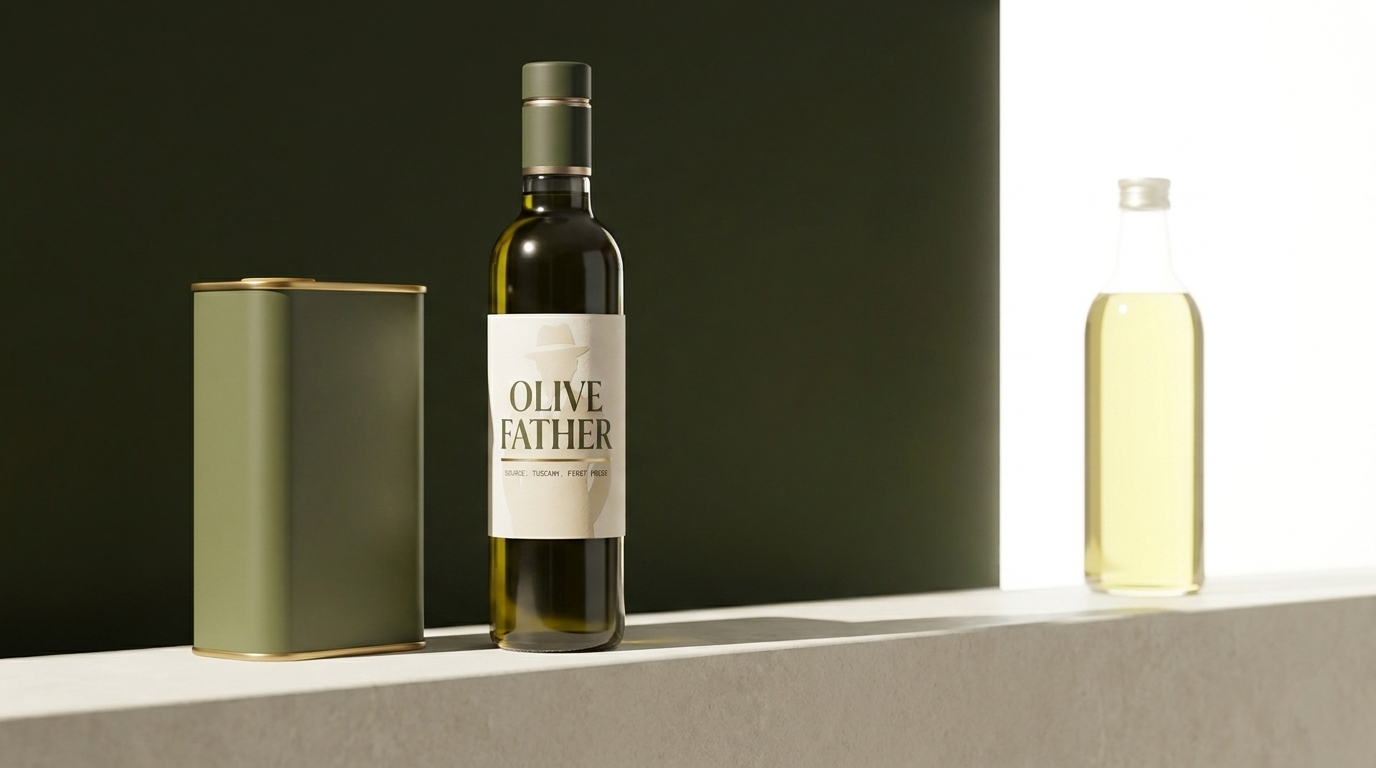
There is a bottle of olive oil sitting in a clear glass decanter on a windowsill in a great many beautiful kitchens right now, and it is dying. Slowly, invisibly, and entirely predictably. Nothing about it looks wrong. That is the problem.
Olive oil is the only major cooking fat sold in a state where it is still chemically alive, and everything that makes it worth buying — the aromatics, the polyphenols, the pepper at the back of the throat — is fragile. The container is not decoration. It is the last line of defence between a fresh-pressed fruit juice and a bottle of expensive, faintly waxy nothing.
The three enemies, in order of speed
1. Light — the fastest killer
This is the one almost nobody accounts for, and it is by a distance the most aggressive. Olive oil contains chlorophyll and other pigments that behave as photosensitisers: when light strikes them, they help convert ordinary oxygen into a far more reactive form that attacks the oil’s fatty acids directly. The result is photo-oxidation, and it runs at a pace that ordinary oxidation in the dark simply cannot match.
Which produces a genuinely perverse outcome: the greener and more phenol-rich the oil, the more it has to lose from sitting in clear glass. A supermarket display of clear bottles under bright retail lighting, for weeks, is close to a worst case. The bottle that lets you admire the colour is the bottle destroying it.
2. Oxygen — the patient one
Every time you open the bottle, air replaces oil. That headspace is what turns a good oil rancid over months rather than years. It is also why bottle size is a quality decision, not just a price one: a half-empty 3-litre bottle of superb oil in October will be a mediocre oil by February. Buy the volume you will genuinely finish in a couple of months, and decant from a larger format if you cook at volume.
3. Heat — the accelerant
Heat does not act alone; it multiplies the other two. Every degree speeds the oxidation reactions along. The convenient spot beside the stove, above the oven, or on a sunny counter is the single most common storage mistake in home kitchens — and it manages to combine all three enemies at once.
What each container actually does
- Clear glass — avoid. Zero light protection. Chemically inert and perfectly recyclable, which is why producers like it, but it offers the oil no defence whatsoever. Treat a clear bottle as a warning sign about the producer’s priorities.
- Dark green or amber glass — good. Blocks a substantial share of the damaging wavelengths while keeping glass’s inertness and its complete lack of flavour transfer. The dark bottle is the traditional serious answer, and still an excellent one.
- Tin — excellent. A lined metal tin blocks light completely. That is not a partial improvement over dark glass; it is total. Tins are also lighter, unbreakable, cheaper to ship, and stack. In Italy, the people who actually cook every day buy oil in tins, not bottles — the small precious bottle is largely an export idea.
- Bag-in-box — underrated. Blocks light and, crucially, collapses as you pour, so almost no air enters. Technically among the best formats available. It simply looks like nothing on a table, which is why it has never caught on.
- Stainless steel fusti — professional standard. How oil is stored at the mill before bottling: sealed, opaque, temperature-stable, often blanketed with inert gas. Overkill for a kitchen, but it tells you what the people who make oil actually believe about storage.
- Clear plastic — worst. No light protection, and plastic is slightly permeable to oxygen over time. Fine for a week; poor for a pantry.
How to read a bottle before you buy it
The container is a reliable tell about the producer’s intentions, because protective packaging costs more and hides the product. A brand that has invested in dark glass or tin has decided freshness matters more than shelf appeal. Combine that read with the two other things worth checking — a stated harvest date rather than only a distant “best by,” and a named single origin rather than a blend of unnamed countries — and you can sort a supermarket shelf in about fifteen seconds. We go deeper into that chemistry on our page about free acidity, rancidity and freshness, and into why the shelf looks the way it does in why not supermarket oil.
Once it is home
- Store it in a closed cupboard, away from the stove. Cool, dark, boring.
- Do not refrigerate. Oil clouds and solidifies in the cold, and while it recovers on warming, the temperature swings do it no favours.
- Close it properly every time. A pour spout left open all week is a slow leak of aroma.
- Keep the everyday oil within reach and the finishing oil out of the light — and use the good one faster, not slower. Saving a great oil for a special occasion is how great oil becomes an average one.
What we bottle in, and why
We press within hours of picking and then spend the rest of the year defending what that press captured — sealed stainless storage at the mill, dark glass for the table, and lined tin for the kitchens that go through oil properly. It is the least interesting part of what we do and one of the most decisive: an oil is only as fresh as the last container it sat in. You can follow the whole chain on from grove to bottle.
If the bottle in your cupboard is clear, sitting in daylight, and has no harvest date on it, you now know three separate reasons it tastes the way it does. Meet the range — single-source, harvest-dated, and packed to arrive tasting the way it did at the mill.
Leave a Reply