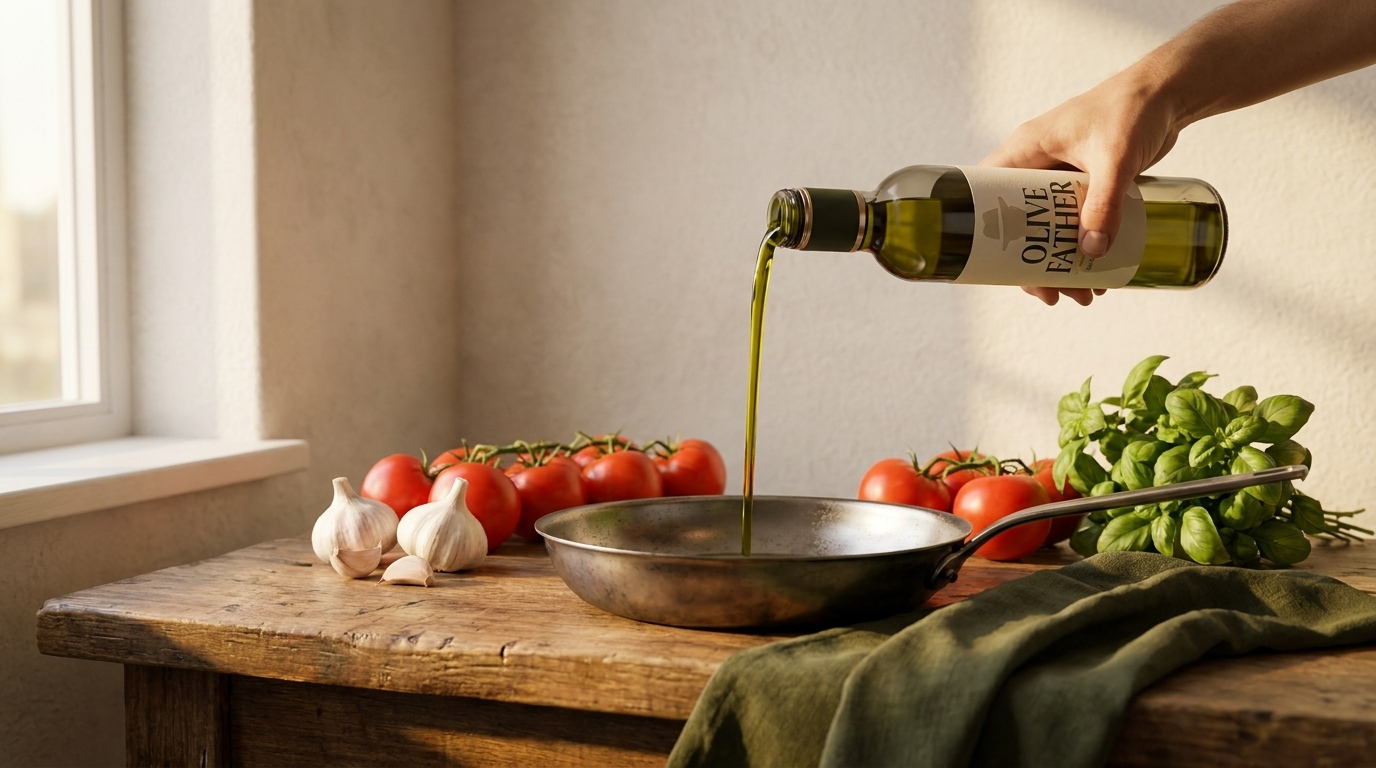
There is a bottle in every serious kitchen that never gets put away. It stands within arm’s reach of the burner, slightly tacky around the neck, and it is reached for before the cook has finished deciding what dinner is. It starts the soffritto. It slicks the roasting tray. It goes over the finished plate in a ribbon nobody measured. Over a year, that one bottle touches more of what a household eats than any other ingredient in the room.
This is ours. Classic Extra Virgin Olive Oil is the everyday member of the Olive Father range: single-source Calabrian, milled within hours of picking, harvest-dated, and priced to be poured with a generous wrist rather than rationed like perfume.
The everyday oil, done properly
Classic is not a lesser oil. It is a different job.
Where our early-harvest organic flagship is built to be tasted raw and studied — picked green, bitter by design, made to be argued about — Classic is built to be used. It comes from fruit picked a little later in the window, when the drupes have begun to turn and the oil they give is rounder, sweeter and more forgiving. That is a deliberate choice about balance, not a concession on quality. The olives still come from the same six-generation estate in San Procopio, still travel from tree to mill in a matter of hours, and are still cold-extracted by mechanical means only. Nothing is blended in from anywhere else. Ever.
In a category where “everyday olive oil” is quietly understood to mean anonymous tanker blends pooled across three continents and bottled wherever the freight worked out, an everyday oil with one verifiable origin and a printed harvest date is a small act of defiance. See where it sits among its siblings on the full range overview, or read how the fruit gets from the row to the glass in grove to bottle.
How it tastes
Pour a little into a glass and warm it in your palm before you smell it. The first impression is green and gently sweet — fresh-broken olive, cut grass after rain, a thread of tomato leaf and green apple skin underneath.
On the palate the middle is rounder and broader than our flagship: a soft, almost sweet-almond warmth that flatters what it touches rather than competing with it. Then, at the swallow, the quiet proof. A clean peppery flicker catches at the back of the throat — one small cough’s worth, no more. That is oleocanthal and its relatives making themselves known, and it is the single most reliable sign at a home kitchen counter that an oil is fresh and genuinely extra virgin. An oil with no catch at all is an oil with nothing left in it.
The tuning here is harmony. Assertive enough to be unmistakably alive; gentle enough that the four-year-old and the grandmother both pour it happily on the same table. If you want to learn to read those sensations the way a professional panel does — the sniff, the strappaggio, the three defects that disqualify an oil outright — our tasting guide walks through the whole method in ten minutes.
Where it earns its place
This is the workhorse, and it works nearly everywhere:
- Sweating garlic and onion at the start of a sauce, where the oil carries the aromatics into everything that follows
- Roasting vegetables hard enough to caramelise the edges without the oil turning acrid
- Frying eggs until the whites throw lacy brown frills
- Building a proper soffritto — patient, low, twenty minutes
- Dressing a weeknight salad with nothing but oil, lemon, salt
- Finishing a bowl of pasta with a raw ribbon poured off the heat
And yes — you can fry with it. Real extra virgin is a notably stable frying medium precisely because its polyphenols act as built-in antioxidants; the “save it for salads” rule is a piece of received wisdom that does not survive contact with the data. We take that apart in the best olive oil for cooking and again in our smoke point explainer.
The details
- Origin: single-source Calabrian, traceable to the estate and the harvest
- Grade: extra virgin — cold-extracted, mechanical means only, no refining, no blending
- Profile: rounded green fruit, sweet-almond middle, softly peppery finish
- Best for: everyday cooking — sautéing, roasting, frying, dressing, finishing
- Formats: 250 ml, 500 ml and 750 ml dark glass
- On the label: harvest date, lot number, single estate of origin
Every format ships in dark glass, because light is one of the three enemies of olive oil alongside heat and air, and clear bottles are a marketing decision made at the expense of the contents. The 250 ml suits a small household or a first acquaintance. The 500 ml is the natural everyday size. The 750 ml is for the cook who pours with confidence and refuses to run dry on a Wednesday. If you cook at volume, the tin formats are the better economics.
Genuine extra virgin, not supermarket filler
“Affordable” is the word under which most of this industry hides its compromises: refined oil blended into the virgin, origins pooled until the bottle can only honestly say “EU”, freshness surrendered to eighteen months of warehouse time and a supermarket shelf lit like an operating theatre.
We are not moralising about price. We are pointing at where the money goes. Classic costs what honest oil costs when the people who grow it also press it, bottle it and sell it, with nobody in between taking a margin for moving it around. That is a supply chain decision, not a quality compromise — and it is why the words on our label mean the same thing in the fifth year as they did in the first.
If your current benchmark is the generic bottle from the big shop, read why we say skip the supermarket first. Then do the only test that settles anything: buy one bottle, put it beside the one you own now, and taste them side by side on a piece of plain bread.
See the full Olive Father range — or talk to the people who press the oil if you would rather ask a question first.