Yes — olive oil goes bad. But not the way people expect, and that is precisely why so much of it is quietly ruined in American kitchens. Olive oil does not curdle, mould, or announce itself. It fades. It loses its pepper, then its aroma, then its character, and eventually it turns rancid without ever looking any different in the bottle.
Which means the person most likely to serve you bad olive oil is you. Here is how long a bottle actually lasts, what destroys it, and how to tell — in about four seconds — whether the one on your counter is still worth pouring.
How Long Does Olive Oil Last?
The useful answer is not measured from the day you bought it. It is measured from the day the olives came off the tree.
An unopened bottle of true extra virgin olive oil, stored well, is at its best for roughly 18 to 24 months after harvest. Once opened, oxygen is in the bottle for good, and you are on a much shorter clock: aim to finish it within two to three months. It will not be dangerous after that. It will simply stop being the thing you paid for.
This is why the harvest date is the single most honest number on a label and the “best before” date is one of the least. A best-before date is typically set two years from bottling, and oil can sit in a tank for a year before it is bottled. Two bottles can carry the same best-before date and be a full year apart in age. If a producer will not print the harvest, ask yourself why.
The Four Things That Kill Olive Oil
Rancidity is oxidation. The fats in the oil react with oxygen and break down into the aldehydes and ketones you can smell. Four conditions accelerate that reaction, and every one of them is under your control.
- Light. The worst offender and the most ignored. Ultraviolet light drives oxidation hard, which is why serious producers bottle in dark green glass or tin and why a clear bottle in a sunny window is a slow execution.
- Heat. Every ten degrees roughly doubles the rate of chemical breakdown. The shelf directly above your stove is the worst place in the house, and it is where almost everyone keeps the bottle.
- Oxygen. Cap it properly, every time. A half-empty bottle is half full of air, so decanting the last of a large tin into a smaller bottle genuinely helps.
- Time. The one you cannot bargain with. Buy the freshest oil you can find and buy a size you will actually finish.
How to Store Olive Oil Properly
The instruction is almost boringly simple: cool, dark, closed. A cupboard or pantry at around 57–70°F (14–21°C), away from the oven, the dishwasher and the window. Cap tightened after each pour. Original dark glass or tin, not a decorative clear cruet left out on the counter.
Should You Refrigerate It?
No — and while we are here, the popular “fridge test” for authenticity is a myth. Chilled olive oil clouds and thickens because its waxes and fats begin to crystallise, but the temperature at which that happens varies with cultivar and composition. Real extra virgin may solidify slowly, quickly, or barely at all. A refined or adulterated oil can behave the same way. You cannot tell anything about quality from a cold bottle, and repeatedly chilling and rewarming an oil does it no favours.
How to Tell If Olive Oil Has Gone Rancid
Trust your nose. Pour a little into a small glass, cup your hand over it, warm it against your palm for a few seconds, then smell. Fresh oil smells green — cut grass, artichoke, green tomato leaf, sometimes almond or fresh herb. Rancid oil smells of something else entirely, and once you have named it you will never miss it again: wax crayons, putty, stale walnuts, old peanuts, wet cardboard.
Then taste it. A living oil finishes with a bitter edge and a peppery catch at the back of the throat — that is oleocanthal and the rest of the polyphenol family still doing their work. Rancid oil is flat, greasy and sweetish, with no sting at all. Those antioxidants are the first casualties of age, which is the real cost of an old bottle: you lose the flavour and the health compounds in the same breath. Our tasting guide walks through the full method if you want to train the palate properly.
Rancid oil will not make you ill in any normal quantity. It will make your food taste of crayons. And if that bottle was already mediocre when you bought it — blended, over-refined, a year older than it looked — you were fighting from behind before you got it home. That is why we are so insistent about what quality actually means.
Buy Fresh, Store Well, Pour Generously
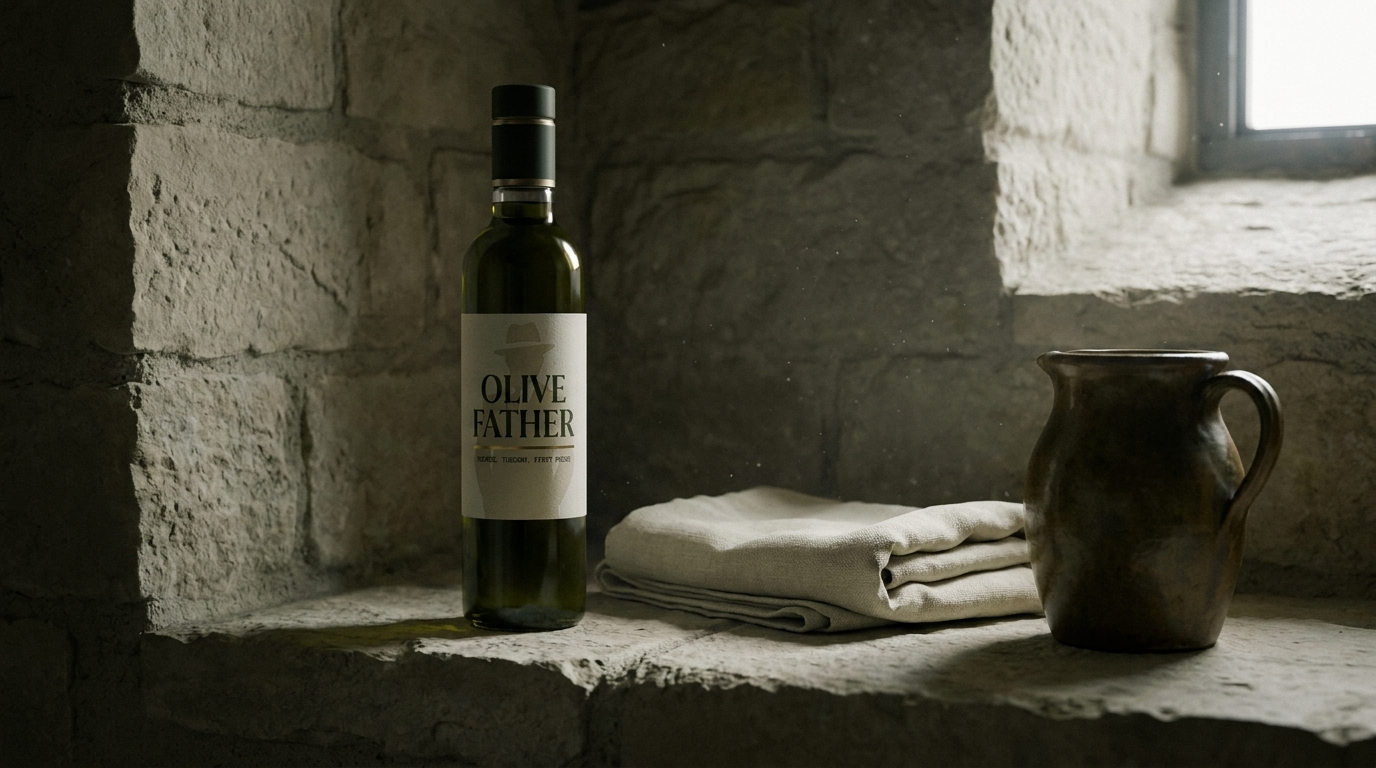
The best storage advice anyone can give you is to buy oil young enough that storage barely matters. Every Olive Father bottle is single-source, milled cold within hours of picking, and carries its harvest so you always know exactly how old it is. Keep it in a cupboard, finish it in a season, and use it like Italians do — too fast for it to ever go bad. See the current harvest.
Leave a Reply